Screw conveyors
Screw conveyor / auger conveyor / spiral conveyor
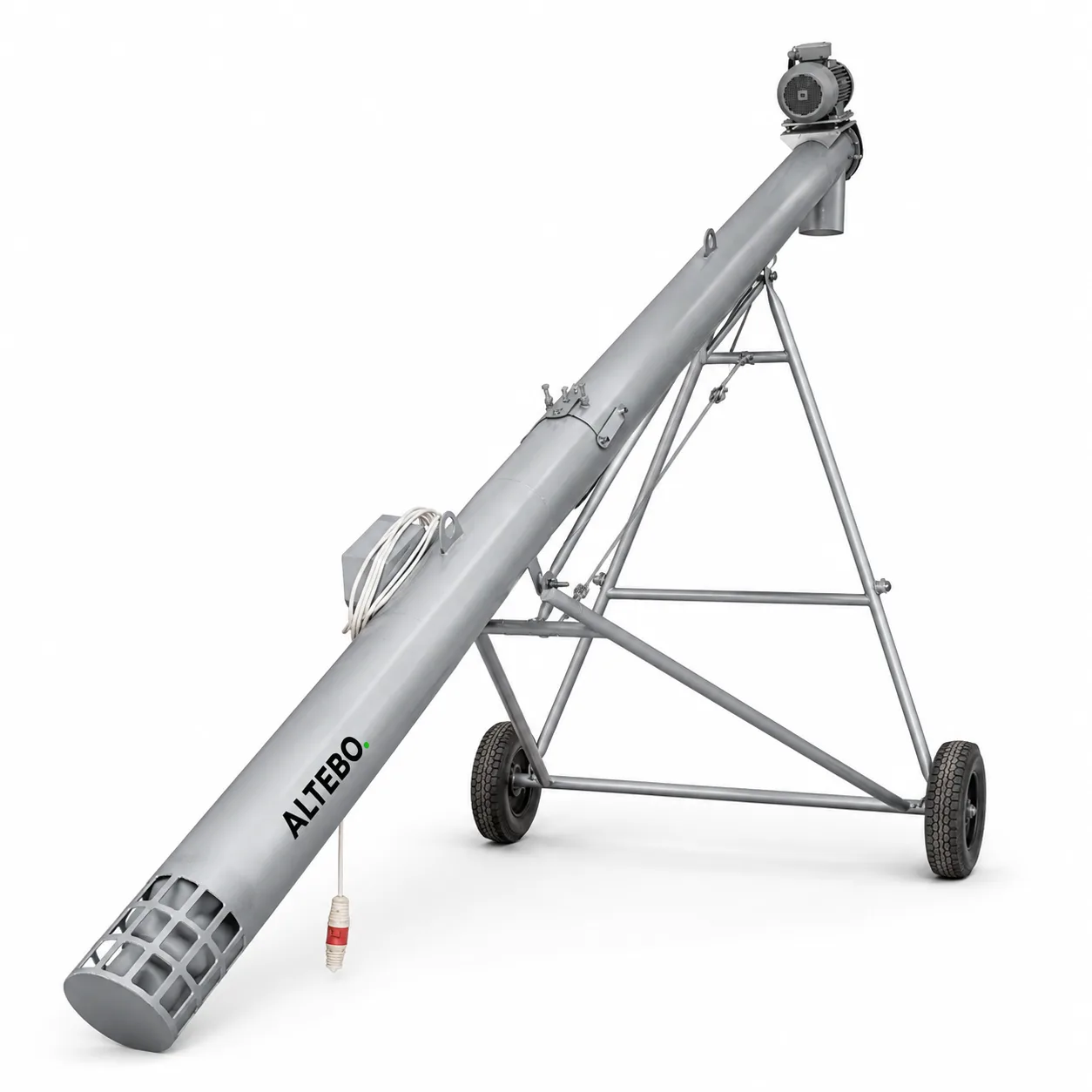
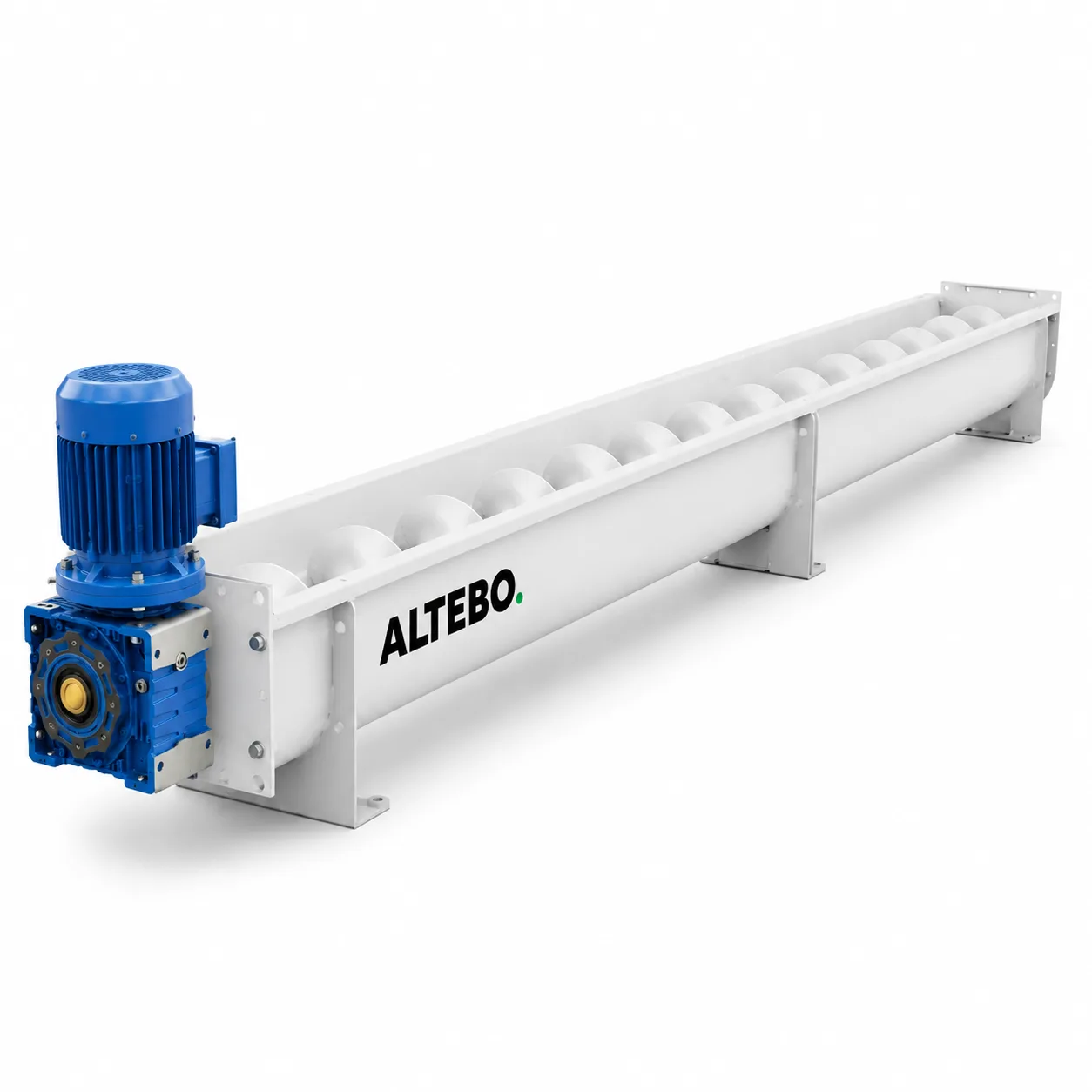
Helical screw conveyor for bulk material, horizontal or inclined — flour, gypsum, cement, plastic granulate, meals, sludge. Three constructions: tubular, U-trough and shaftless. Built routinely at throughputs of 1 – 120 m³/h.
Also known as: screw conveyor · auger conveyor · spiral conveyor · tubular screw conveyor · shaftless screw conveyor · screw feeder
Individually sized on your material and your process. Technical proposal and price normally within 48 hours. Delivery across the EU and the Republic of Moldova.
How it works
The screw conveyor — also called an auger or spiral conveyor — moves powdered and granular materials horizontally or on an incline: flour, gypsum, cement, technical dust, plastic granulate, meals, as well as sludge and screenings at treatment plants. Being an enclosed machine, it protects the material from contamination and the hall from dust emissions.
The helical flight pushes the material along the trough or tube. Throughput is determined by the diameter, pitch and speed of the flight — parameters set at design stage from the density and behaviour of the material — and stays constant and controllable, which also makes the screw suitable for metered feeding of downstream machines.
The choice between the three constructions follows from the material and the route: tubular for sealed runs and steep inclines, U-trough for full cleaning access, shaftless for sticky or fibrous material and material containing foreign objects — the case of treatment plant sludge, where a centre shaft would clog.
The build is AISI 304/316L stainless for food, pharmaceutical and chemical applications, or protected carbon steel for general industrial duty, with diameters built routinely up to 1,200 mm, lengths to order, and feed and discharge openings positioned along the route in the customer's plant.
Three constructions
Tubular, U-trough or shaftless — chosen for the material and the route.
Throughput set by construction
Diameter, pitch and speed calculated for the material conveyed.
Enclosed route
The material is not contaminated, the hall does not fill with dust.
Configured to order
Lengths, inclines and opening positions — on the route in your plant.
When to choose it
The concrete situations in which this machine is the right answer — and the one in which we would point you to something else in our range.
You move bulk material horizontally or on an incline, on a fixed route in the hall, and you want the dust kept out of the atmosphere — the screw is enclosed along its whole length.
You need the throughput to be constant and controllable, not just for the material to get from one point to another: diameter, pitch and speed determine the rate, so the screw can meter-feed the downstream machine.
The material is sticky, fibrous or contains foreign objects — sludge, screenings, waste — and a centre shaft would clog: the shaftless version is chosen.
The route has multiple feed or discharge openings, in positions dictated by the existing machines.
When this is NOT the right machine
If the material has to be lifted vertically to a significant height, an inclined screw loses a lot of throughput and needs a long run for little height gained.
See Bucket elevator