Conveyors and bucket elevators
Bucket elevator
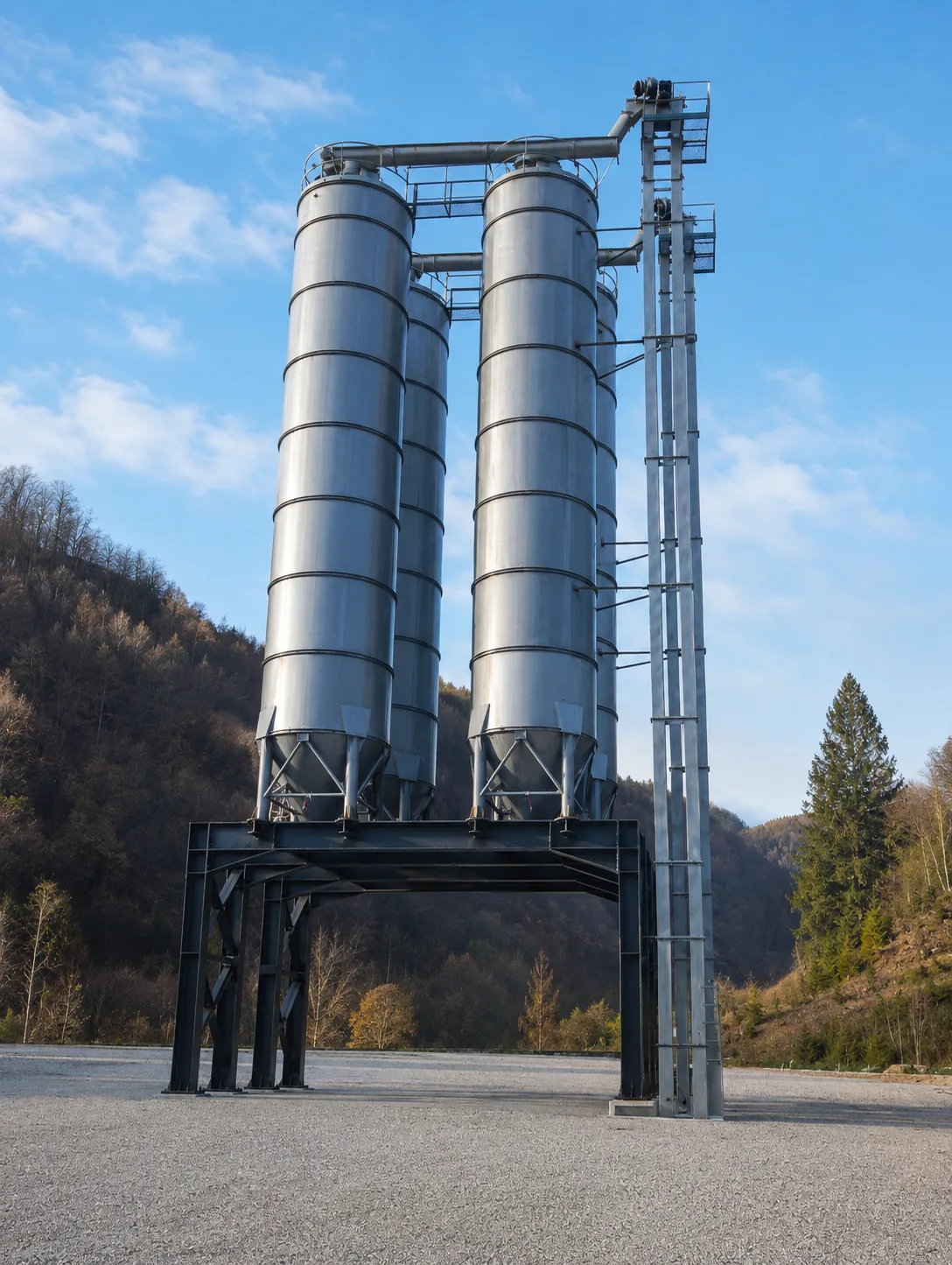
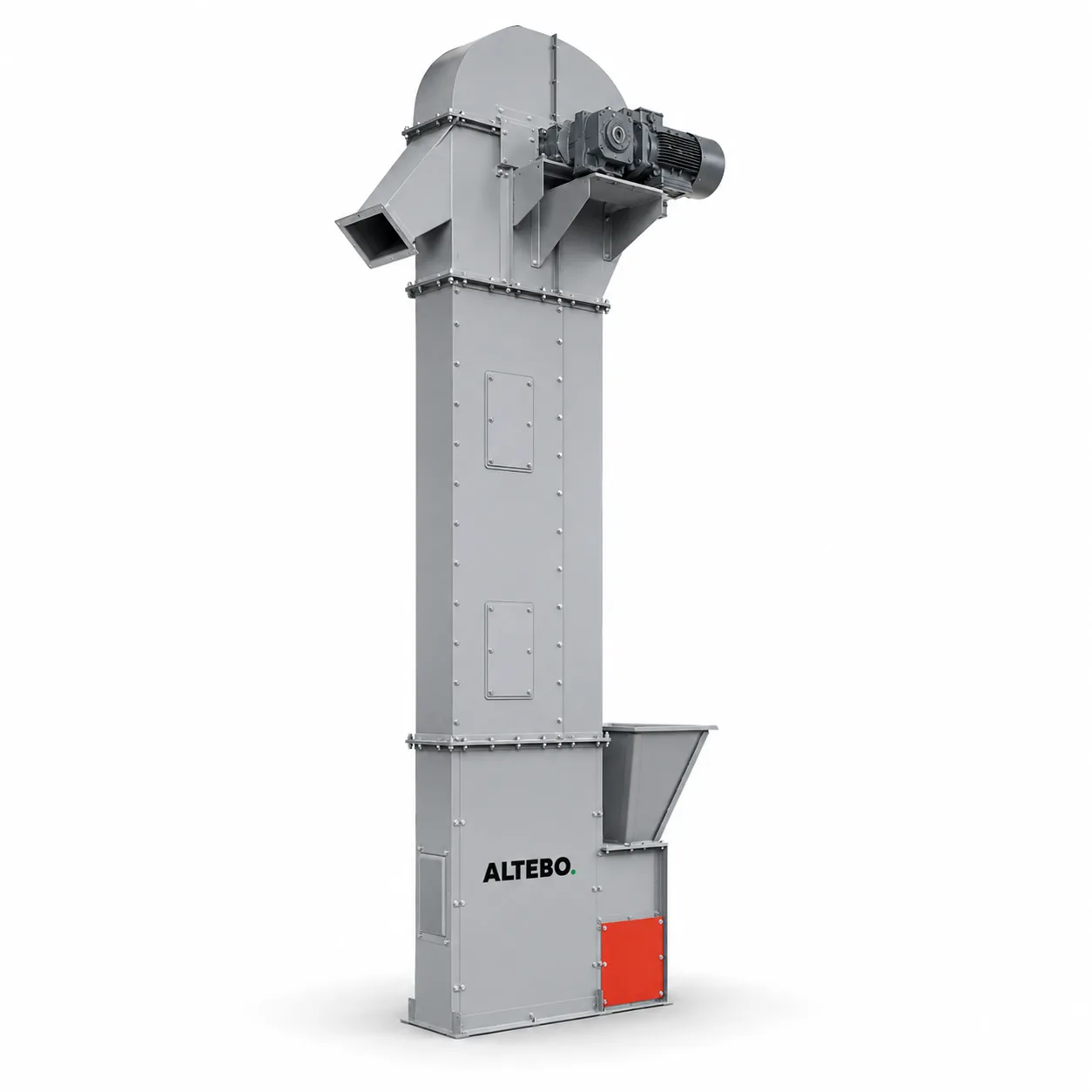
Vertical bucket elevator for grain, granulate, powder and pellets — feeding silos and processing lines. Lifts material up to 30 m, on a floor footprint of under one square metre.
Also known as: belt bucket elevator · vertical elevator · grain elevator
Specifications
| Throughput | 5 – 100 m³/h |
|---|---|
| Lifting height | Up to 30 m |
| Casing material | Painted steel or stainless |
| Buckets | Polyethylene (food) or metal (abrasive materials) |
| Motor power | 1.5 – 22 kW |
| Drive | Gearmotor with anti-runback device |
| Monitoring | Belt rotation and misalignment sensors |
| Options | Inspection ports · stainless build · ATEX protection |
The figures above are the ranges we build routinely, not construction limits. We design and manufacture any capacity, power rating and envelope to order — including below or above the ranges in the table.
Industrii
- Agriculture
- Food
- Construction
- Individually sized — on your material, throughput and space
- Technical proposal and price, normally within 48 hours
- Installation, commissioning and service from our own plants
When to choose it
The concrete situations where this machine is the right answer — and the one where we recommend something else from our range.
You have to lift material to height — feeding a silo, a conditioning plant or a processing line on an upper floor.
You have little floor space: the elevator occupies under a square metre, whereas an inclined conveyor gaining the same height would cross the whole hall.
You need a constant rate, in continuous flow, rather than transport in batches.
The material is abrasive or, conversely, food-grade: buckets are chosen in steel or polyethylene respectively, per application.
When this is NOT the right machine
For horizontal routes or shallow inclines an elevator has nothing to solve — and it is a far more complex construction than needed.
Vezi Screw conveyorHow it works
The bucket elevator provides continuous vertical transport of bulk materials — grain, granulate, powder, pellets — feeding silos, processing lines and conditioning plant. The vertical route frees up the floor area that an inclined conveyor would occupy for no reason.
Buckets mounted on the traction belt or chain pick the material up from the elevator boot and discharge it centrifugally or by gravity at the head, depending on the speed chosen for the material conveyed. Throughput stays constant, and the drive's anti-runback device prevents the belt reversing when the machine stops under load.
The casing, head and boot are built in painted steel or stainless, with inspection ports and belt rotation and misalignment sensors for monitoring operation. The height, the throughput and the bucket type — polyethylene for food products or steel for abrasive materials — are established at design stage, for the customer's application.
Heights up to 30 m
Feeding silos and tall installations, on a minimal footprint.
Centrifugal or gravity discharge
Belt speed chosen for the material conveyed.
Integrated monitoring
Rotation and misalignment sensors, inspection ports along the route.
Buckets per application
Polyethylene for food, steel for abrasive materials.
Variante constructive
What actually differs between them — not just what they are called.
With a traction belt
The usual version for grain and non-abrasive materials, at high speeds. Discharge is centrifugal.
With a traction chain
For abrasive or hot materials, where a belt would wear or degrade. Runs at lower speeds, with gravity discharge.
Polyethylene buckets
For food products — smooth surface, complete emptying, low own weight.
Metal buckets
For abrasive materials, where polyethylene would wear quickly.
Frequently asked questions
Question not answered here? Write to us — an engineer replies, nu un robot.
What is the maximum height you build?
We build routinely up to 30 m. That is not a construction limit — we size to order above it, but beyond a certain height the supporting structure and the maintenance access become additional considerations.
How much floor space does it take?
See the “Floor footprint” row in the specification table. The small footprint is precisely the argument for an elevator: you gain height without crossing the hall with an inclined conveyor.
What happens if the power fails with the elevator full?
The anti-runback device in the drive prevents the belt reversing under the weight of the material. Without it, a stop under load would send the belt backwards and the material would pile up in the elevator boot.
How do I know if the belt has misaligned or slipped?
Through the rotation and misalignment sensors fitted on the machine: the first detects belt slip, the second lateral drift. Both are faults that, undetected, lead to damage and to a fire risk from friction.
Can it be used for powders, not just grain?
Yes — powders, granulate and pellets are within the application range. For fine powders, check whether your application requires explosion protection; the availability of the ATEX version is given in the specification table, in the “Options” row.