Industrial mixers — blenders, kneaders and reactors, built to order in the EU
Industrial mixers homogenise powders, granulate, pastes and liquids, in batches or in continuous flow, to a uniform composition throughout the mass of the product. They are used by food, chemical, pharmaceutical, construction material and compound feed plants. We design and build them in our own plants in Tomești (Iași, Romania) and Bălți (Moldova).
Specifications
Everything is built to order: the values follow from your material, your throughput and your building.
| Constructions built | Ribbon · ploughshare · twin-shaft · V-blender · paddle · vertical · rotating drum · Z-blade · jacketed reactor |
|---|---|
| Working volumes | Sized to order — request a quotation |
| Mixing time | Sized to order — request a quotation |
| Degree of homogeneity | Sized to order — request a quotation |
| Drive power | Sized to order — request a quotation |
| Materials | AISI 304 stainless · AISI 316L stainless · carbon steel · wear-resistant steel |
| Options | Thermal jacket · load cells · liquid nozzles · chopper blades |
The figures above are the ranges we build routinely, not construction limits. We design and manufacture any capacity, power rating and envelope to order — including below or above the ranges in the table.
When a mixer is the right choice
The situations where a mixer is the correct answer — and the one where we recommend a different machine of ours.
The recipe has several components and the result has to be identical in every batch — the mixer type is chosen from how different the densities and particle sizes are.
An additive making up under 1 % of the batch mass has to be distributed evenly through the whole volume: for that you choose the ploughshare mixer, which fluidises the material mechanically.
Cycle time limits the capacity of the line: the twin-shaft mixer brings mixing down to tens of seconds per batch.
The material is a dense paste or a dough that an ordinary mixer cannot penetrate: Z-blades stretch it, cut it and fold it.
When this is NOT the right machine
If the recipe requires exact quantities of each component, with a report for every batch, mixing alone is not enough — you need weighing before the mixer.
See gravimetric dosing systemsThe mixer range
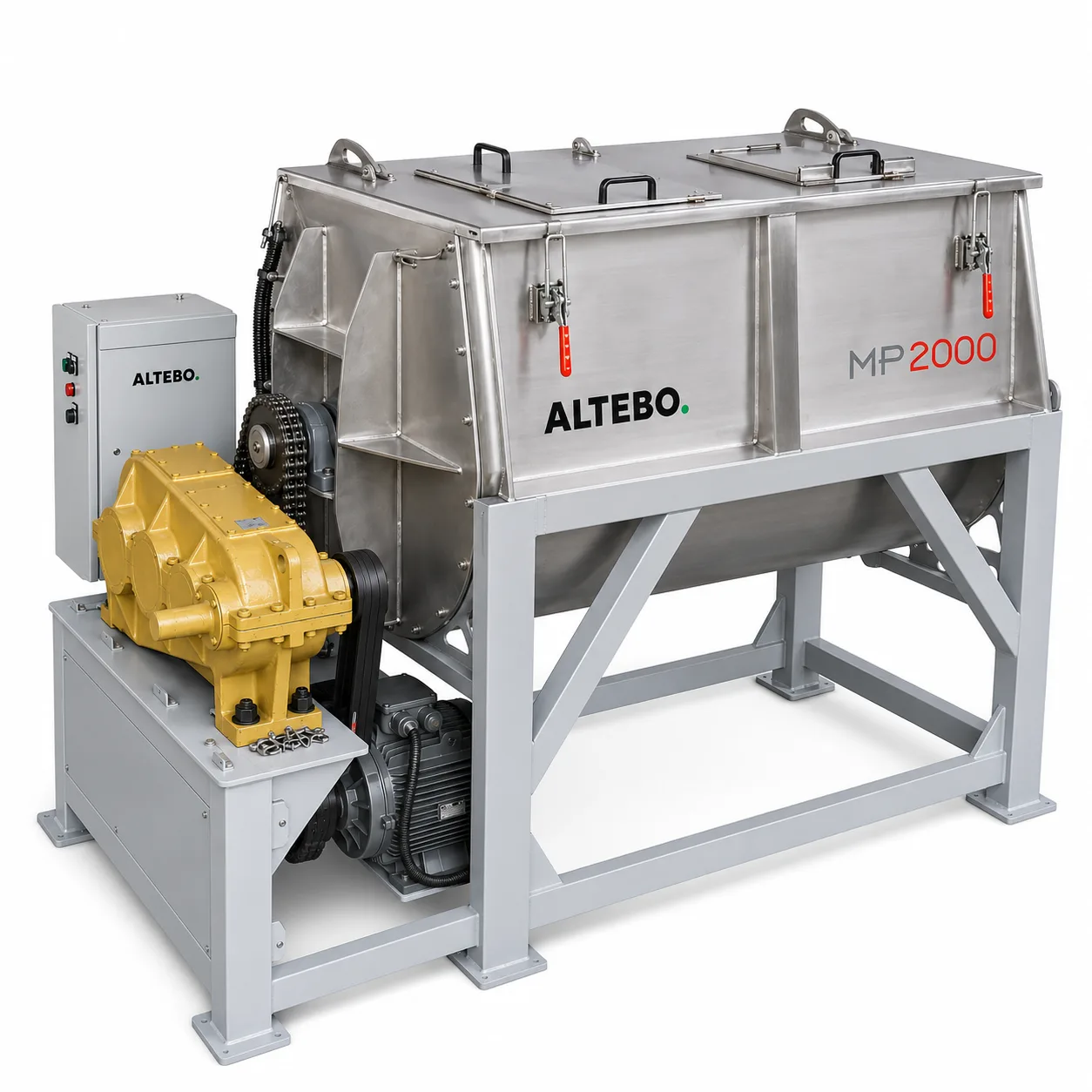
Ribbon blender
The reference machine for blending powders and granulates.
See the product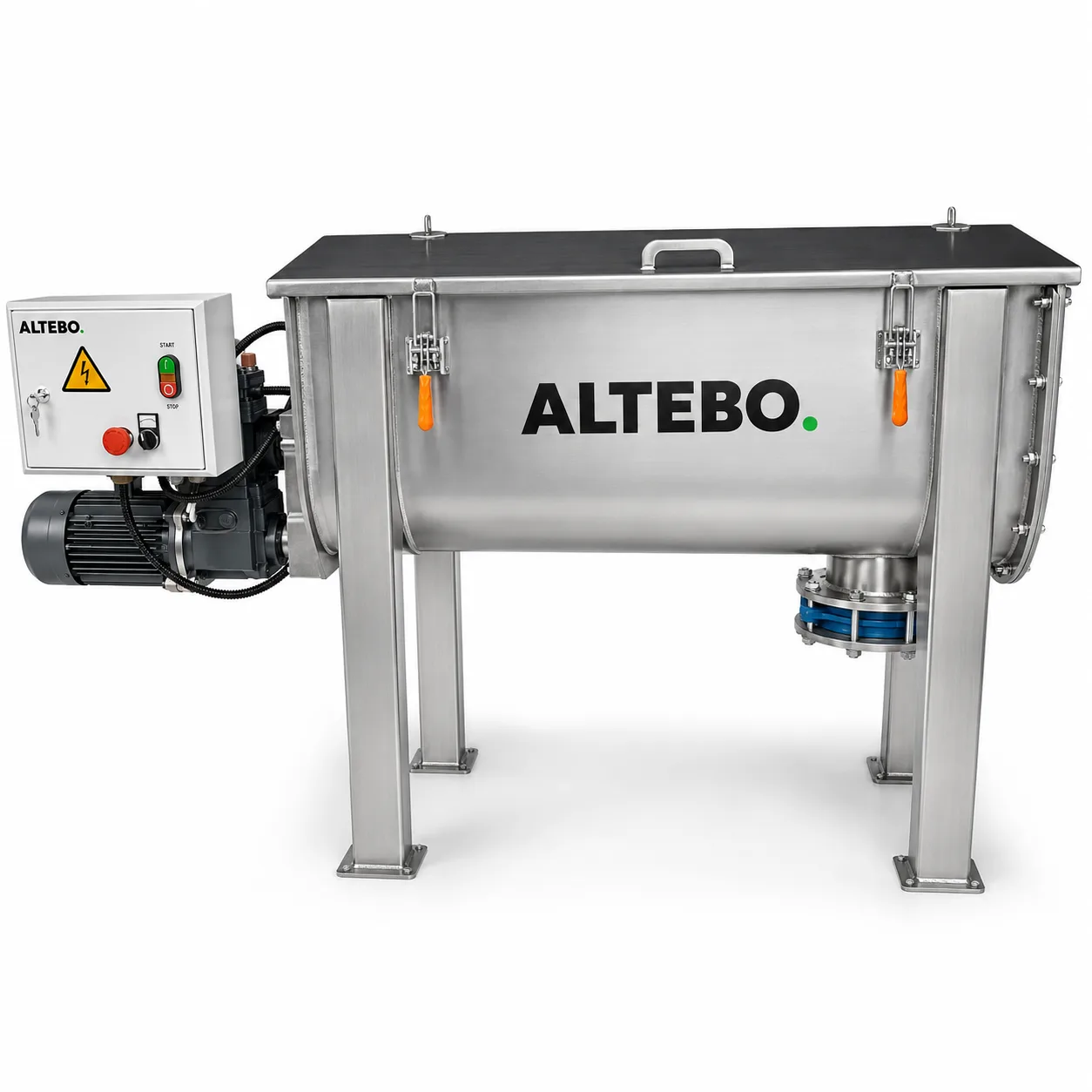
High-tonnage ribbon blender
Industrial batches at large capacity.
See the product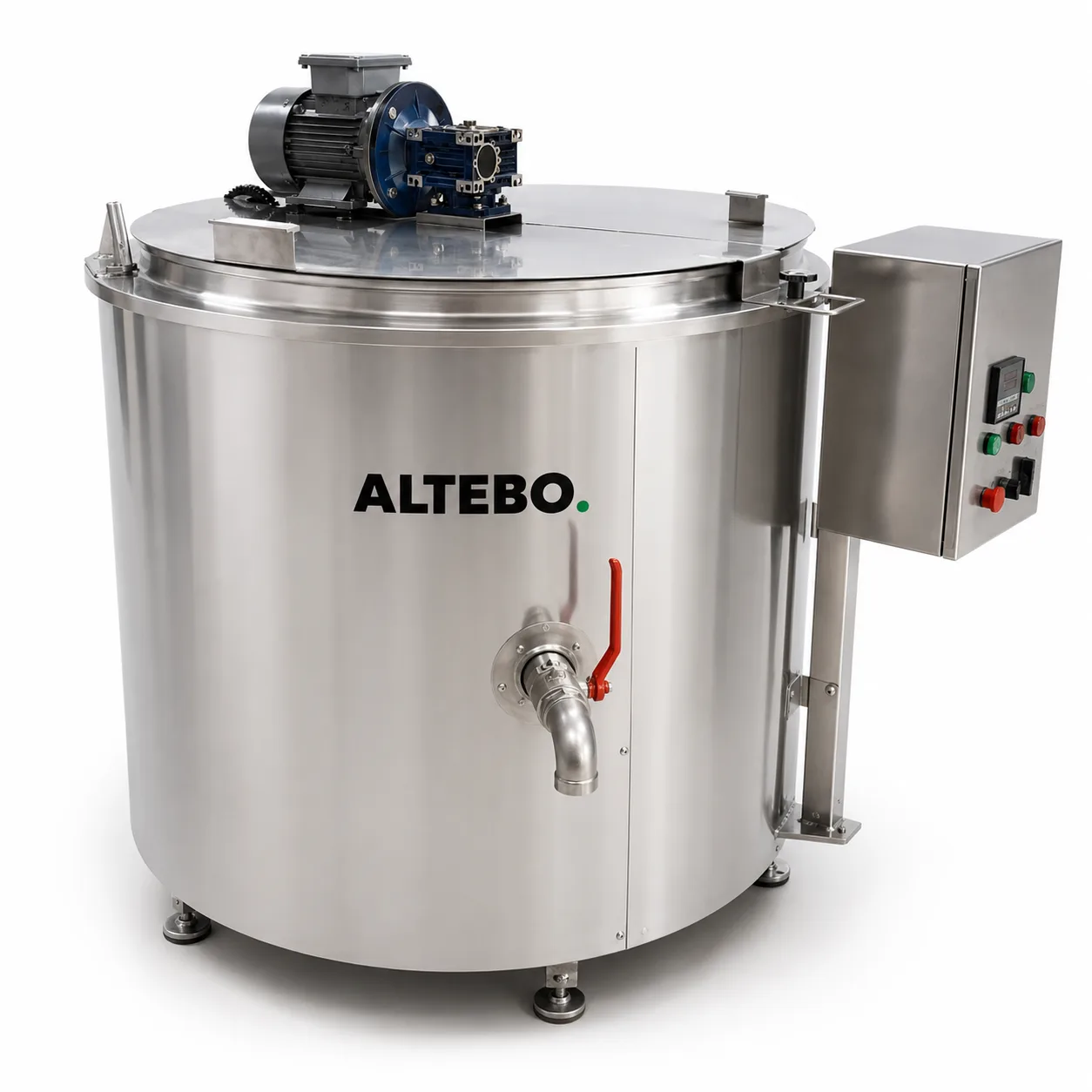
Jacketed reactor with agitator
A process vessel with controlled parameters.
See the product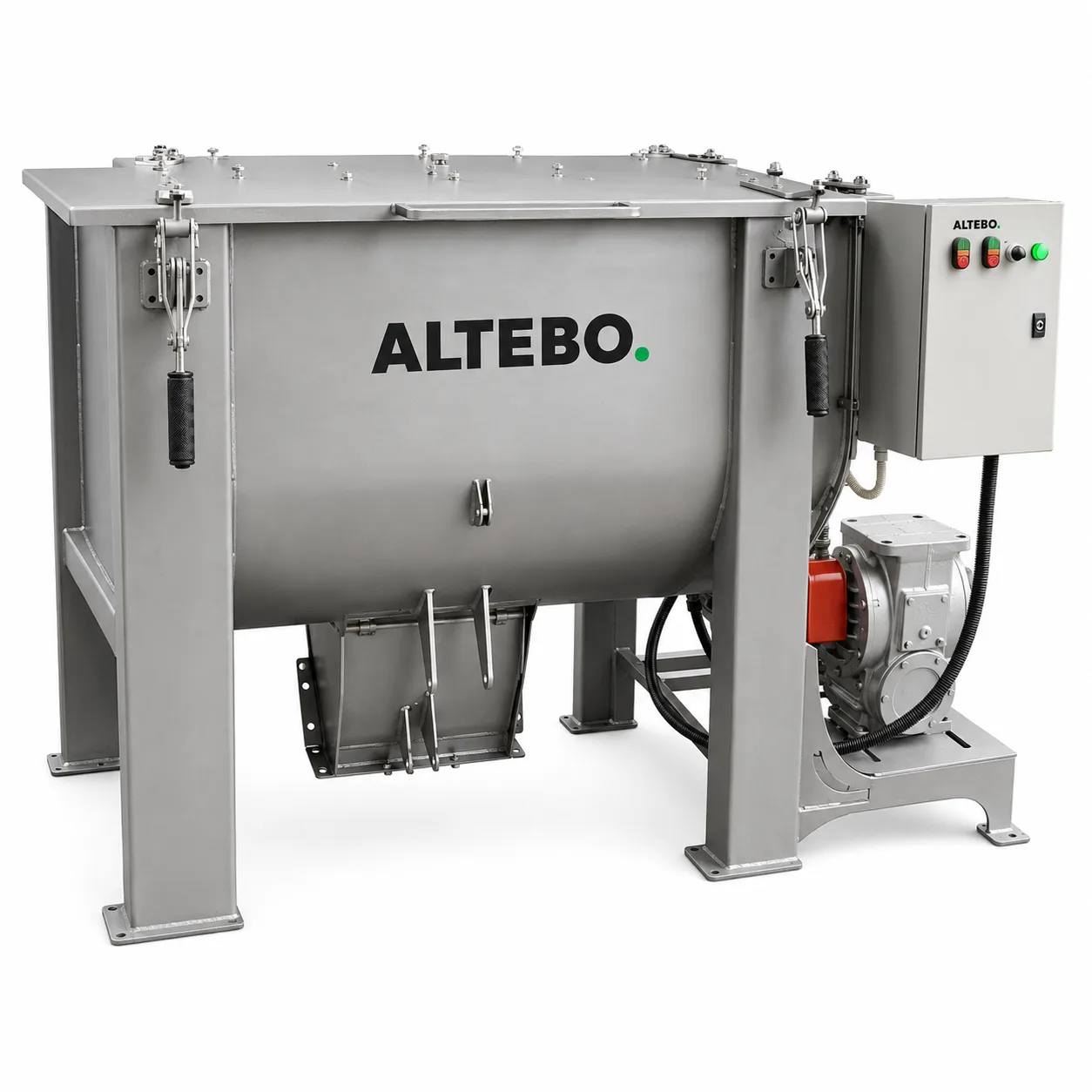
Paddle mixer
The all-rounder: powders, granulates, liquid additions.
See the product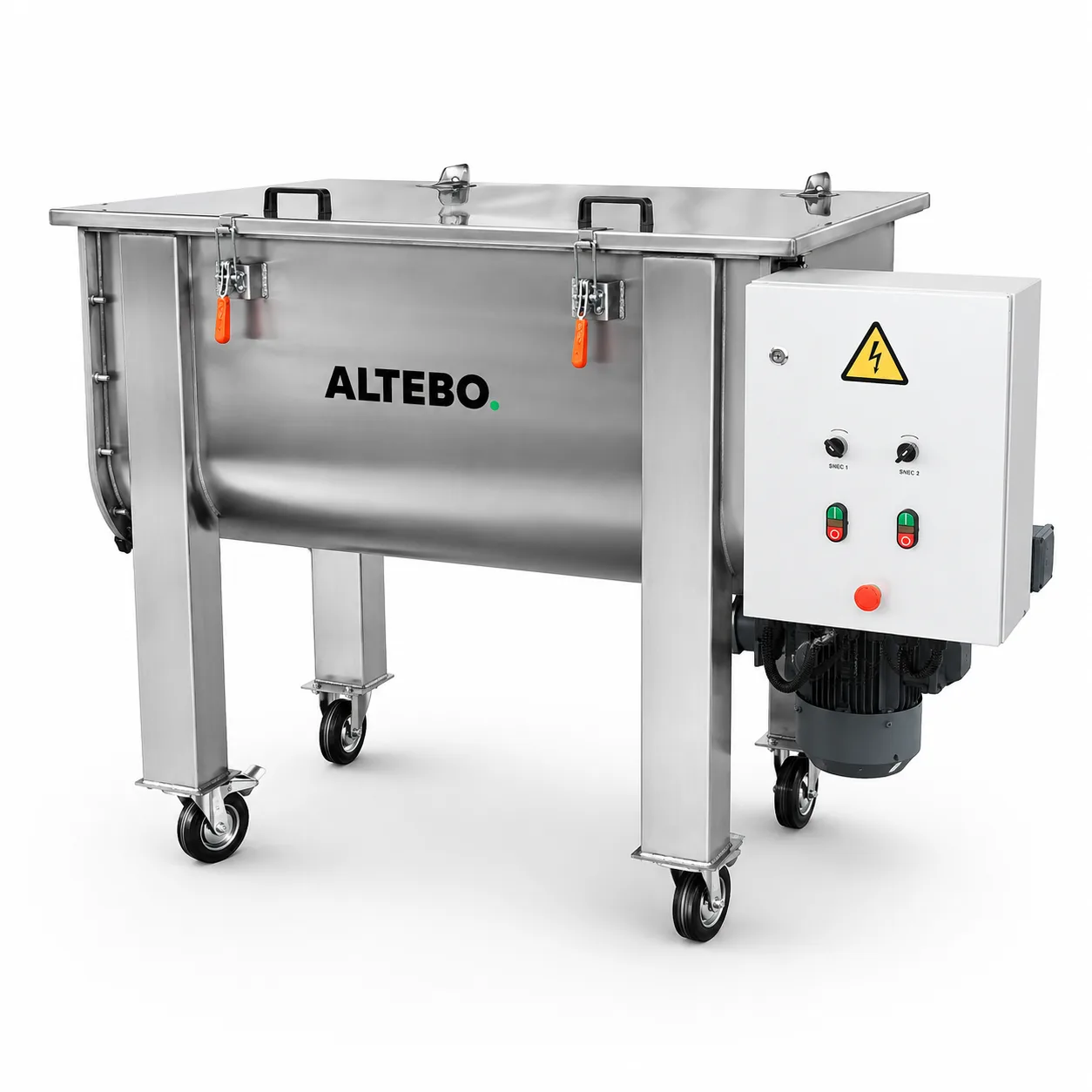
Twin-shaft mixer
The shortest mixing time per batch.
See the product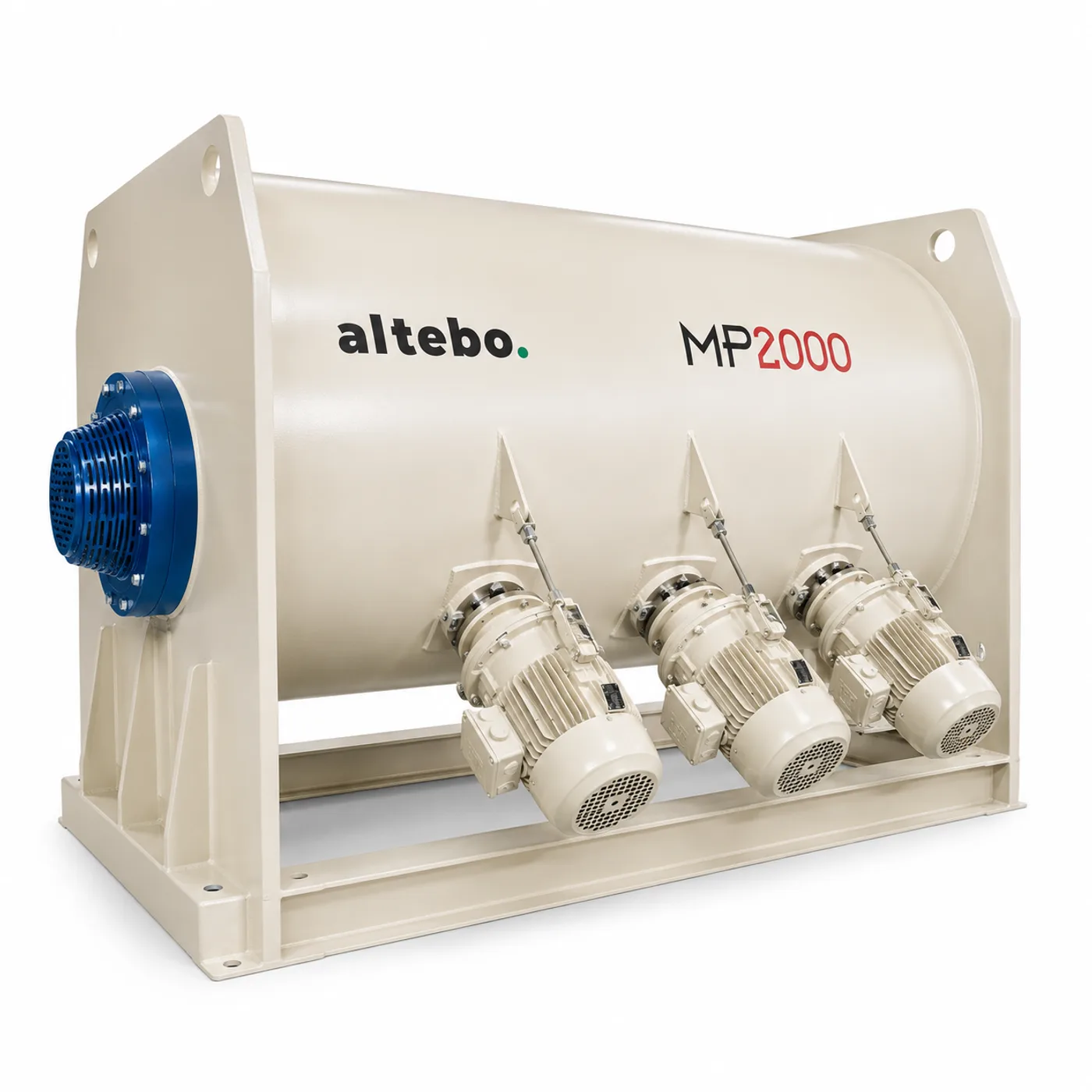
Ploughshare mixer
Mechanical fluidisation, precision homogenising.
See the product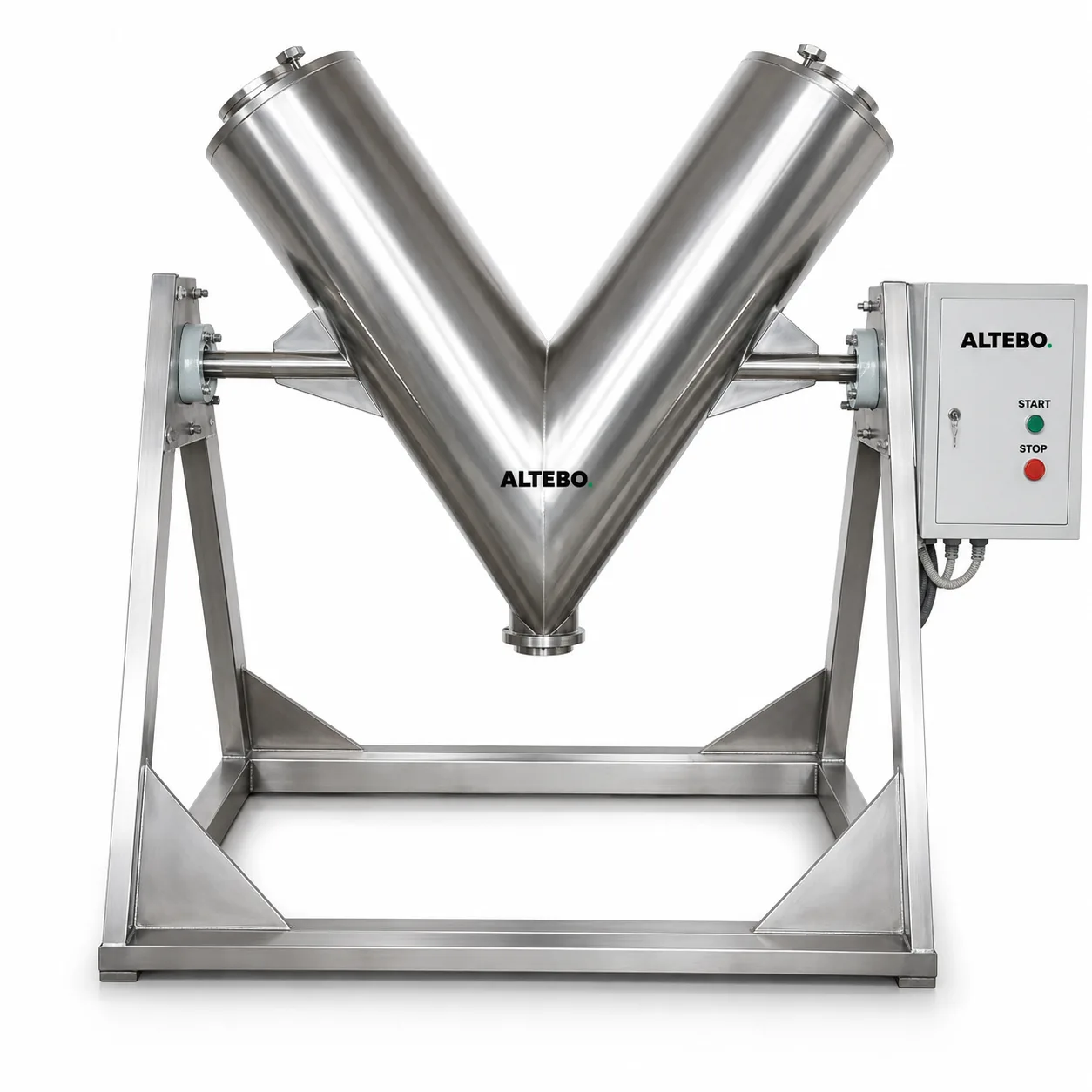
V-blender
Gravity blending for sensitive powders.
See the product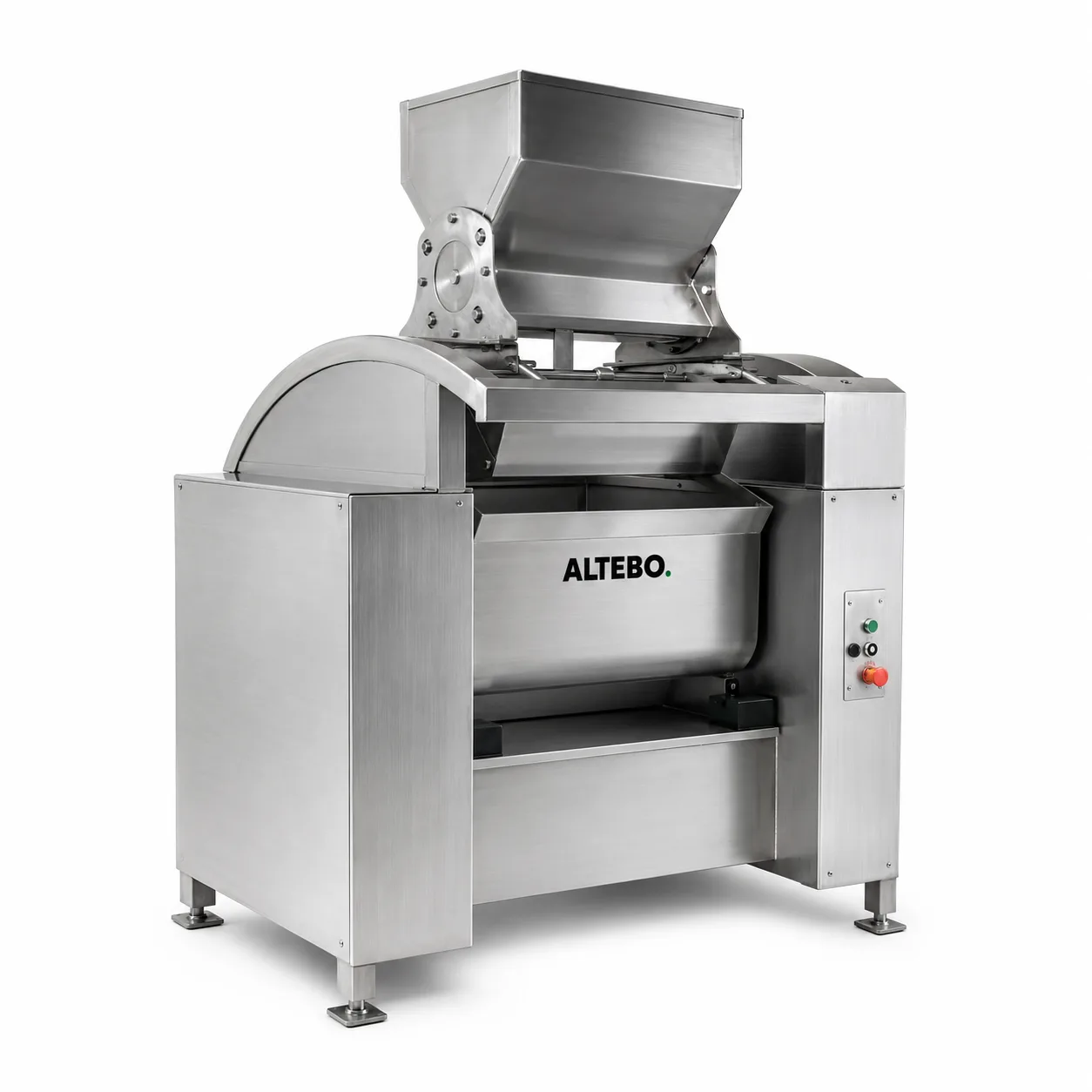
Z-blade mixer
Kneading for dense pastes and heavy doughs.
See the product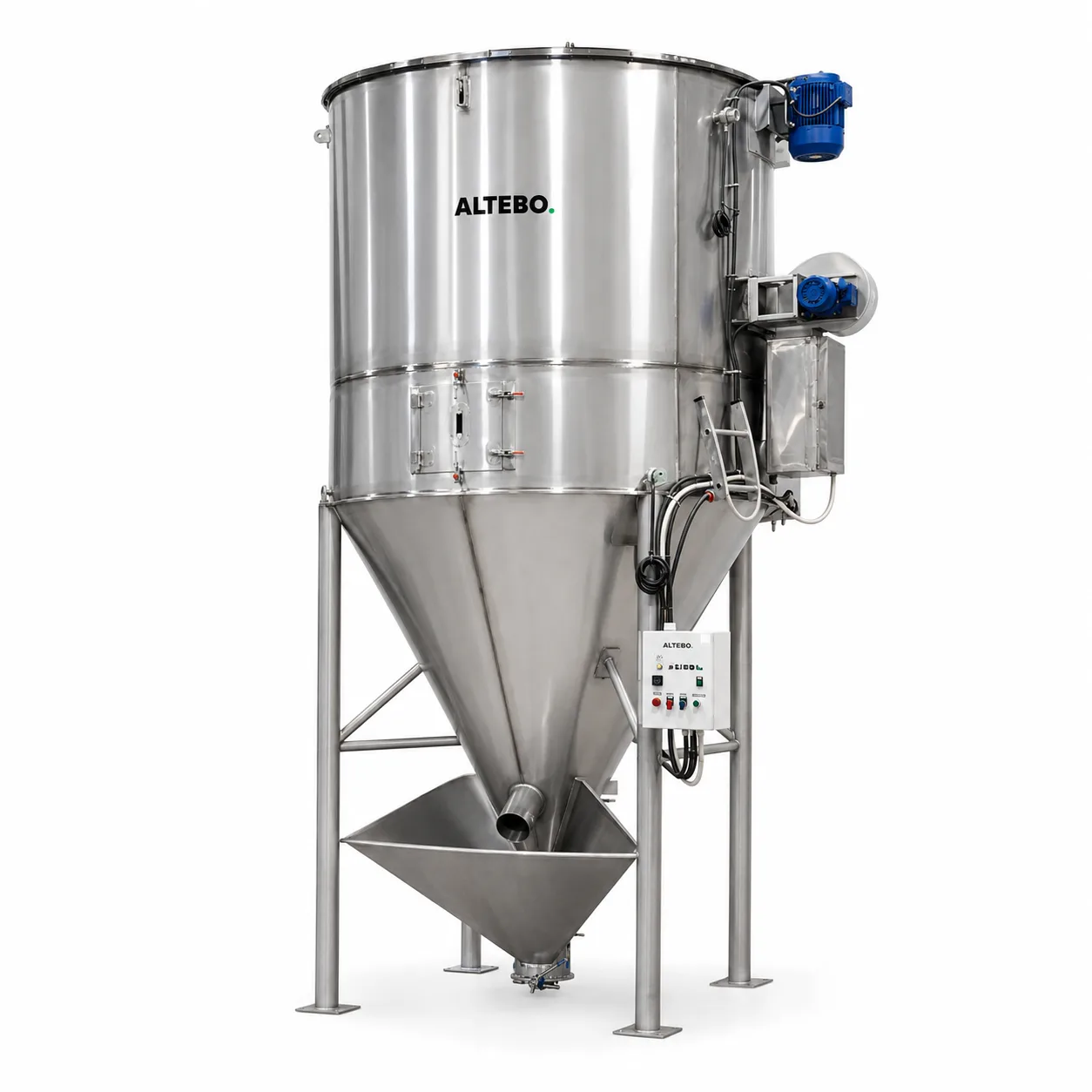
Vertical mixer with drying
Drying and homogenising for plastic granulate.
See the product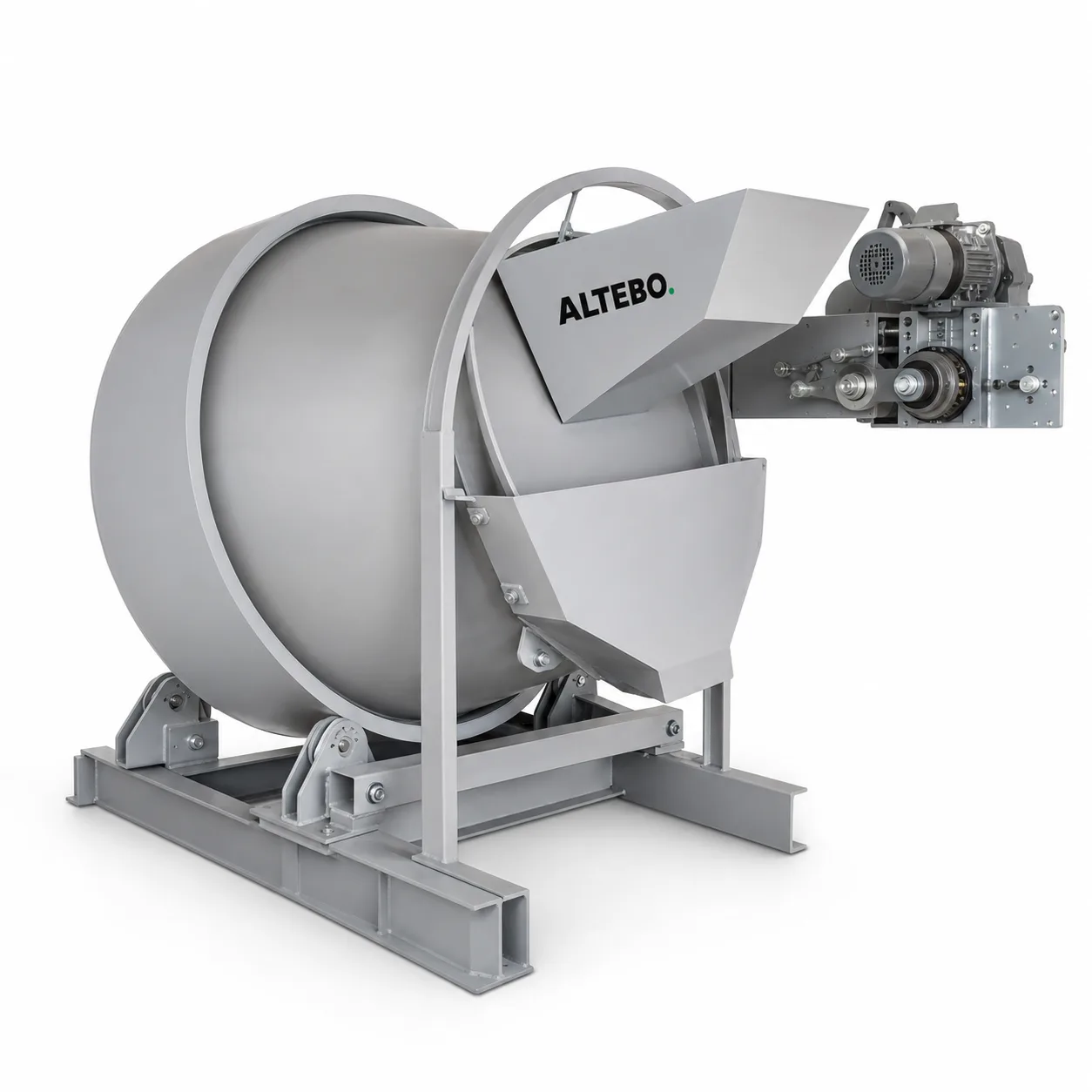
Rotating drum mixer
A rotating drum for abrasive compositions.
See the product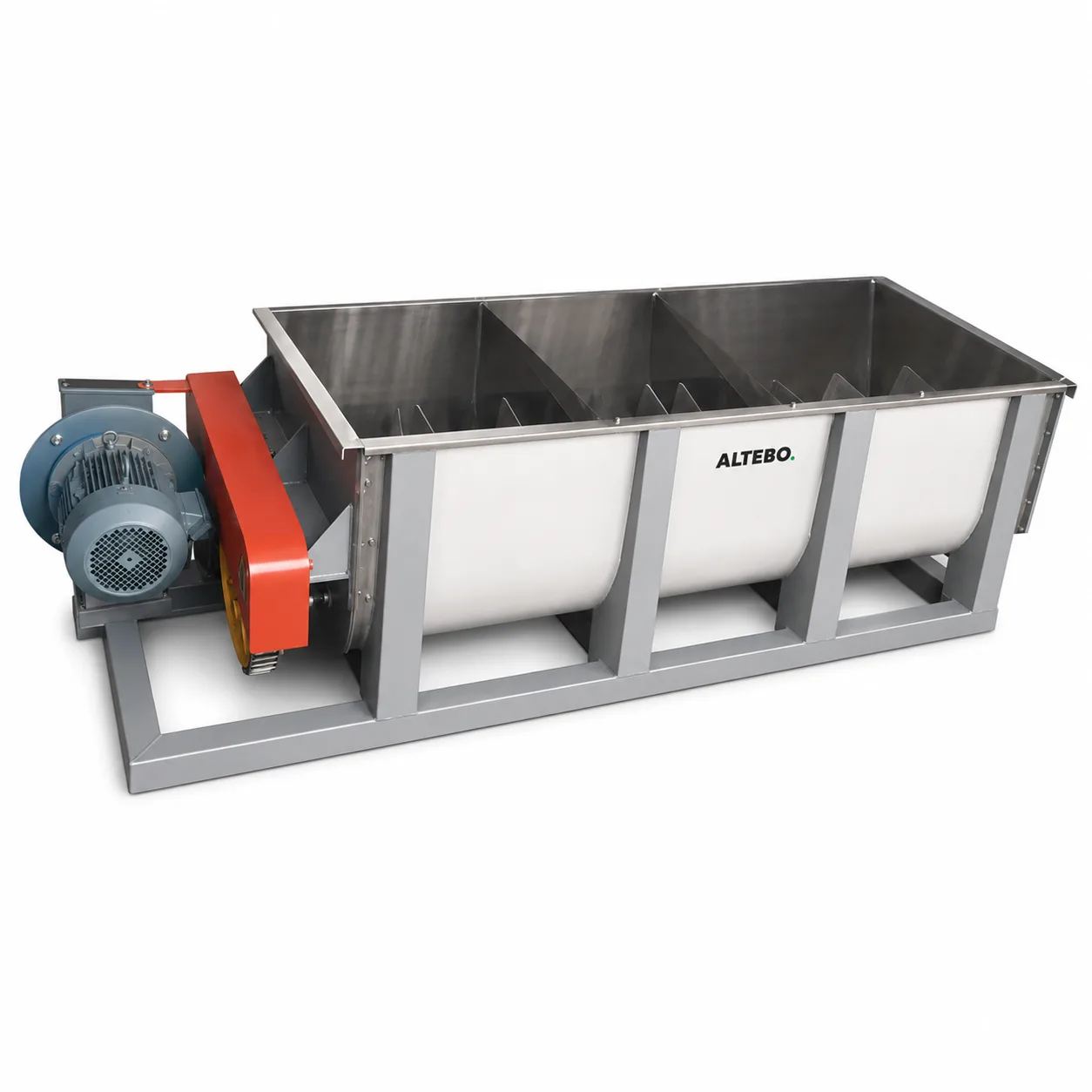
Pug mill mixer
Continuous mixing for clay and ceramic bodies.
See the product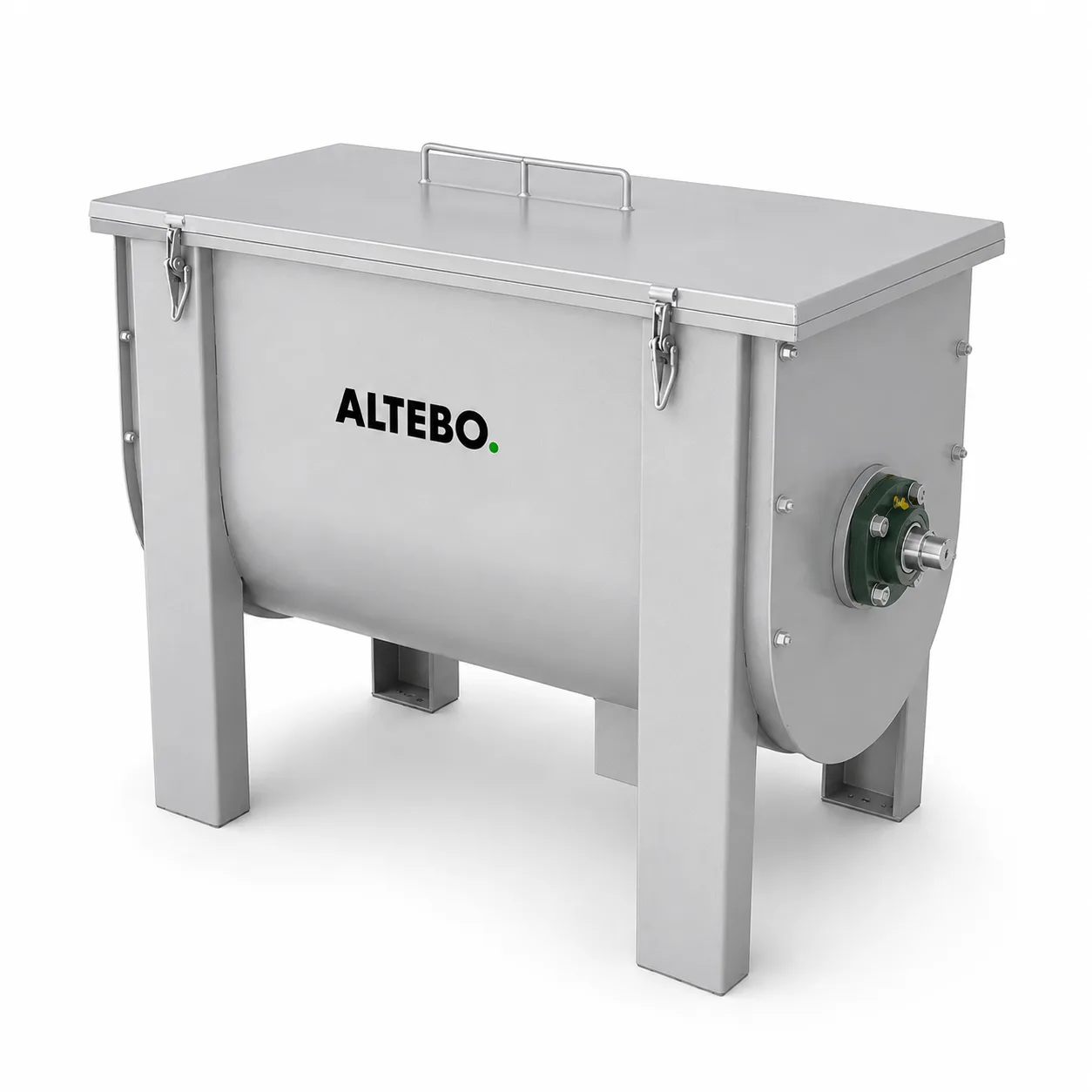
Animal feed mixer
Uniform rations, with premixes correctly distributed.
See the productApplications
Frequently asked questions about mixers
Which type of mixer do I need for my recipe?
It depends on three things: the consistency of the material, how different the densities of the components are, and how small the dosage of the smallest additive is. Dry free-flowing powders — ribbon blender. Additives under 1 % — ploughshare mixer. Dense pastes — Z-blades. Very short cycles — twin-shaft. Send us the recipe and we will recommend the type.
How long does it take to homogenise a batch?
The time depends on the number of components, the density difference between them and the particle size. The twin-shaft mixer is the fastest in the range, and the V-blender the gentlest on the product.
What degree of homogeneity does it reach?
Send us the recipe and we can state the homogeneity achievable for that particular composition.
304 or 316L stainless for the food industry?
AISI 304 covers most dry food applications. AISI 316L is specified when the product or the cleaning brings chlorides or acids — salt, brines, acidic flavourings, chlorine disinfectants — because the molybdenum in 316L resists pitting corrosion. For pharma we add polished surfaces with no retention pockets.
Can the recipe be weighed directly in the mixer?
Yes — the mixer is mounted on load cells and the components are weighed straight into the trough, with a report for every batch. That removes the need for a separate weighing hopper upstream.
Can I add liquids over the dry phase?
Yes, through spray nozzles fitted in the cover. For recipes where the liquid creates agglomerates, independently driven chopper blades are added to break up the lumps during mixing.
Do you deliver and install across Europe?
Yes. The Tomești plant is in Romania, inside the EU single market, so deliveries within the Union involve no customs and no import duty.
What is the lead time?
We normally send the technical proposal and the price within 48 hours of receiving your process description.
Mixer projects
 Construction materials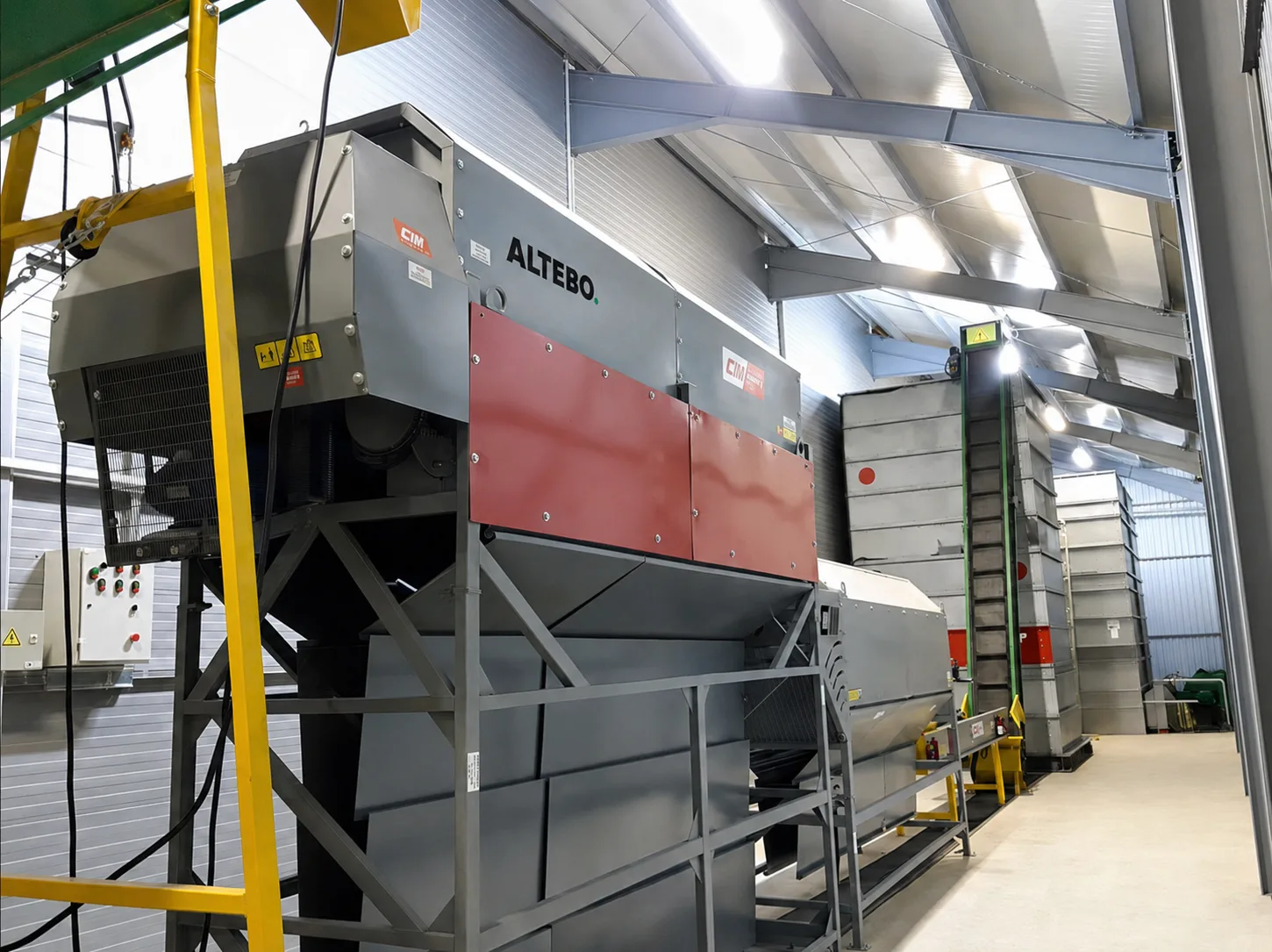
Ploughshare mixer for construction materials
A ploughshare mixer for blending construction materials — homogenising by mechanical fluidisation, at the throughput of a high-capacity industrial line.
See the project Fertiliser production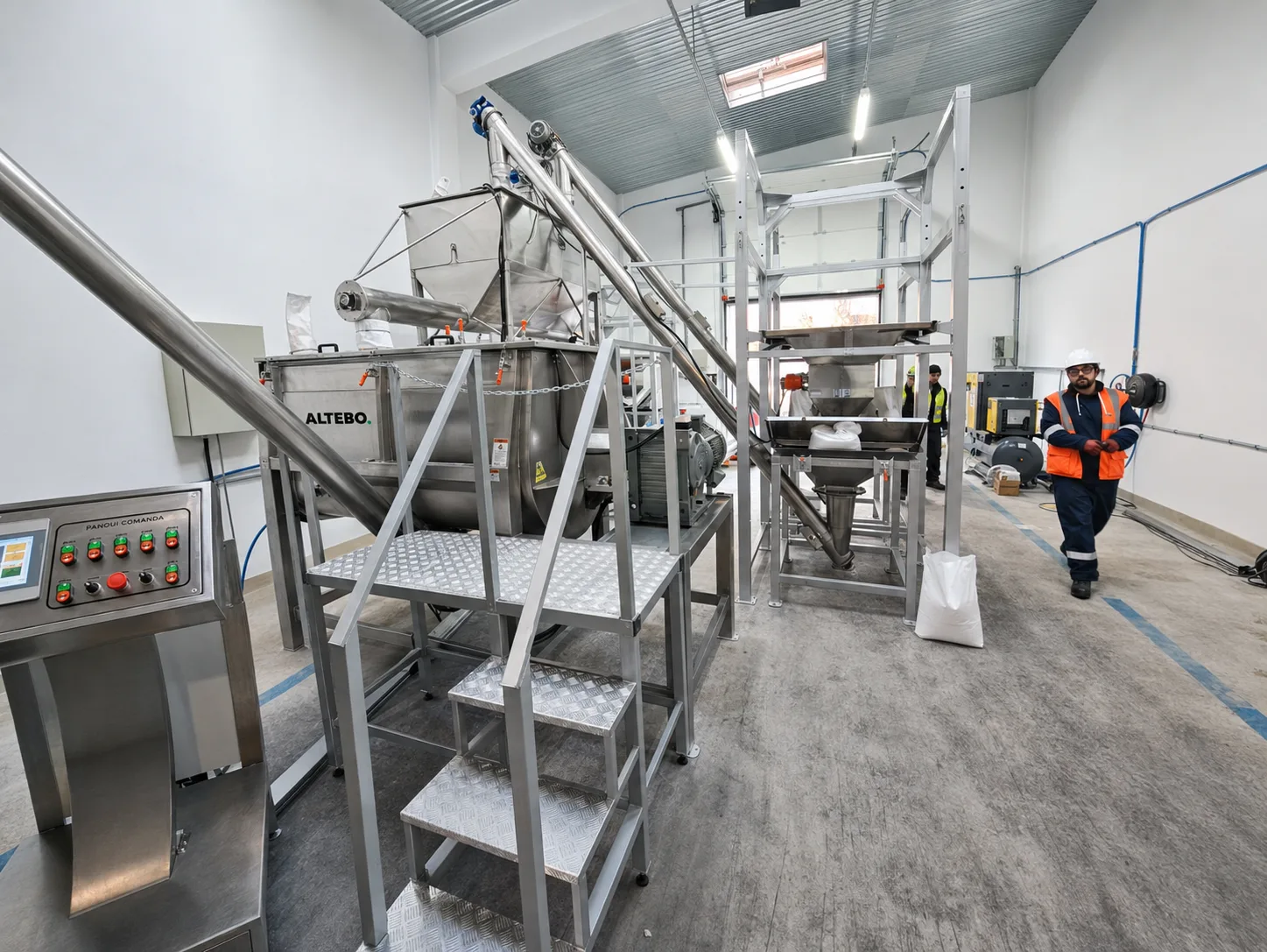
3,000-litre rotating mixers for fertiliser production
Rotating mixers with a capacity of 3,000 litres for fertiliser production, built for corrosive media and continuous running — chemically resistant materials and drives sized for permanent industrial duty.
See the project