Industrial mixers
Rotating drum mixer
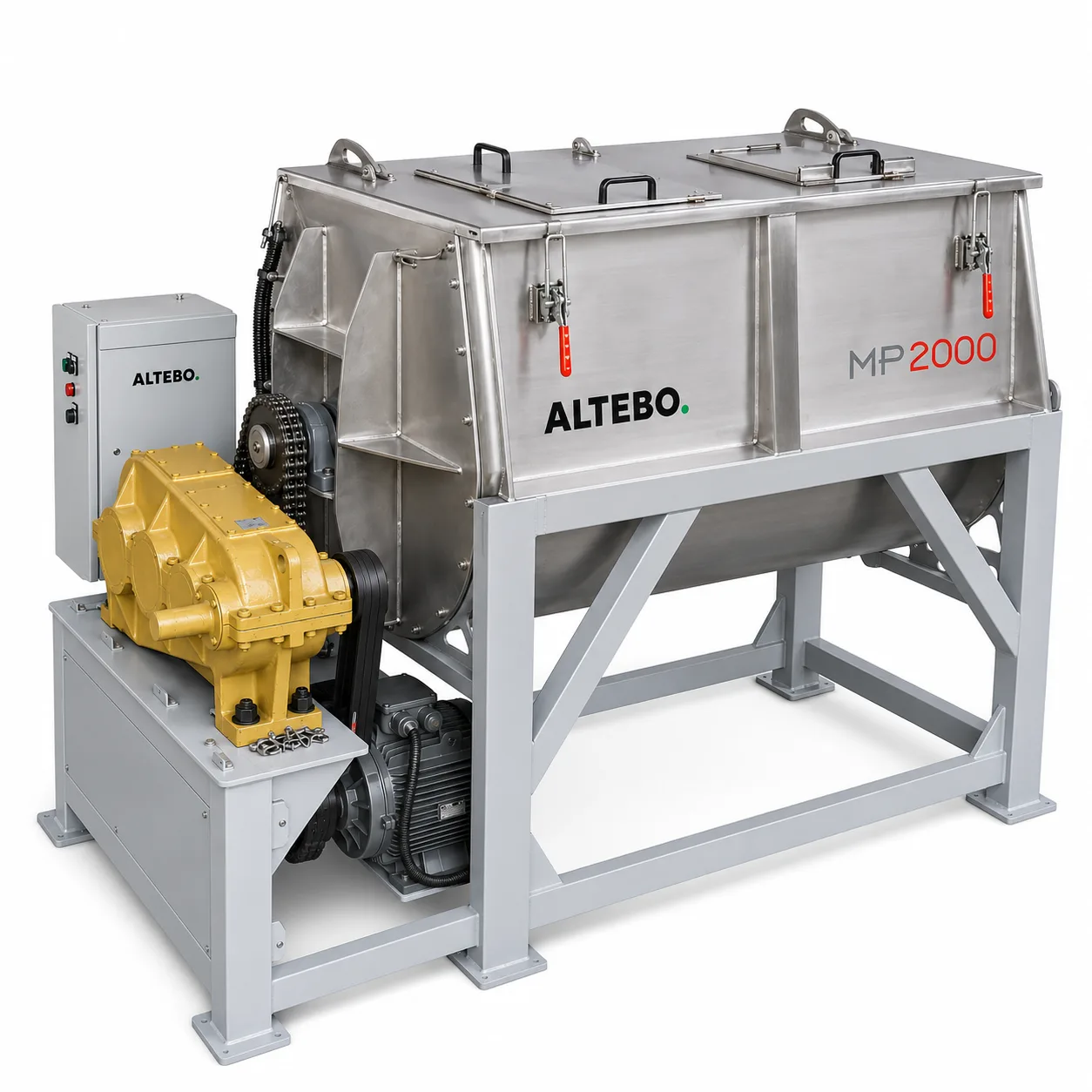
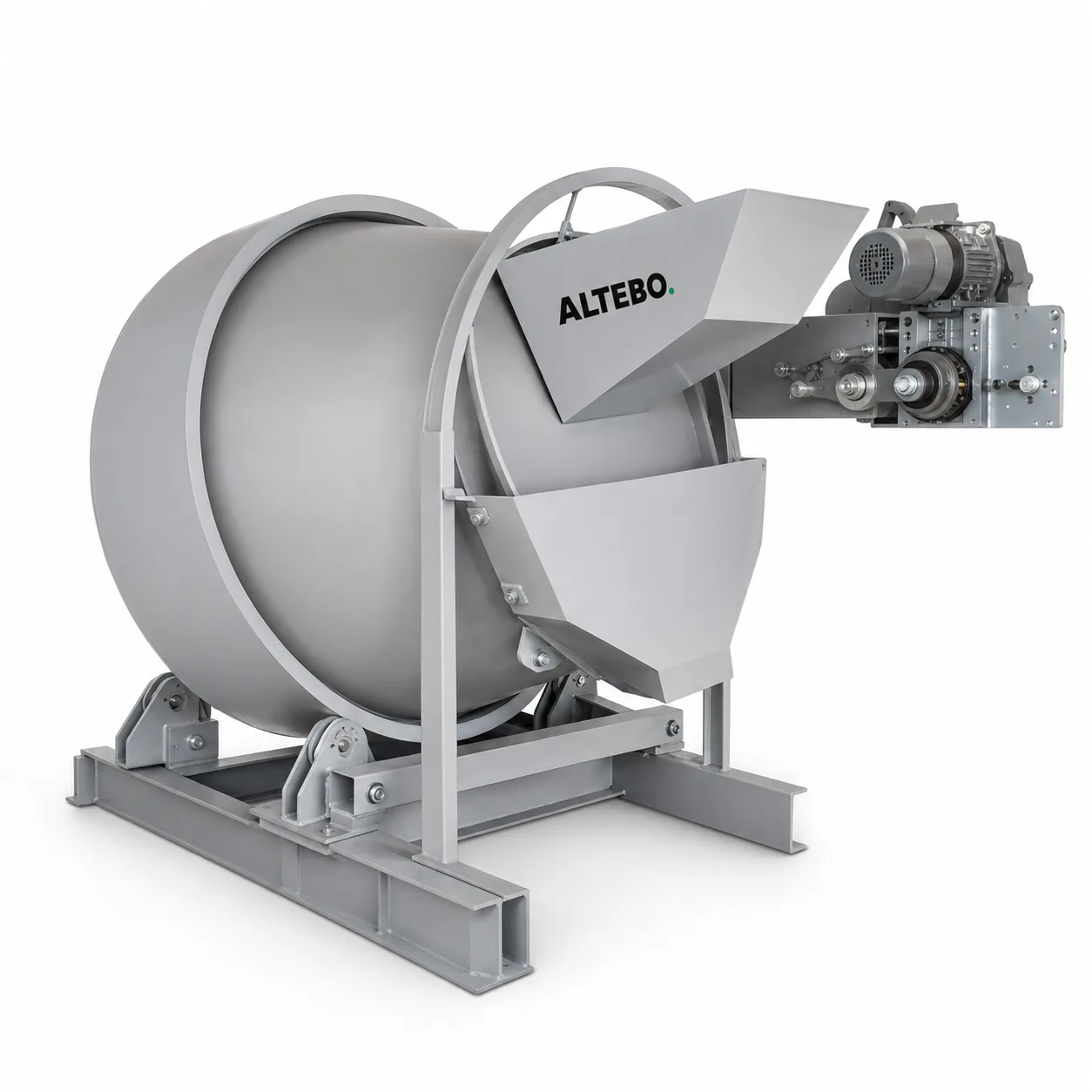
Rotating drum mixer in wear-resistant steel for concrete, mortar, screeds and raw ceramic bodies — production plants and precast workshops. Built routinely from 250 to 3,000 L per batch.
Also known as: drum mixer · industrial concrete mixer · tumbling drum mixer
Individually sized on your material and your process. Technical proposal and price normally within 48 hours. Delivery across the EU and the Republic of Moldova.
How it works
The rotating drum mixer is intended for the heavy, abrasive compositions of the construction industry: concrete, mortar, screeds, mixes for precast elements and raw ceramic bodies. Its simple, robust construction makes it suitable for intensive duty in production plants and precast workshops.
Mixing is achieved by continuous rotation of the drum, fitted internally with helical paddles: the material is lifted by the paddles and falls by gravity through the mass of the mix, a cycle repeated until homogeneity is reached. Discharge is by tilting the drum or by reversing the direction of rotation, depending on the version.
The drum and paddles are built in wear-resistant treated steel, and the ring-gear-and-pinion drive is sized for repeated starts under load. The control provides adjustable mixing time, and the mechanical guards and emergency stop cover the safety requirements for site work.
Drum with helical paddles
Lifting and gravity fall — homogenising of heavy compositions.
Wear-resistant steel
Resistant to abrasion from aggregates, cement and sand.
Ring gear and pinion drive
Sized for repeated starts with a full drum.
Simple operation
Adjustable mixing time, minimal maintenance, emergency stop.
When to choose it
The concrete situations in which this machine is the right answer — and the one in which we would point you to something else in our range.
You mix compositions with abrasive aggregates — concrete, mortar, screeds — which would rapidly wear out a stainless ribbon or paddle mixer.
You need a machine with minimal maintenance, working intensively in a production plant or a precast workshop.
Batches follow one another quickly and the machine restarts frequently under load — the ring gear and pinion drive is sized for that.
You produce precast elements and need a homogeneous mix, with no hygiene or sanitary finish requirements.
When this is NOT the right machine
If the line requires simultaneous feeding and discharge at a constant rate, a batch machine limits your capacity.
See Continuous twin-shaft mixer