Sales +31 6 1112 8662WhatsApp
ALTEBO.
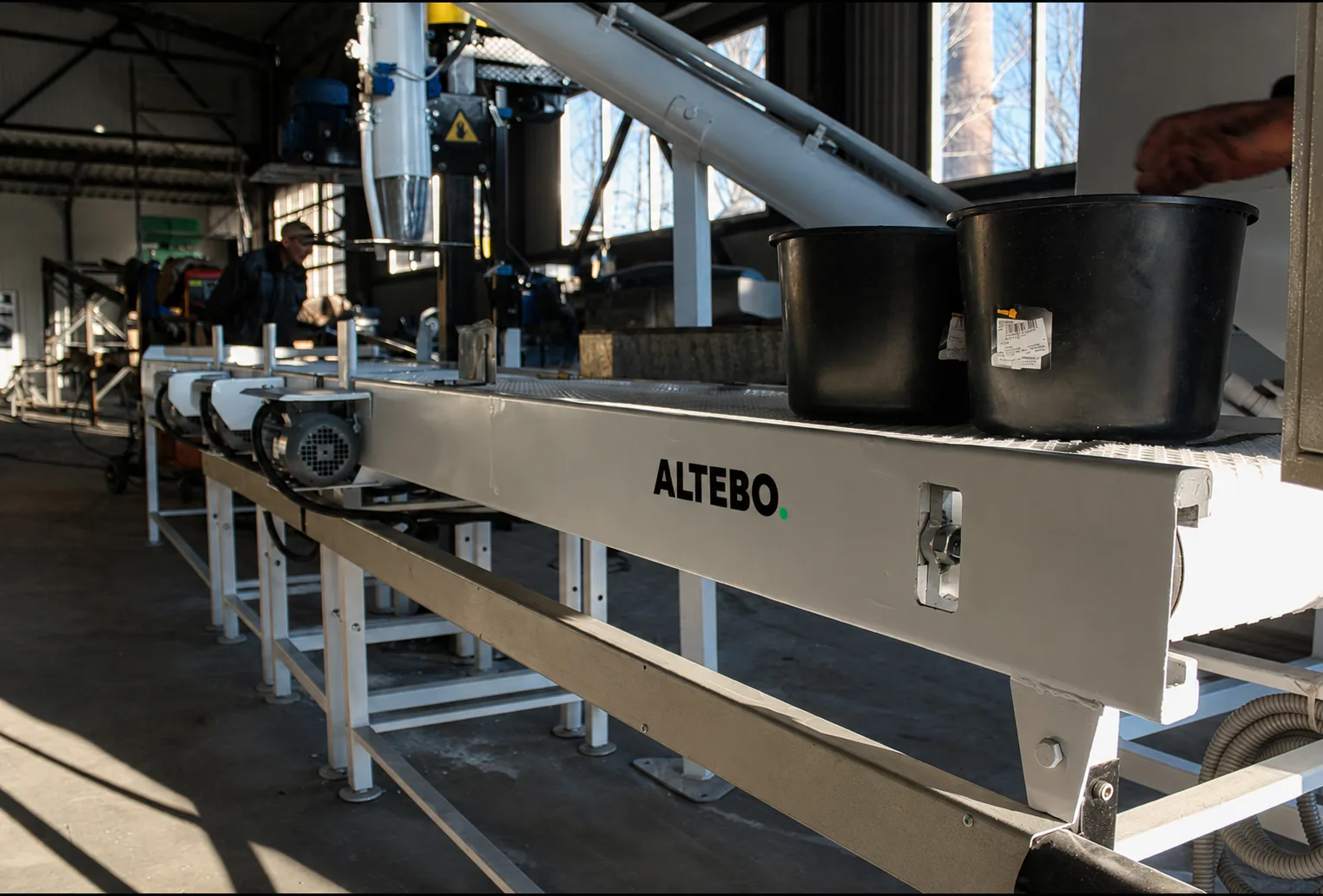
Belt conveyor — built by Altebo

Conveyors and bucket elevators

Belt conveyor

Belt conveyor for the material flow inside a plant — routes sized on the throughput of the line, with supporting structures built to the geometry of the building. Supplied to ceramic block plants and to the paper and packaging industry.

Also known as: conveyor belt · belt conveyor system · transfer conveyor

routes built to ordersupplied in ceramics and paper

Individually sized on your material and your process. Technical proposal and price normally within 48 hours. Delivery across the EU and the Republic of Moldova.

How it works

The belt conveyor moves materials horizontally or on a shallow incline, in the continuous flow of a plant. Unlike a screw, a belt handles material in lumps, packaged products and parts, not only powdered bulk — which is why it is the usual machine between production stages.

In a plant that is running, the difficult part is not the belt but the integration: the route has to pass between the existing machines, the supporting structure has to bear on the geometry of the building, and the throughput has to match the pace of the downstream machine. We build all of it to order, on your plant layout.

We have supplied routes of this kind for a ceramic block plant and for a paper and packaging mill, in both cases integrated into installations that were already in place.

Route sized on throughput

Belt width and speed chosen for the real pace of the line.

Structures to order

Support frames built to the geometry of the existing building.

Integration without a long shutdown

Connects to the machines in the plant rather than replacing them.

Guarding included

Guards, emergency stops and safety accessories along the route.

When to choose it

The concrete situations in which this machine is the right answer — and the one in which we would point you to something else in our range.

  • You convey material in lumps, packaged products or parts — a screw cannot handle them, a belt can.

  • The route is long and horizontal or on a shallow incline, and the material does not have to be sealed in.

  • You need the new machine to fit into a plant that is running, without replacing the existing installations.

  • You want visual access to the material along the route, for inspection or manual sorting.

When this is NOT the right machine

If you convey fine powder that must not reach the hall atmosphere, an open belt is the wrong choice — dust rises along the whole route.

See Screw conveyor
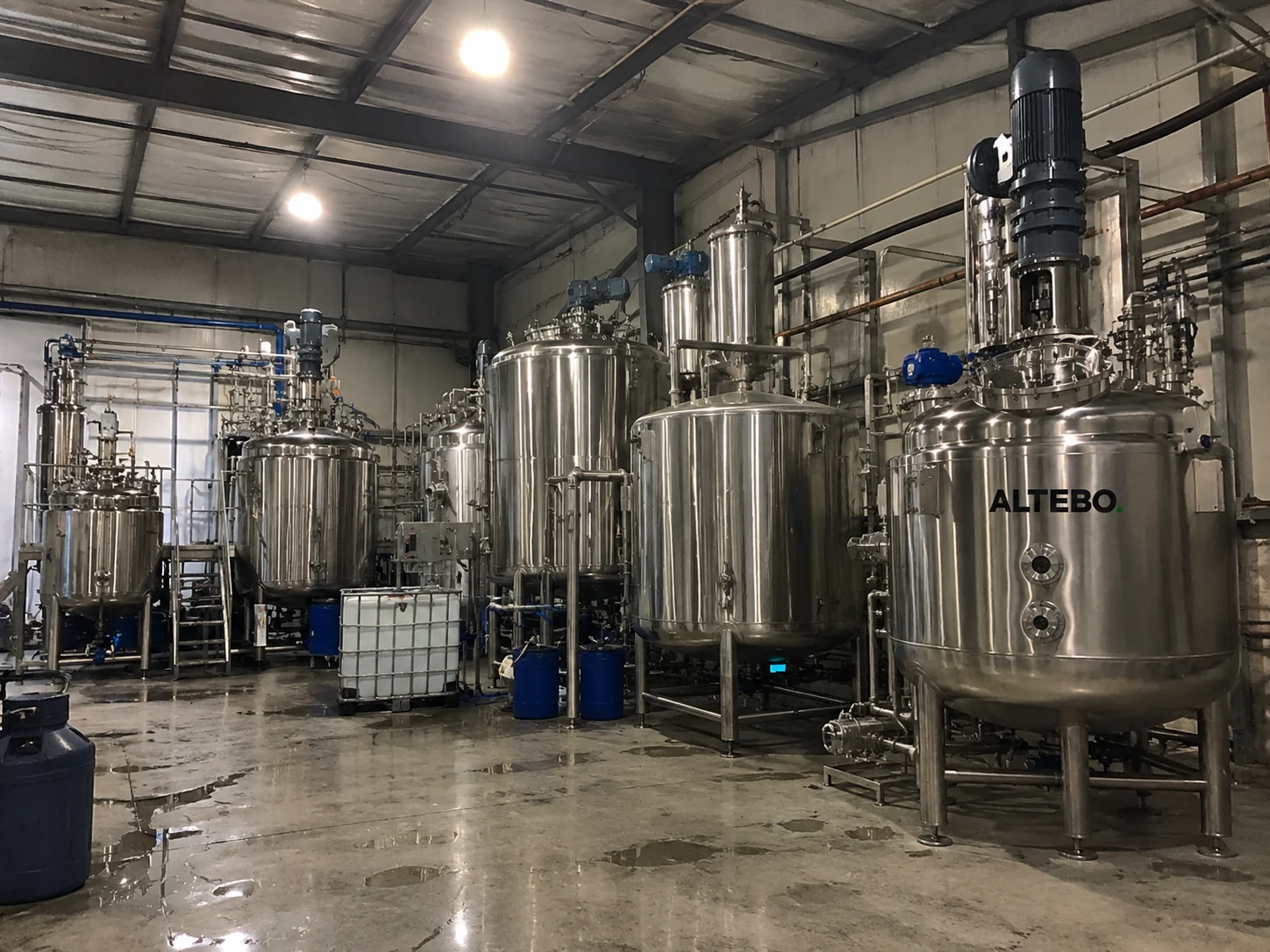
Line of stainless steel reactors and process vessels built by Altebo in its own production hall

Own production

Built entirely in our own plants

Cutting, welding, machining, assembly, testing and automation — the whole chain runs in our plants in Tomești (Iași county) and Bălți. Nothing is subcontracted.

Specifications

The ranges we build routinely. Final dimensions and installed power follow from the density and viscosity of the product, the batch size and the process conditions.

Build variants

What actually changes between them — not just what they are called.

Plain belt, horizontal

The usual version for straight runs between machines.

Cleated belt, inclined

Transverse cleats hold the material back on the climb. Chosen when the route has a gradient and the material would slide back on a plain belt.

Belt with sidewalls

Side walls on the belt, for fine material that would spill over the edges.

Z-belt

A stepped route — horizontal, climb, then horizontal again. Used to feed a machine positioned higher up, when there is no room for a long ramp.

Where it is used

The industries we build this machine for — each with its own execution requirements.

Frequently asked questions

Question not answered here? Write to us — an engineer replies, not a bot.

What throughput can a belt conveyor sustain?

Throughput is set by belt width, belt speed and the type of material. See the rows in the specification table. When sizing, we start from the pace of the downstream machine, not from a theoretical rate.

What is the maximum incline?

It depends on the belt type: a plain belt has a limit above which the material slides back, whereas a cleated belt climbs much more steeply.

Can it be installed in a working plant, without a long shutdown?

Yes — that is what we normally do: the routes are built to fit into the existing installations, on the geometry of the building. Installation time depends on the complexity of the route.

Belt or screw — how do I choose?

A belt for material in lumps, packaged products, parts and long routes where dust does not matter. A screw for powders and granulates that have to stay in a closed circuit, with no emissions. If the material is powdered and the hall has to stay clean, choose the screw.

Do you deliver and install in the Republic of Moldova?

Yes. We have a production plant in Bălți and we provide delivery, installation, commissioning and service in both Romania and the Republic of Moldova.

Typical applications

Other machines in conveyors and bucket elevators

Need a version adapted to your process?

Describe the material, the batch size and the process conditions — we size the equipment exactly on the application.