Floor-standing single-door panel
For one machine or a small equipment group.
A single-door floor-standing enclosure covers the majority of machine-level control: the drives, the protection, the contactors and a small PLC for one machine or a tightly grouped set of them.
It is the size at which internal layout starts to matter. Power and control are separated, wiring is routed so a fault can be followed rather than guessed at, and the door carries only what an operator actually needs to reach.
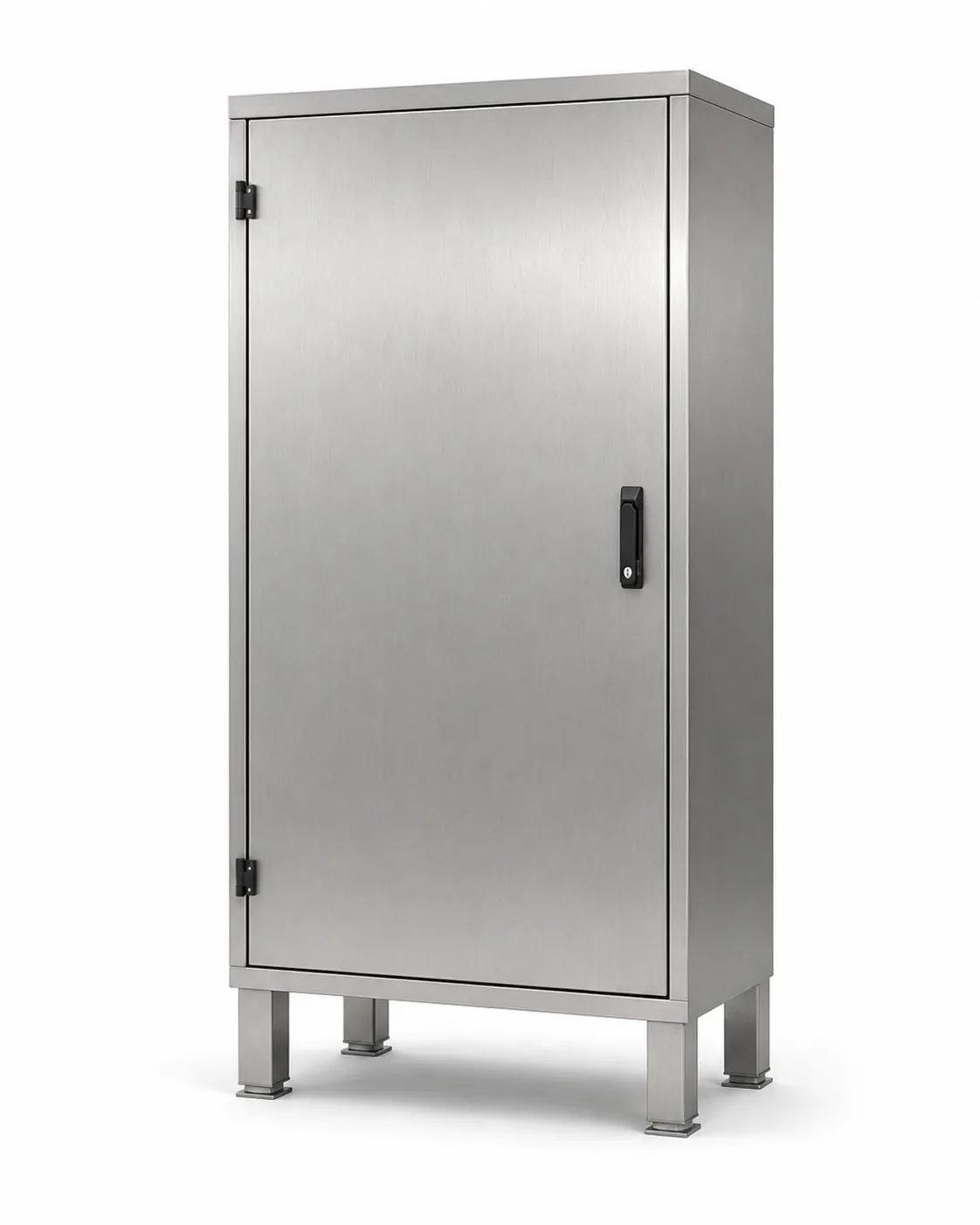
Why it stands on feet
Adjustable feet do two things a plinth does not: they keep the base of the enclosure clear of a floor that gets hosed down, and they let the cabinet be levelled on a surface that is never as flat as the drawing assumed. On a wash-down floor, a cabinet sitting directly on the concrete corrodes from the bottom edge upwards.
When to choose this size
The situations this panel is the right answer for — and the one where we would point you to a different size.
One machine, or a small group of machines controlled together.
Drives, protection and a small PLC — more than a wall panel holds, less than a bay needs.
A wash-down floor, where the enclosure base has to stay clear of standing water.
An uneven or sloping floor that has to be compensated at installation.
When a different size fits better
When the internal layout can no longer be organised in functional zones without stacking components on top of each other, the answer is width rather than height — a double-door enclosure.
Double-door panelSpecifications
Common to every panel we build. Enclosure size, component selection and control architecture are set from your process data.
| Enclosure material | Stainless steel · painted steel |
|---|---|
| Build | Enclosure fabricated, wired, programmed and tested in our own plant |
| Protection rating | Specified per project |
| Control architecture | Hardwired · PLC-based · distributed with remote I/O |
| PLC / HMI platforms | Specified per project |
| Fieldbus protocols | Specified per project |
| Supply voltage | Specified per project |
| Testing before dispatch | Functional test with the panel powered and the sequences exercised |
| Documentation | Specified per project |
| Installation | Delivered, installed and commissioned at your site |
The rest of the range
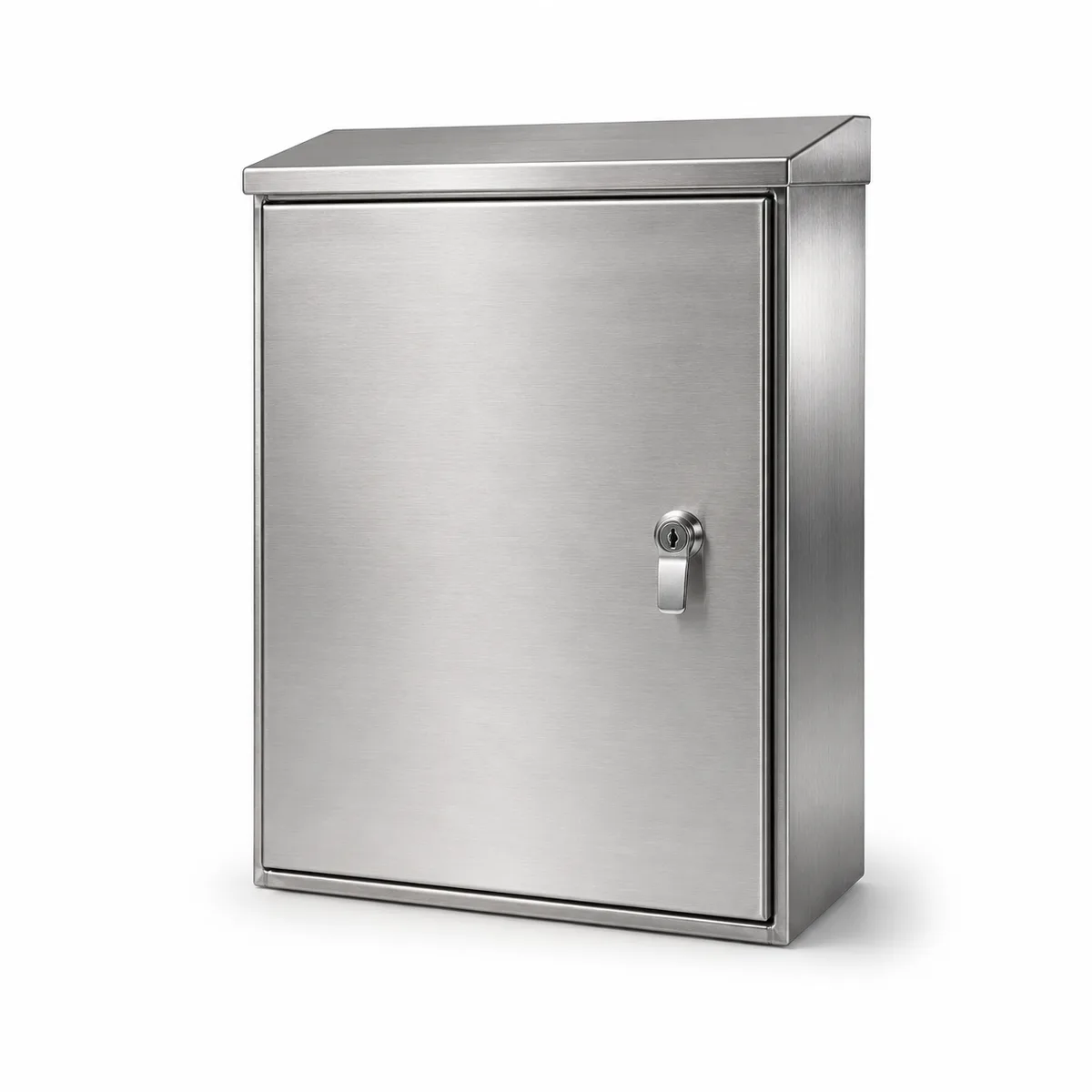
Compact wall-mounted panel
For a single machine or a local control point.
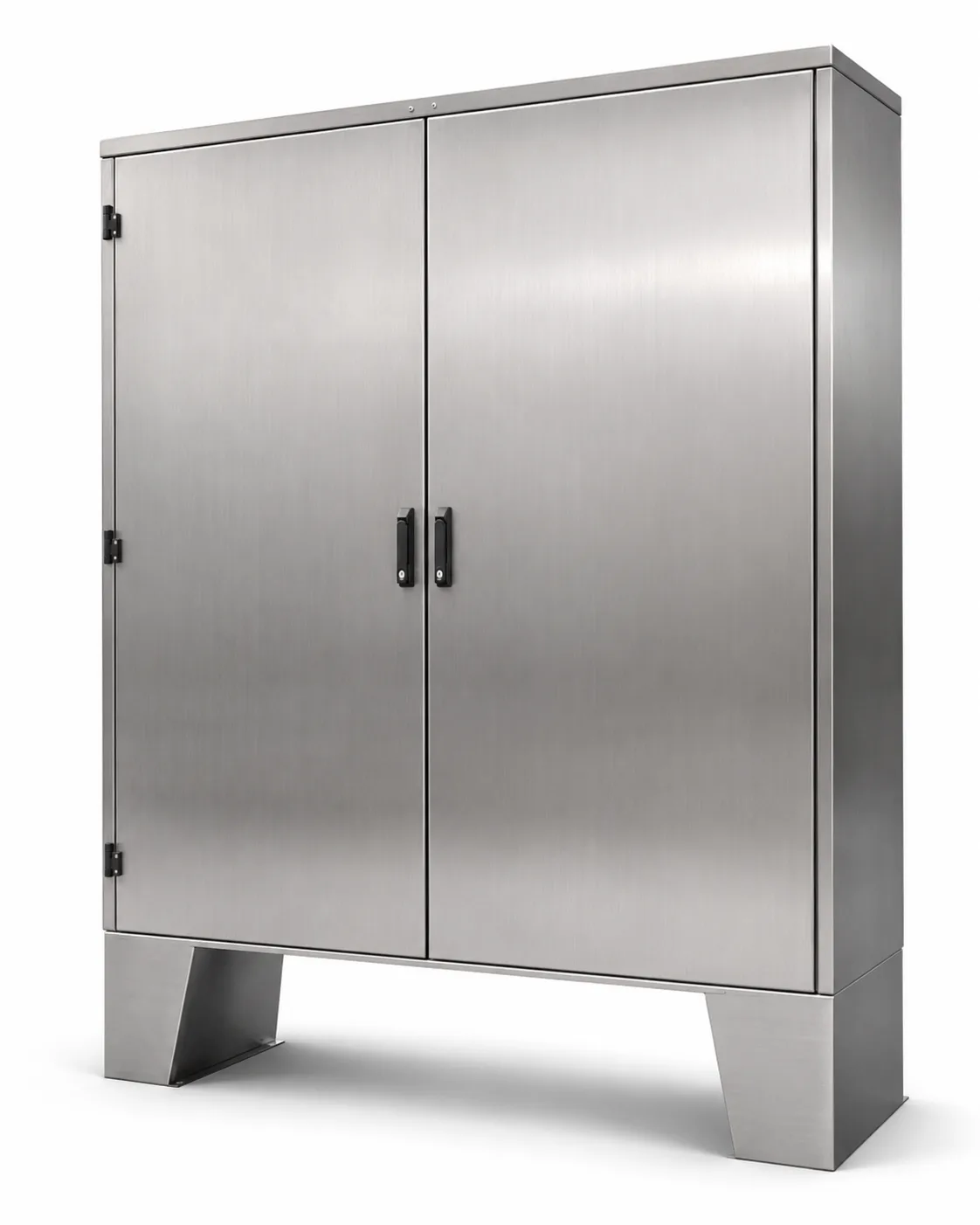
Double-door panel
For a process section or a machine group.
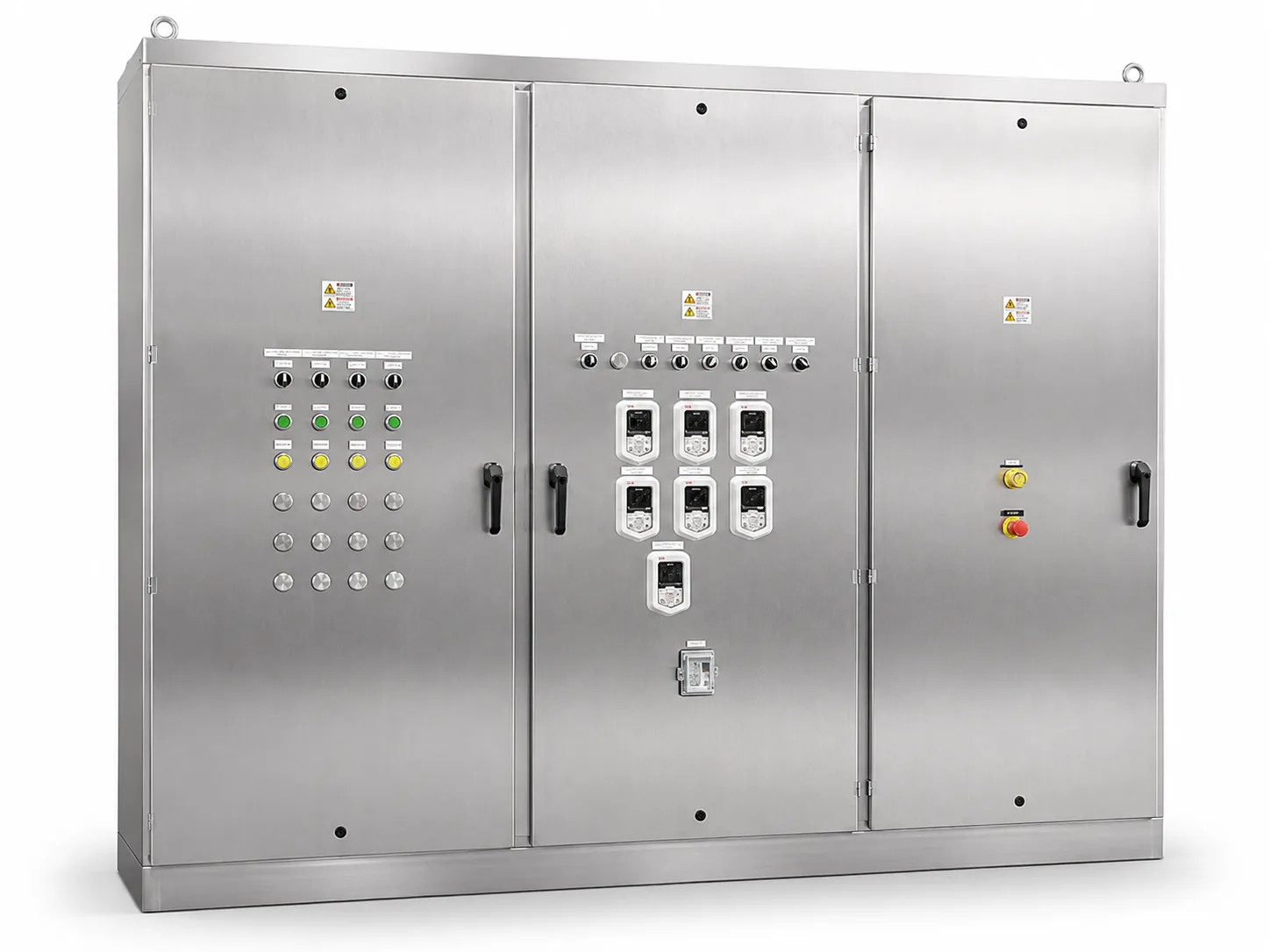
Multi-bay factory control system
For a complete production line.
Frequently asked questions
Not answered here? Write to us — an engineer replies.
Can you build a panel to our own drawings and component list?
Yes. If you send finished drawings we build to them, including to your preferred component brands so the panel matches the spares you already hold. If you send a process specification instead, our engineers develop the control architecture with you and you approve the drawings before anything is ordered.
How large a system can you build?
The largest example on this page is a three-bay line-up controlling a complete production line, and multi-bay systems are routine work. The practical limits are the space available in your building and how the line-up can be brought in and placed — both of which we check at drawing stage.
What protection rating do you build to?
The rating is specified to the environment rather than applied by default — a wash-down food plant and a dry electrical room are not the same problem.
Do you supply the panel with the machinery, or on its own?
Both. When we build the process equipment, the panel is designed and commissioned as part of it — which is the arrangement we would recommend, because the two are then tested together before they reach your site. We also build panels on their own, for machinery you already have or are building yourself.
Can it be installed without stopping our production?
Usually yes, and it is a large part of how we work: the panel is built and tested in our plant, so the time on site is installation and commissioning rather than assembly. The changeover window depends on how the existing control is arranged, which we assess during the site survey.
Where are the panels manufactured?
In our own plants in Tomești (Iași, Romania) and Bălți (Republic of Moldova). The Romanian plant is inside the EU single market, so deliveries within the Union involve no customs and no import duty.