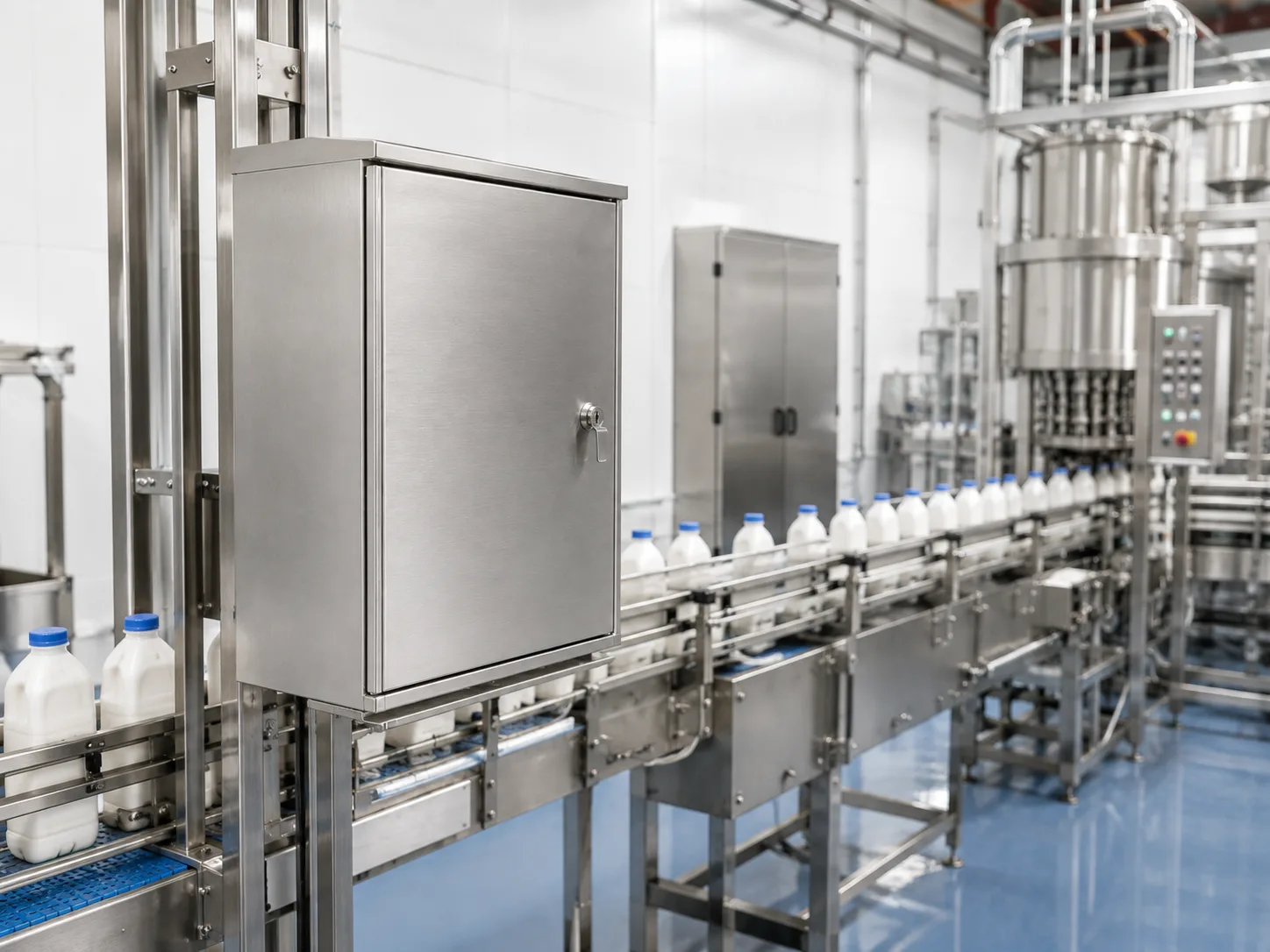
Engineered for your application.
The control architecture follows the process: batch or continuous, recipe-driven or fixed, standalone or integrated into an existing plant control system.
Custom industrial solutions by ALTEBO
Electrical and automation control panels designed and built to your process, your equipment and your electrical specification — from a compact panel on a single machine to a multi-bay system controlling a complete production line.
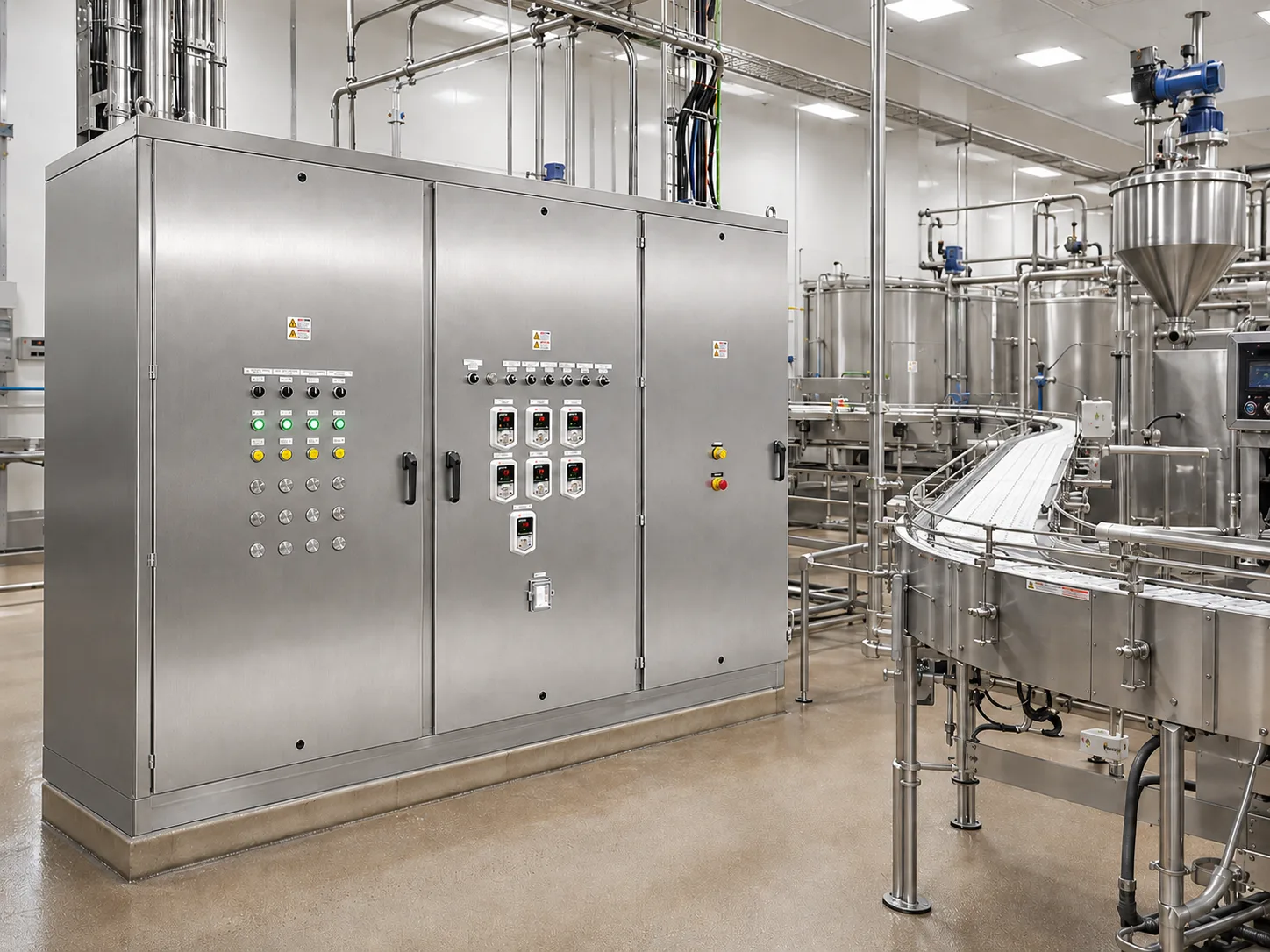
Three-bay line-up in service. Selector switches and status lamps per drive on the left, drive keypads in the centre, emergency stop and main isolator on the right — all reachable without opening a door.
Engineering, not catalogue
A control panel bought from a catalogue is an empty enclosure with a price. What decides whether a line runs is what goes inside it, how it is laid out, how it is wired and whether the architecture matches the process it controls — and none of that comes out of a catalogue.
We have built the process equipment these panels control for over twenty years: mixers, conveyors, dosing systems, complete production lines. That is the difference in practice — the panel is designed by people who know what the machine on the other end of the cable is doing, not only what the wiring diagram says.
The control architecture follows the process: batch or continuous, recipe-driven or fixed, standalone or integrated into an existing plant control system.
Enclosure size, bay count, door arrangement and cable entry set by the space available and the way your maintenance team needs to work on it.
Stainless enclosures for wash-down and food production, painted steel for dry plant rooms, with the protection rating specified to the environment rather than assumed.
Range
The same engineering and the same build quality across the range. What changes is the scale — and the four examples below are all our own work.
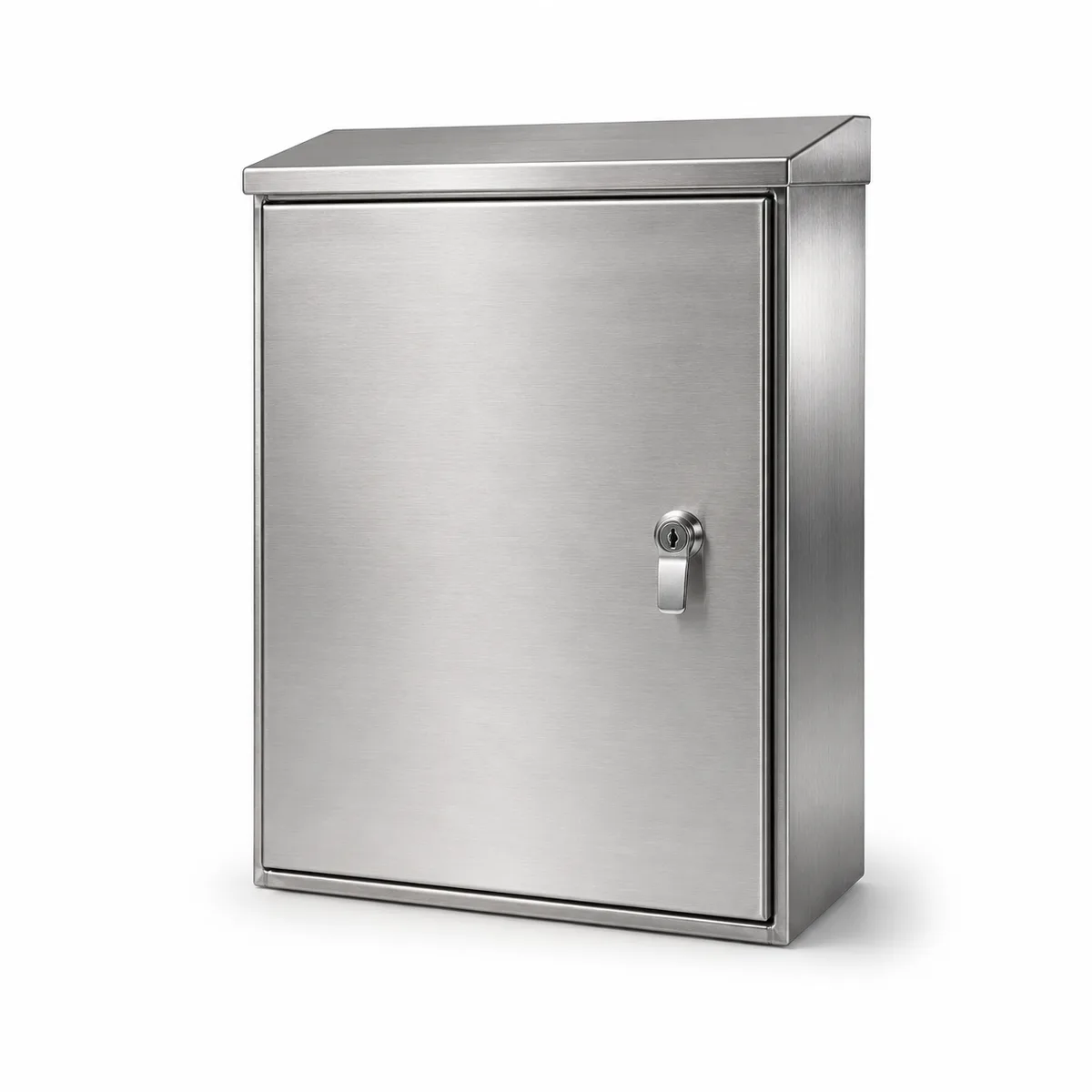
For a single machine or a local control point.
See this panel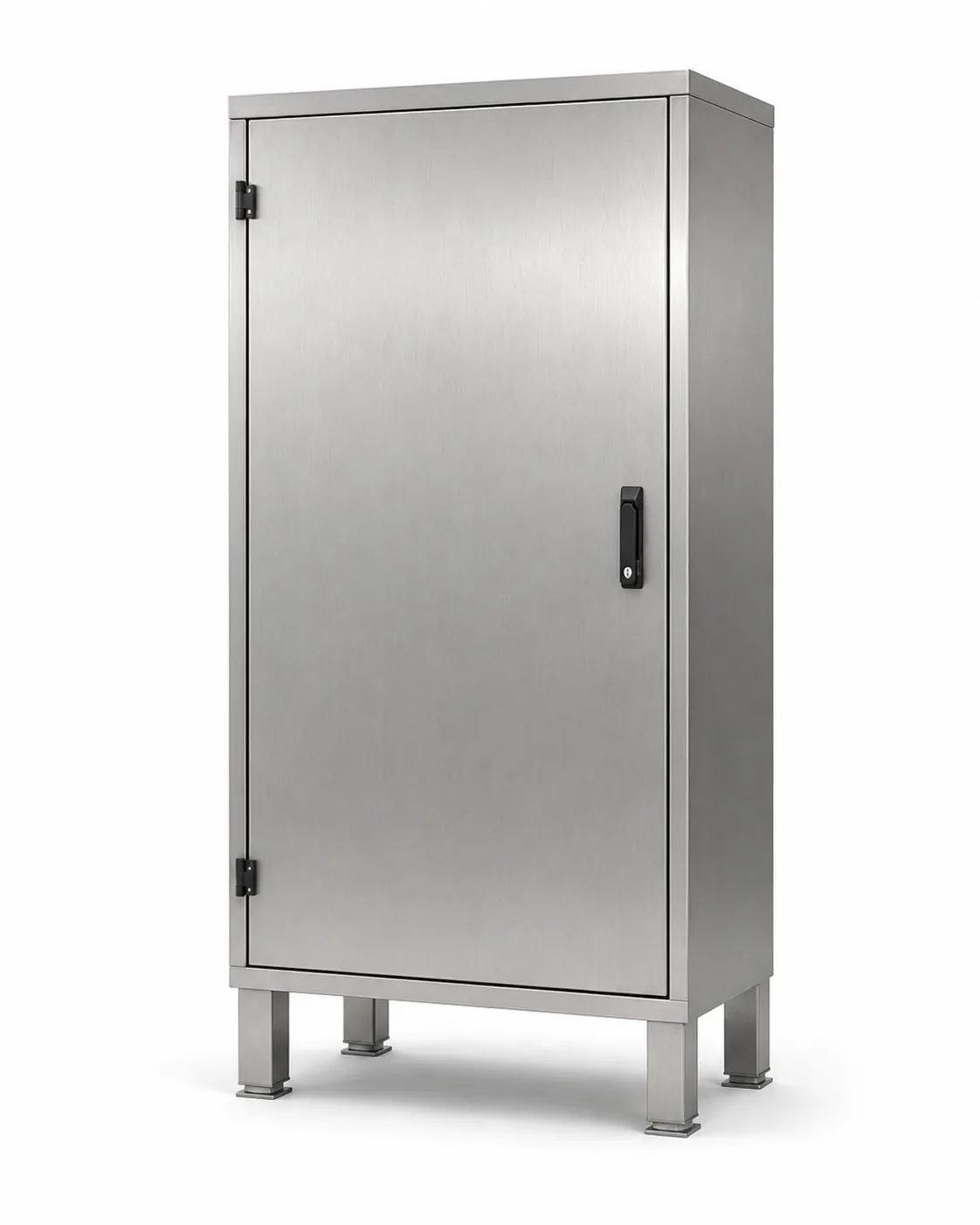
For one machine or a small equipment group.
See this panel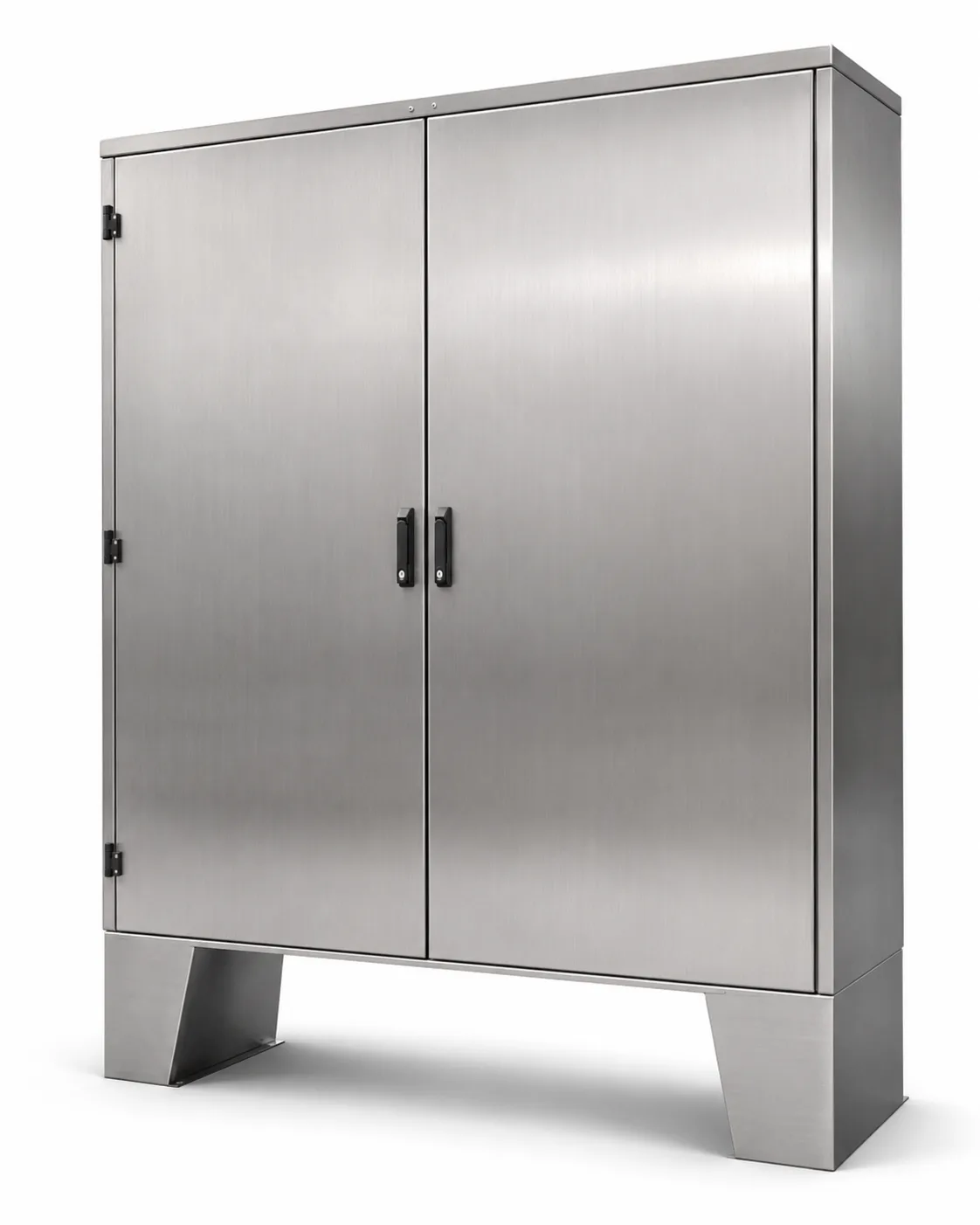
For a process section or a machine group.
See this panel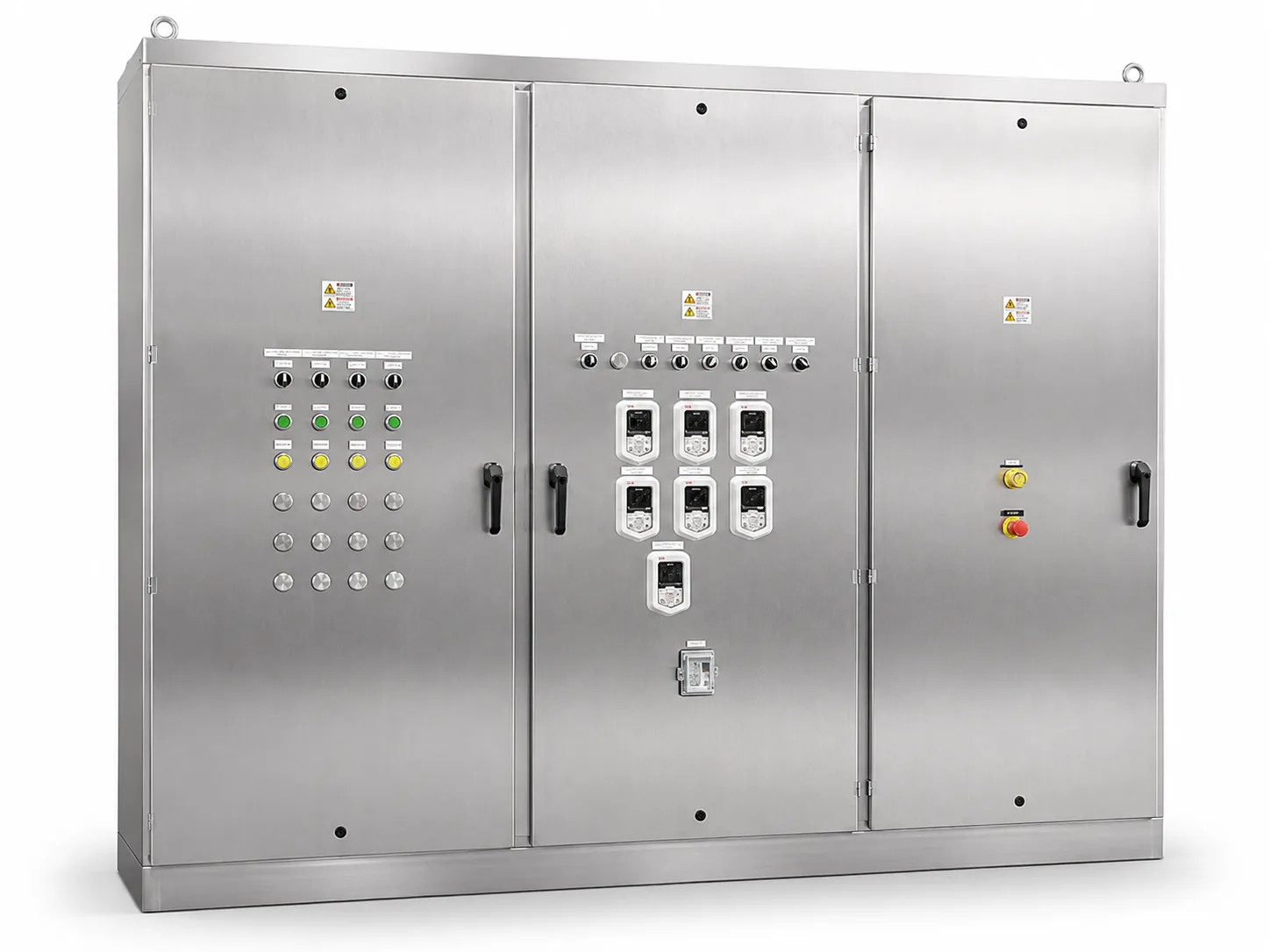
For a complete production line.
See this panelSpecification
Send us as many of these as you have. The ones you cannot answer, we work out together — that is part of the engineering rather than a reason to delay the quotation.
What the line actually does, and which sequences the panel has to control and interlock.
The motors, drives, valves, heaters and instruments to be connected, with their ratings.
Recipe handling, batch reporting, remote access, integration with an existing plant system.
The footprint and headroom available, and how the panel has to be brought into the building.
From a handful of starters to hundreds of I/O points across several bays.
Supply voltage and frequency, fault level, protection and earthing arrangement.
Hardwired, PLC-based, or a distributed arrangement with remote I/O and local HMIs.
Wash-down, dust, ambient temperature, corrosive atmosphere, hygiene requirements.
Manufacturing
The enclosure is fabricated in the same workshop that builds our stainless process equipment, and the panel is built and tested alongside the machinery it controls. Nothing is subcontracted.
Common to every panel we build. The values that depend on your process are set at engineering stage.
| Enclosure material | Stainless steel · painted steel |
|---|---|
| Build | Enclosure fabricated, wired, programmed and tested in our own plant |
| Protection rating | Specified per project |
| Control architecture | Hardwired · PLC-based · distributed with remote I/O |
| PLC / HMI platforms | Specified per project |
| Fieldbus protocols | Specified per project |
| Supply voltage | Specified per project |
| Testing before dispatch | Functional test with the panel powered and the sequences exercised |
| Documentation | Specified per project |
| Installation | Delivered, installed and commissioned at your site |
Industries
The environment decides the enclosure as much as the process decides the electrics.
Stainless enclosures, wash-down protection and hygienic detailing — bottling and filling lines, dairies, bakeries, processing plants.
Corrosive atmospheres and batch processes with recipe control and a documented record per batch.
Dust, vibration and high-power drives — dry mortar plants, ceramics, aggregate handling.
Intake, conveying, dosing and mixing sequences, often across a site rather than a single building.
How it works
You send the process, the equipment list and the electrical supply data. Under NDA if the project needs one.
Control architecture, enclosure arrangement and price — normally within 48 hours of a complete specification.
Wiring diagrams and panel layout approved by you before anything is cut or ordered.
Enclosure fabrication, electrical assembly, programming and functional testing in our own plant.
Delivery, installation and commissioning on site, handed over running.
Frequently asked
Yes. If you send finished drawings we build to them, including to your preferred component brands so the panel matches the spares you already hold. If you send a process specification instead, our engineers develop the control architecture with you and you approve the drawings before anything is ordered.
The largest example on this page is a three-bay line-up controlling a complete production line, and multi-bay systems are routine work. The practical limits are the space available in your building and how the line-up can be brought in and placed — both of which we check at drawing stage.
The rating is specified to the environment rather than applied by default — a wash-down food plant and a dry electrical room are not the same problem.
Both. When we build the process equipment, the panel is designed and commissioned as part of it — which is the arrangement we would recommend, because the two are then tested together before they reach your site. We also build panels on their own, for machinery you already have or are building yourself.
Usually yes, and it is a large part of how we work: the panel is built and tested in our plant, so the time on site is installation and commissioning rather than assembly. The changeover window depends on how the existing control is arranged, which we assess during the site survey.
In our own plants in Tomești (Iași, Romania) and Bălți (Republic of Moldova). The Romanian plant is inside the EU single market, so deliveries within the Union involve no customs and no import duty.
Send the process, the equipment list and the electrical supply data — you get the control architecture and a price, normally within 48 hours.