Industrial mixers
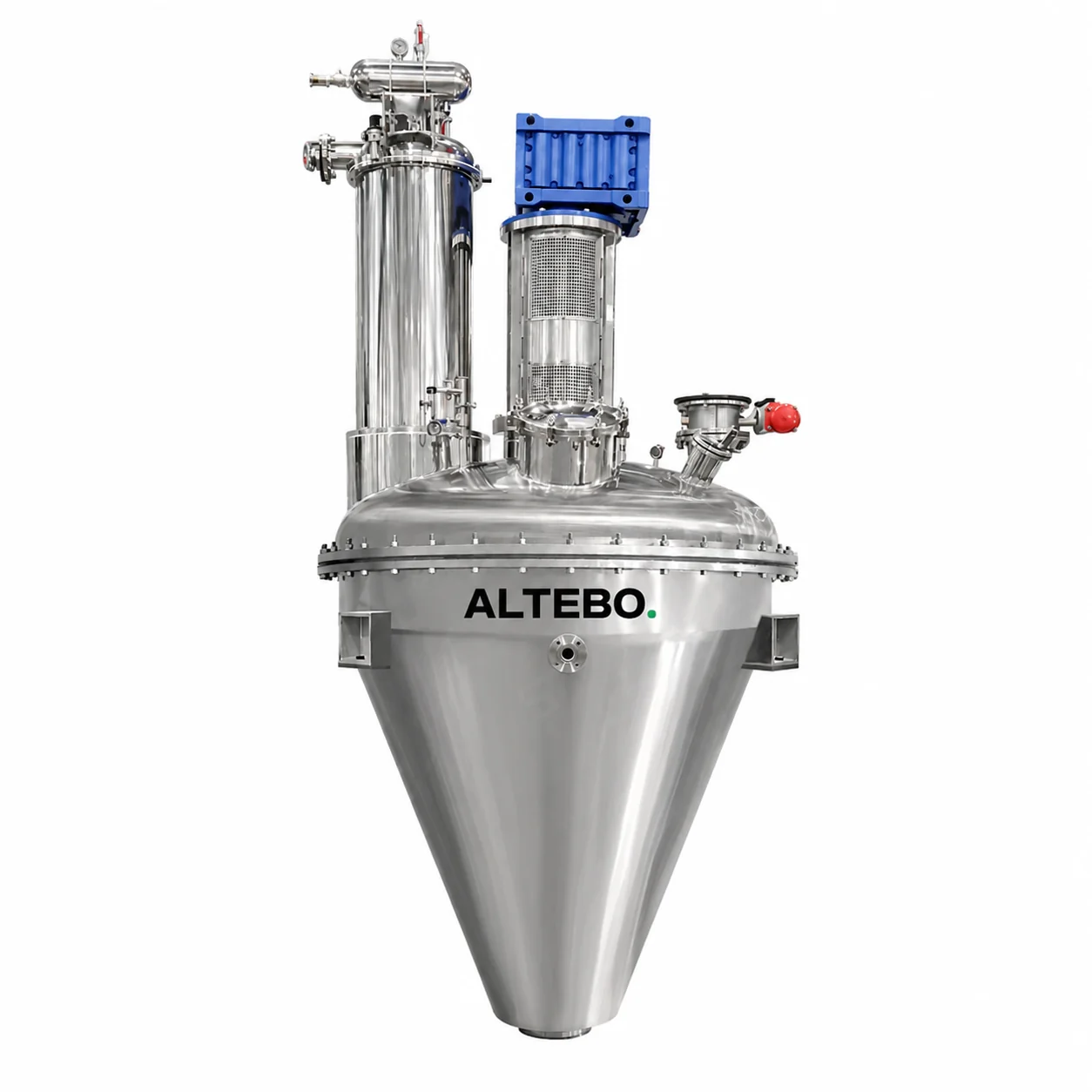
Conical vacuum mixer dryer
Mixes and dries in the same vessel, under vacuum, products that will not survive the temperature of a conventional dryer — pharmaceutical intermediates, pigments, advanced materials, food ingredients. Built routinely between approx. 500 and 30,000 L, in AISI 304 or 316L stainless.
- Usual configurable range
- approx. 500 – 30,000 L
- Usual installed power
- approx. 7.5 – 160 kW
Also known as: conical vacuum dryer · nauta dryer · conical screw mixer dryer · vertical conical dryer
Individually sized on your material and your process. Technical proposal and price normally within 48 hours. Delivery across the EU and the Republic of Moldova.
How it works
This machine solves a temperature problem. A heat-sensitive product degrades if you dry it at atmospheric pressure, because the solvent only boils at its normal boiling point. Under vacuum, that same boiling happens tens of degrees lower, so the moisture leaves the material without the material suffering for it.
Mixing is done by a helical screw arm that rotates slowly about its own axis while orbiting along the conical wall. Material is lifted along the wall and falls back through the centre. The motion is gentle: crystals and granules are not broken, and specific energy consumption stays low even at large volumes — which is why this design is chosen for products whose final particle size is part of the specification.
A jacket on the conical body heats or cools the batch, while vapour is held back by the filter in the lid and passes into a condenser, where the solvent is recovered instead of being vented. The conical bottom empties completely by gravity — no residual heel to scrape out by hand and find again in the next batch.
Drying at low temperature
Vacuum lowers the boiling point of the solvent, so the product dries without thermal degradation.
Mixing without breakage
Slow-turning helical screw arm: crystals and granules keep their particle size.
Solvent recovered
Lid filter and optional condenser — the solvent is collected instead of vented.
Complete gravity discharge
The conical bottom leaves no heel between batches, so no cross-contamination builds up.
When to choose it
The concrete situations in which this machine is the right answer — and the one in which we would point you to something else in our range.
The product is heat-sensitive and degrades at atmospheric drying temperature — under vacuum the same moisture leaves tens of degrees lower.
The solvent in the batch has to be recovered rather than vented: either because it is expensive, or because it must not reach the atmosphere.
Final particle size is part of the specification and mixing must not break the crystals.
Mixing and drying have to happen in the same vessel, with no intermediate transfer — every transfer means product loss, exposure and one more cleaning operation.
When this is NOT the right machine
If the product is a dry powder that only needs homogenising, with no drying and no vacuum, a conical dryer is a far more expensive machine than you need.
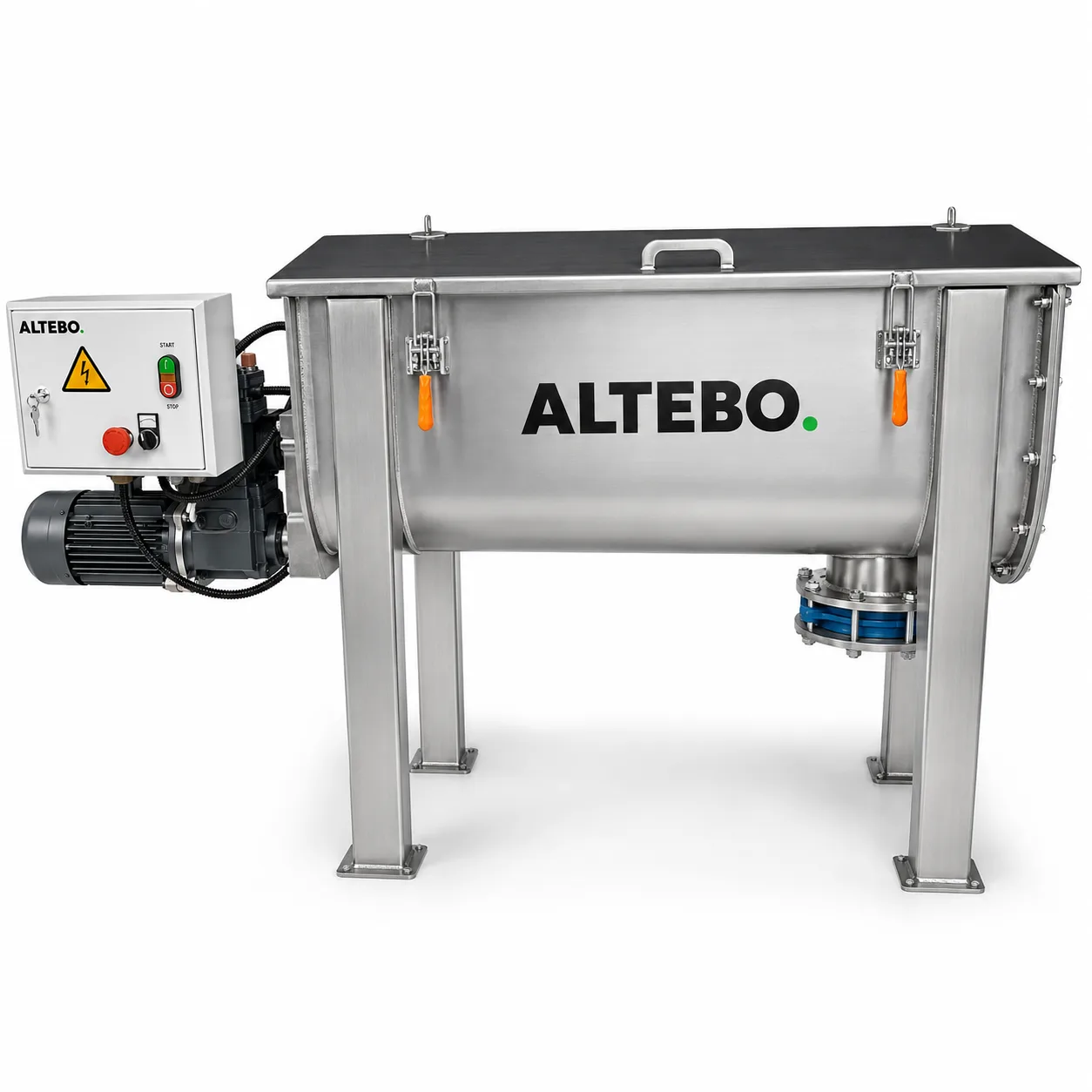
See Ribbon blender