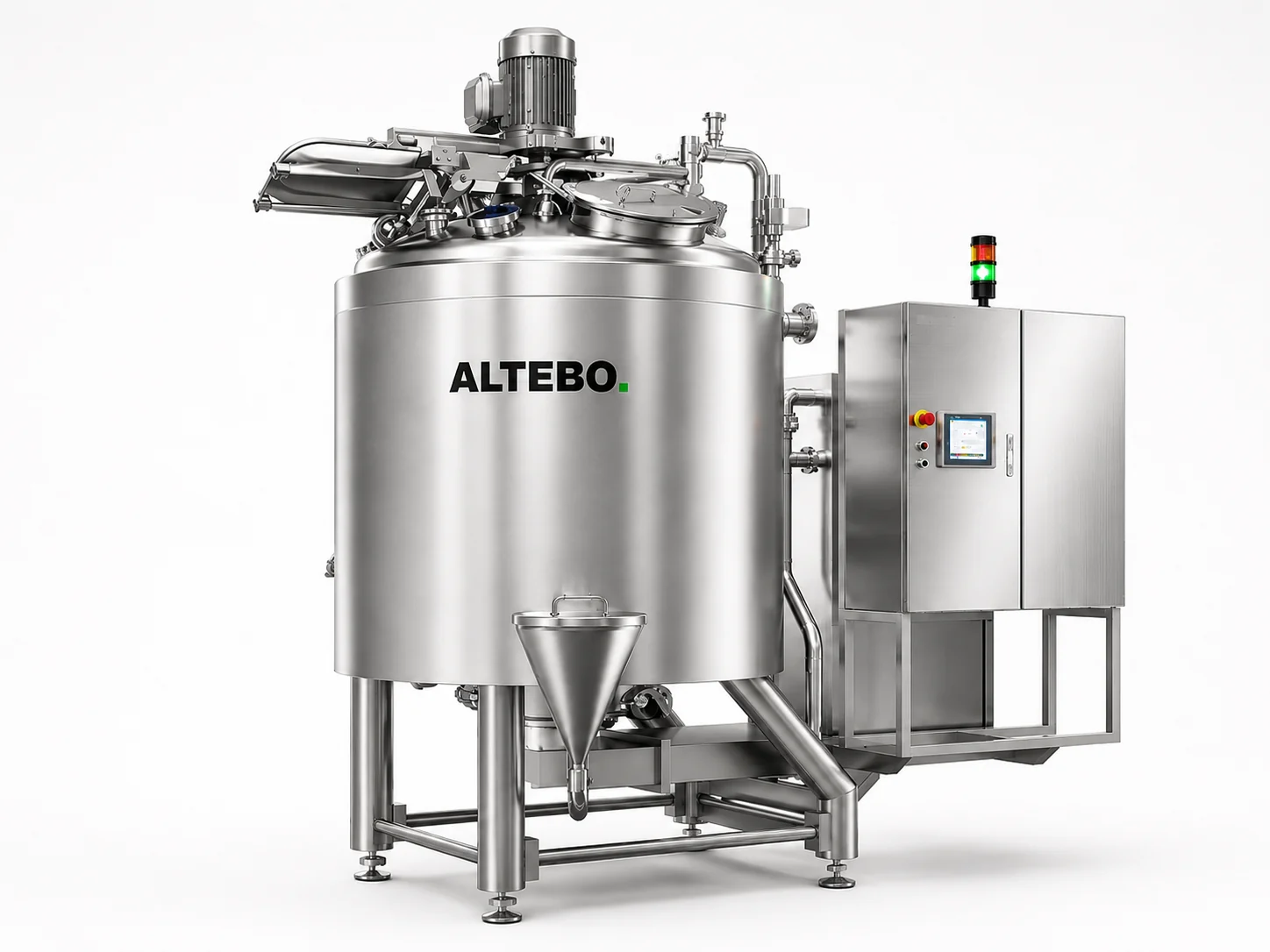
Industrial mixers
High-shear mixer (rotor/stator)
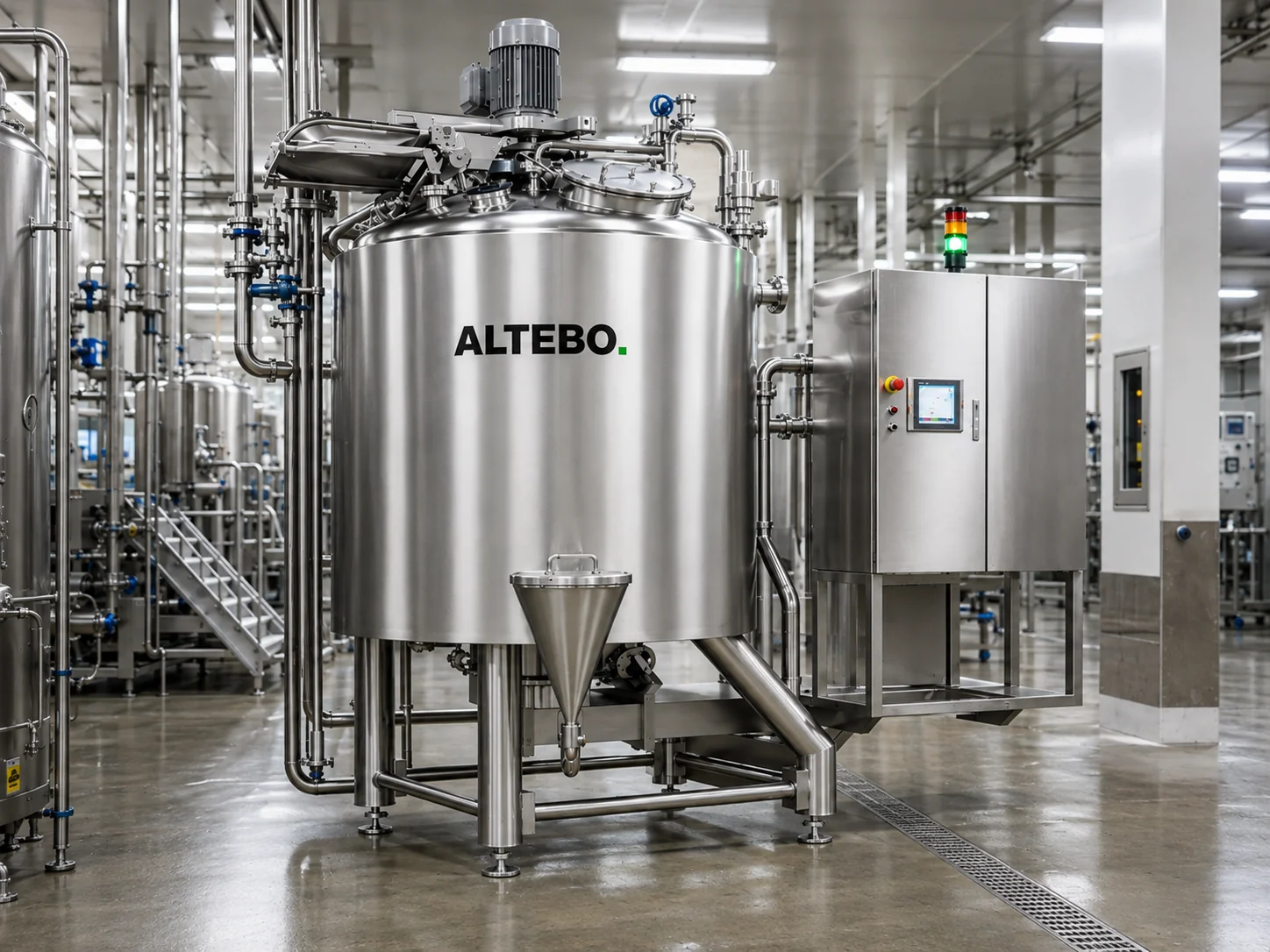
Disperses, emulsifies, homogenises and de-agglomerates — and wets powder into liquid without lumps. Vessel built routinely between approx. 100 and 3,000 L; larger systems are sized to order, in AISI 304 or 316L stainless.
- Usual configurable range
- approx. 100 – 3,000 L
- Usual installed power
- approx. 2.2 – 37 kW
Also known as: rotor stator mixer · high shear homogeniser · disperser · inline high shear mixer
Individually sized on your material and your process. Technical proposal and price normally within 48 hours. Delivery across the EU and the Republic of Moldova.
How it works
An ordinary agitator moves the liquid; a high-shear mixer tears it. The difference is the working element: a rotor turning at high speed inside a perforated stator, with a gap measured in tenths of a millimetre. Material drawn into that gap experiences shear several orders of magnitude above what a paddle in a vessel produces, and agglomerates, droplets and fibres are broken mechanically.
That is where the four uses come from. In emulsions, the dispersed phase is broken into droplets small enough that the emulsion does not separate before its shelf life ends. In dispersions, powder agglomerates open up and the pigment develops its true colour. In powder-into-liquid wetting, the powder is drawn into the vortex and wetted particle by particle, without the lumps you get from pouring powder onto a liquid surface. In de-agglomeration, lumps formed in storage are opened without milling the product.
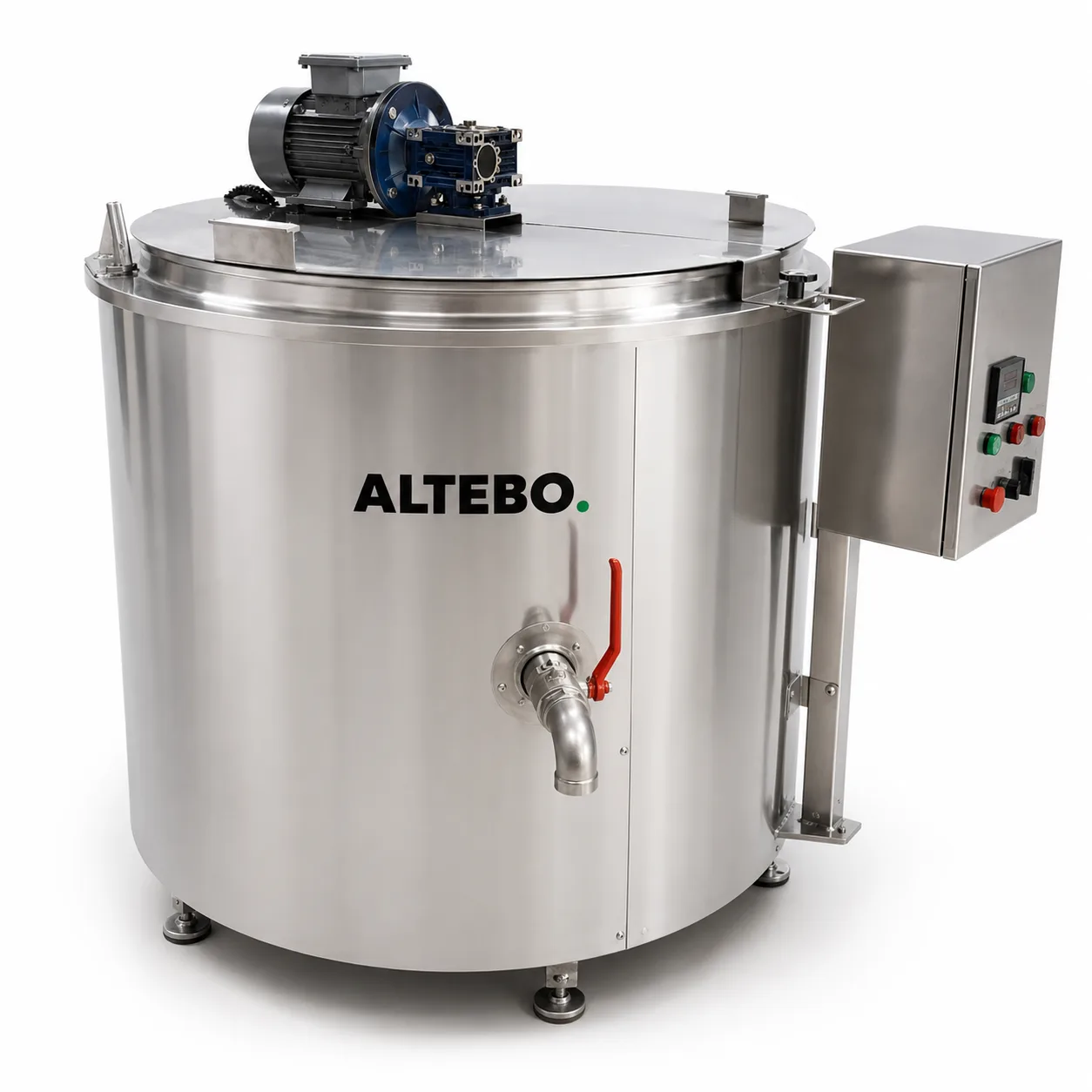
The vessel is built with a heating and cooling jacket, with a separate slow agitator for bulk circulation and, on request, as a closed design for vacuum or pressure operation. AISI 316L construction with polished surfaces and CIP/SIP is chosen for pharmaceutical and cosmetic products.
Rotor/stator
Tenths of a millimetre of gap at high speed — shear comes from geometry, not from spinning a paddle faster.
Four processes in one vessel
Dispersion, emulsification, homogenising and de-agglomeration, plus wetting powder into liquid.
Thermal jacket
Heating and cooling through the batch — many emulsions are made hot and break if cooled too quickly.
Hygienic execution
AISI 316L, polished surfaces, optional CIP/SIP for pharma and cosmetics.
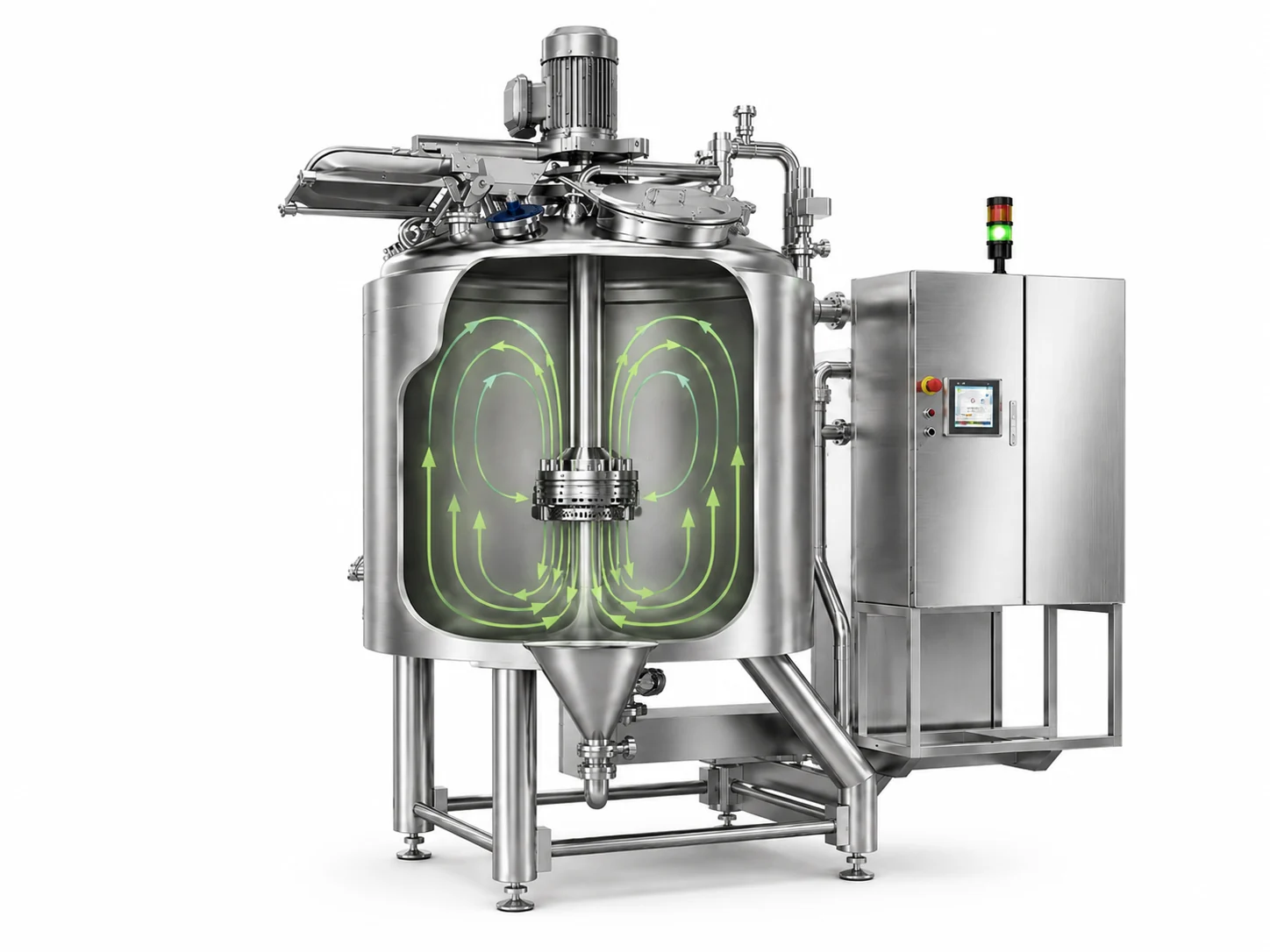
Internal construction
What happens inside
Cutaway view: the centrally mounted rotor/stator with the circulation path of the batch — material is drawn into the shear head and pushed back along the wall.
When to choose it
The concrete situations in which this machine is the right answer — and the one in which we would point you to something else in our range.
You make an emulsion that has to survive until its expiry date: the droplet size of the dispersed phase decides stability, and droplet size comes from shear, not from mixing time.
You wet powder into liquid and get lumps: the powder has to be wetted particle by particle inside the shear head, not poured onto the liquid surface.
A pigment or an additive is not developing its effect: most often it is not dissolved but only partly dispersed, with agglomerates still intact.
The product cakes in storage and has to be brought back to consistency without being milled.
When this is NOT the right machine
If you are mixing dry powders together, high shear gains you nothing — on the contrary, it breaks granules and heats the batch.
See Ribbon blender