ALTEBO.
Industrial synthesis reactor — built by Altebo

Industrial mixers

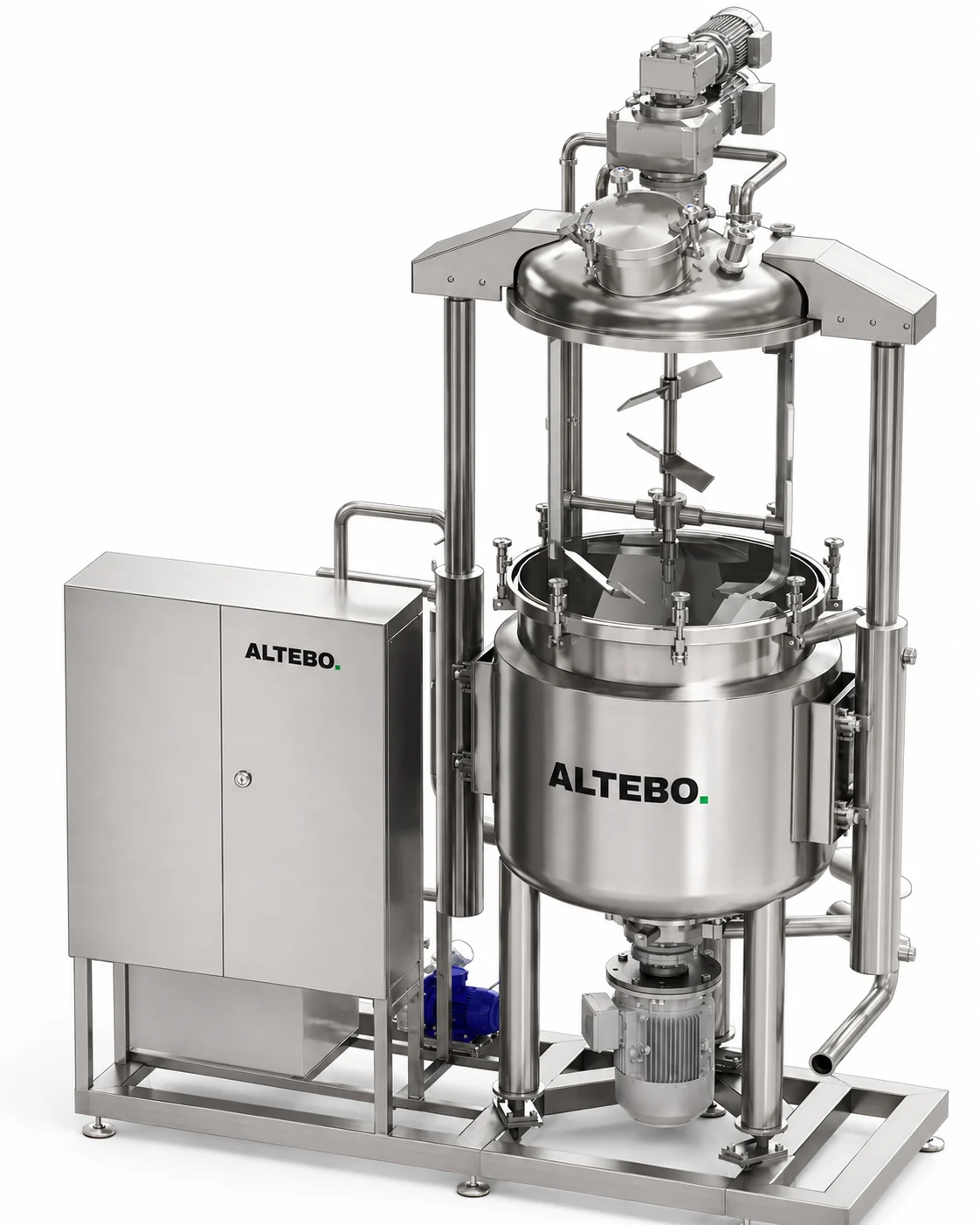
Industrial synthesis reactor with agitator

Closed reaction vessel with a heating and cooling jacket, an agitator chosen on the rheology of the batch and full instrumentation — for chemical synthesis, polymers, resins and agrochemicals. Built routinely between approx. 1,000 and 30,000 L, in AISI 316L or special materials.

Usual configurable range
approx. 1,000 – 30,000 L
Usual installed power
approx. 5.5 – 200 kW

Also known as: synthesis reactor · chemical reactor with agitator · jacketed process reactor · stirred tank reactor

approx. 1,000 – 30,000 LAISI 316L / special materials

Individually sized on your material and your process. Technical proposal and price normally within 48 hours. Delivery across the EU and the Republic of Moldova.

How it works

In a synthesis reactor, mixing is only one of the variables. What has to be kept under control is temperature — many reactions are exothermic and, if heat transfer cannot keep up, the batch runs away — then the order and rate at which components are dosed, the pressure in the vessel, and a record of everything that happened, so the next batch comes out identical.

The agitator is chosen on the rheology of the batch, not on its volume. For fluid products, a turbine or a propeller gives the circulation needed at low power. As viscosity rises during the reaction — the usual case with polymers and resins — an anchor agitator becomes necessary, sweeping the wall and maintaining heat transfer where an insulating layer of product would otherwise build up.

The rest of the system is composed on the process: a jacket or half-pipe coil for heating and cooling, a condenser for solvent reflux, dosing ports in the lid, temperature and pressure instrumentation, load cells for gravimetric dosing and PLC automation with recipes. The build material follows from the chemistry of the process — AISI 316L covers most applications, and special materials are settled at design stage for more aggressive media.

Agitator chosen on rheology

Anchor, turbine, propeller or high-efficiency impeller — according to how viscosity changes through the batch.

Heating and cooling jacket

Temperature control in an exothermic reaction is the real problem; cooling capacity is sized on the peak heat release, not the average.

Dosing and instrumentation

Dosing ports in the lid, load cells, temperature and pressure measurement.

Recipe-driven automation

PLC with recipes and a batch report — reproducibility is demonstrated with records, not with statements.

When to choose it

The concrete situations in which this machine is the right answer — and the one in which we would point you to something else in our range.

  • The process is a reaction, not simple mixing: temperature, pressure and dosing order are part of the recipe and have to be controlled throughout, not set once at the start.

  • The viscosity of the batch rises as it goes — with polymers and resins — and the agitator has to maintain heat transfer at the wall right to the end.

  • You need a report on every batch: what was dosed, when, at what temperature — either for your customer or for your own quality control.

  • The solvent has to be recovered by reflux, and the vessel has to stay closed throughout the process.

When this is NOT the right machine

If the process is mixing at controlled temperature, with no chemical reaction and no sequential dosing, a fully equipped synthesis reactor is more than you need.

See Jacketed reactor with agitator
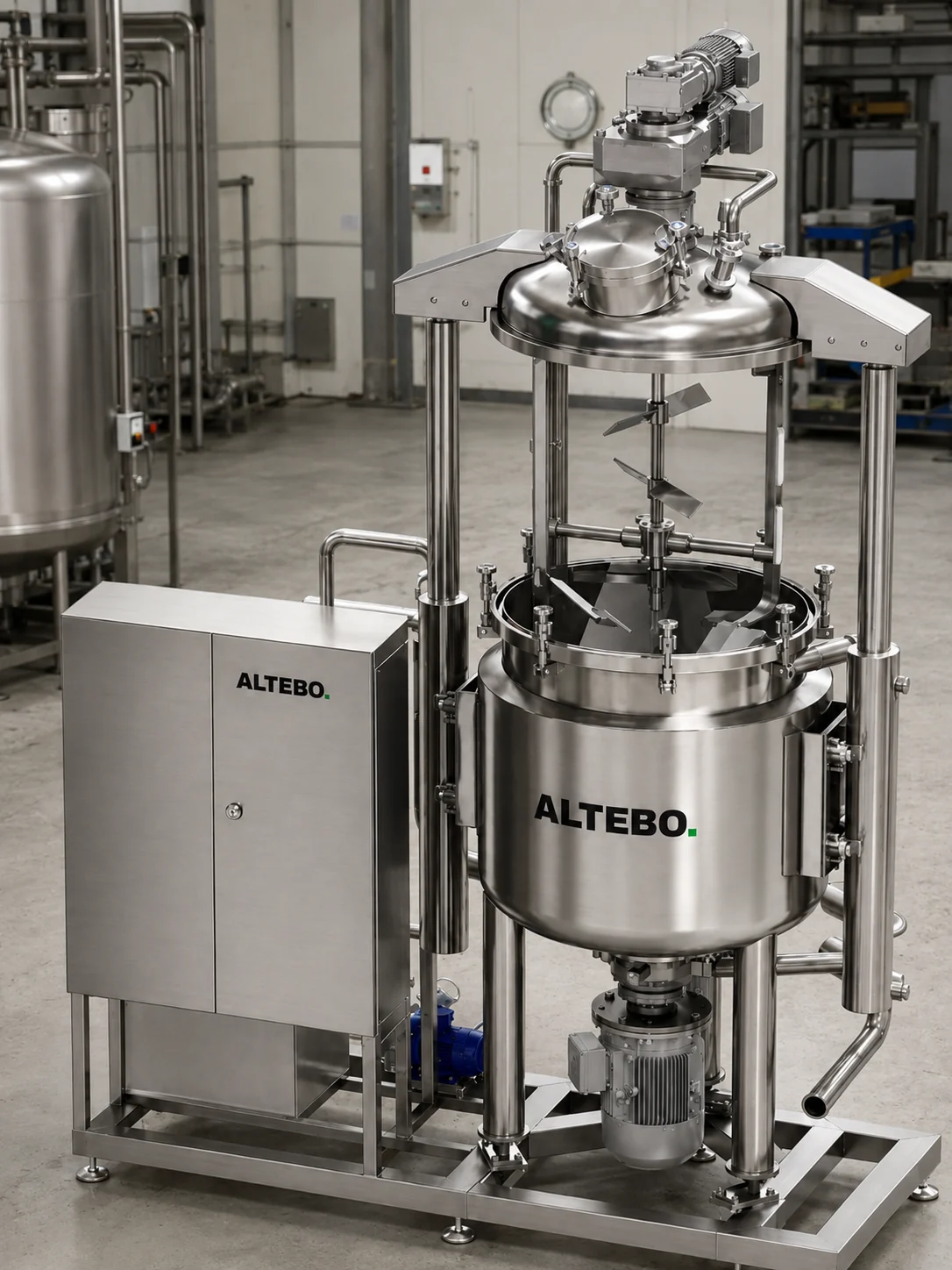
Industrial synthesis reactor — installed at the customer's plant

In service

The machine, in service

The reactor installed on its own frame, with the control panel alongside.

Specifications

The ranges we build routinely. Final dimensions and installed power follow from the density and viscosity of the product, the batch size and the process conditions.

Technical specifications — Industrial synthesis reactor
Configurable volumeapprox. 1,000 – 30,000 L
Product contact materialAISI 316L stainless; special materials according to the process
AgitatorAnchor · turbine · propeller · high-efficiency impeller, chosen on rheology
JacketHeating and cooling, jacket or half-pipe coil
Operating regimeVacuum or pressure, defined at design stage for each process and the applicable certification requirements
Design pressureDefined for each process and the applicable certification requirements
Installed powerTypically approx. 5.5 – 200 kW, depending on volume and the viscosity at the end of the batch
Operating temperatureJacket for hot water, steam or thermal oil — typically up to approx. 200 °C, depending on the heating medium selected
ATEX executionSettled case by case, against the classified zone in your plant documentation — tell us the zone and we will confirm what we can supply
OptionsCondenser and reflux · dosing ports · load cells · instrumentation · PLC automation with recipes

The figures above are the ranges we build routinely, not construction limits. We design and manufacture any capacity, power rating and envelope to order — including below or above the ranges in the table.

Build variants

What actually changes between them — not just what they are called.

With an anchor agitator

Sweeps the wall and maintains heat transfer for products that thicken during the batch. The usual choice for resins and polymers.

With a turbine or propeller

For fluid batches, where circulation is needed rather than wall sweeping — lower installed power at the same volume.

Jacket or half-pipe coil

A jacket is the usual solution. A half-pipe coil welded to the outside withstands higher pressure on the heat transfer medium and gives better circulation velocities, hence a higher heat transfer coefficient.

With a reflux system

Condenser mounted on the lid: evaporated solvent condenses and returns to the vessel instead of leaving the system.

Where it is used

The industries we build this machine for — each with its own execution requirements.

Mixing technology

Frequently asked questions

Question not answered here? Write to us — an engineer replies, not a bot.

What is the maximum pressure it can take?

The design pressure is defined for each process together with the applicable certification requirements — we do not publish a single figure valid for every execution, because it depends on volume, material, temperature and the standards the equipment falls under. Send us the parameters of your process and we will confirm what we can build.

Which agitator do I need?

It is chosen on rheology, not on volume. If the batch stays fluid, a turbine or a propeller is enough. If viscosity rises during the reaction, you need an anchor that sweeps the wall — otherwise a stuck layer of product forms and thermally insulates the jacket, and temperature control is lost exactly when it matters most.

Which build material should I choose?

AISI 316L covers most syntheses. For media with concentrated halides, hot acids or specific chemistries, special materials are settled at design stage. Send us the composition and the maximum process temperature and we will recommend the build.

Is automation included?

Yes, on request: PLC with recipes, temperature and pressure monitoring, dosing sequences and a report for every batch. We build the control panel in the same plant that builds the reactor, so the process diagram and the electrical drawing come from the same team.

How does it differ from the pressure mixing reactor?

The synthesis reactor is organised around the reaction: sequential dosing, reflux, instrumentation, recipes. The pressure reactor is organised around the operating regime — a robust vessel, a high-torque agitator, a mechanical seal — for processes that run under pressure or vacuum for the whole batch.

Typical applications

Need a version adapted to your process?

Describe the material, the batch size and the process conditions — we size the equipment exactly on the application.