Industrial mixers
Pressure mixing reactor
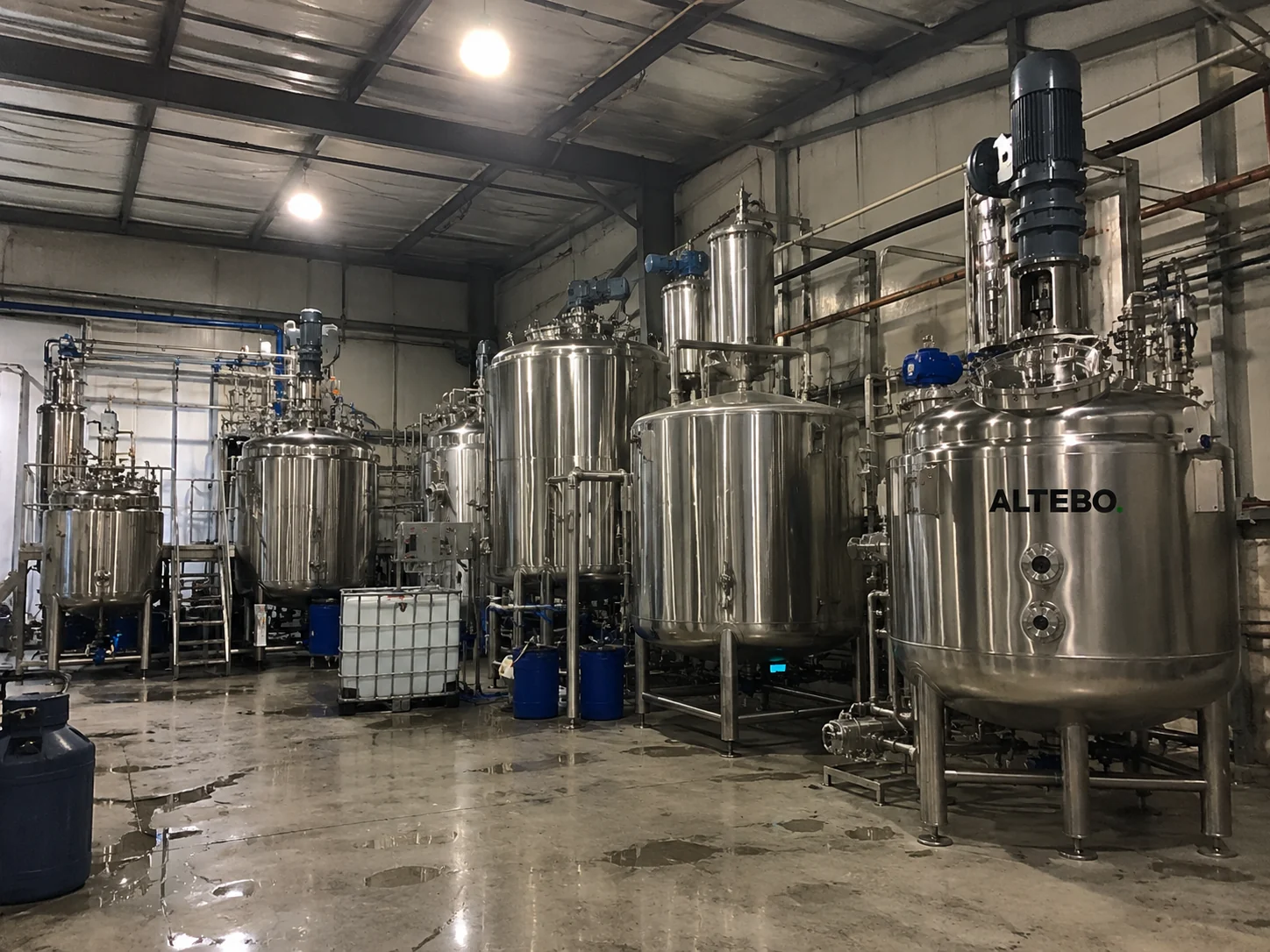
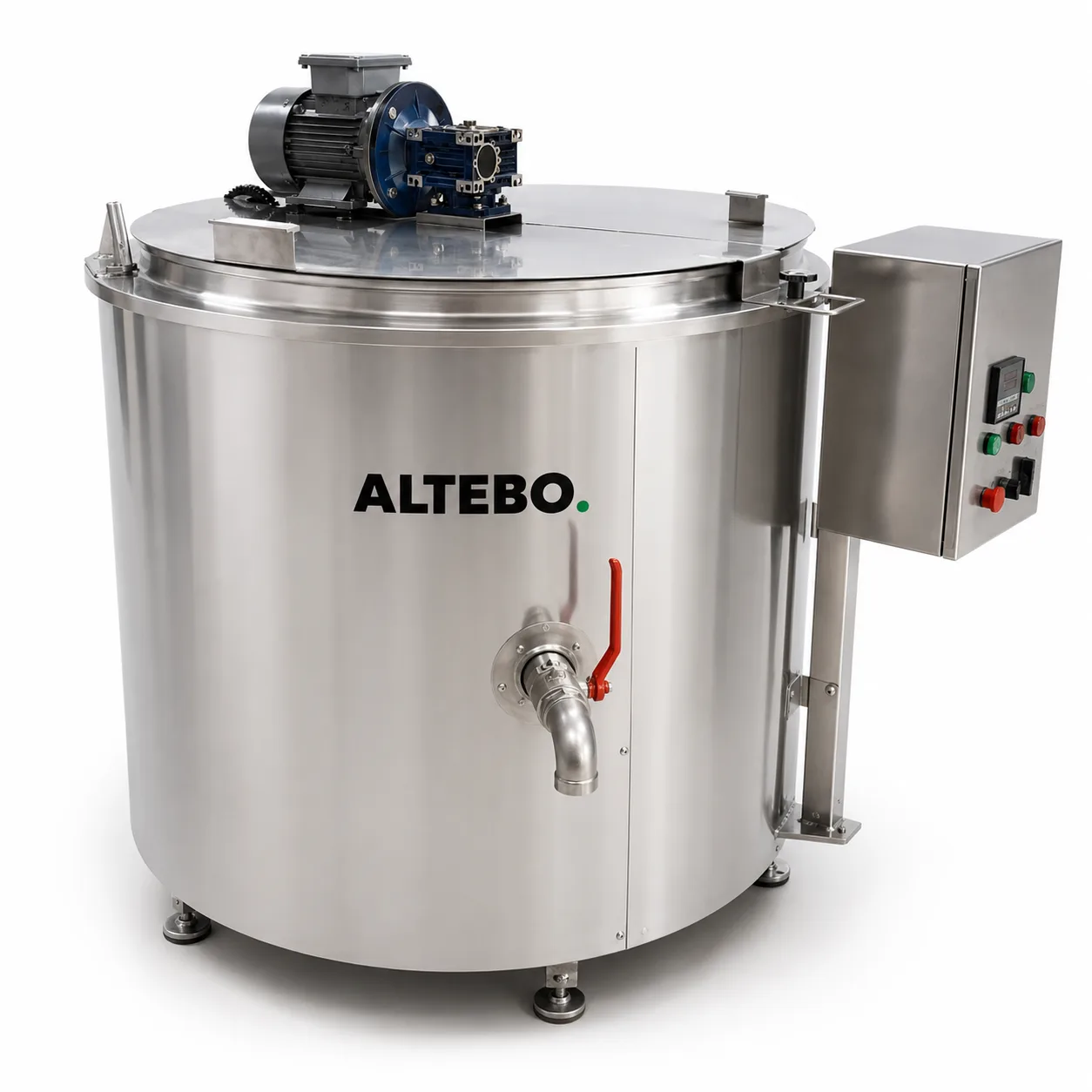
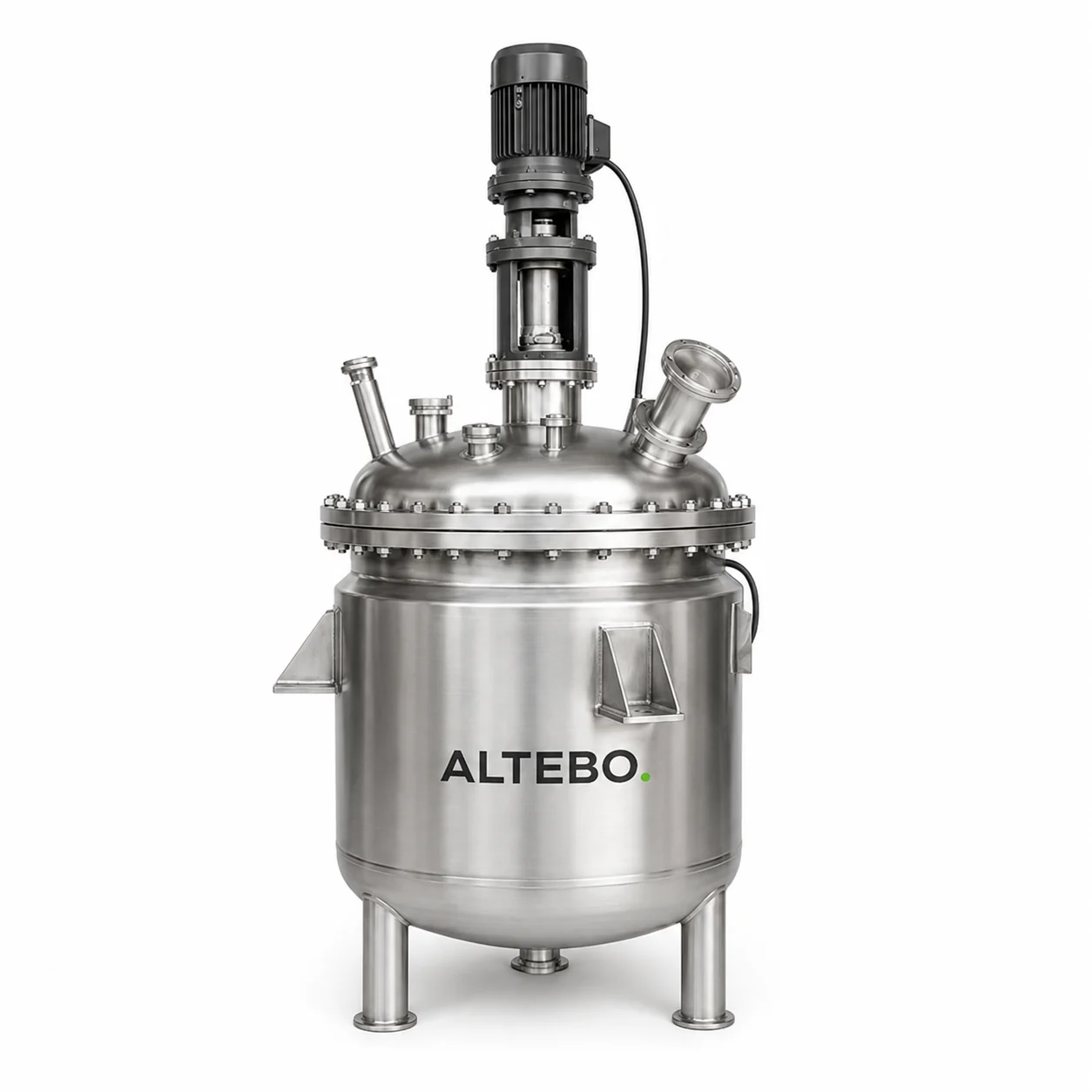
Jacketed vessel with a high-torque agitator and a mechanical seal, for processes that run under pressure or vacuum for the whole batch. Built routinely between approx. 500 and 30,000 L; the design pressure is defined for each process.
- Usual configurable range
- approx. 500 – 30,000 L
- Usual installed power
- approx. 15 – 250 kW
Also known as: pressure reactor · process autoclave · pressurised mixing vessel · pressure vessel with agitator
Individually sized on your material and your process. Technical proposal and price normally within 48 hours. Delivery across the EU and the Republic of Moldova.
How it works
When the process calls for pressure, the whole construction changes. The shell is calculated mechanically for the operating regime, the lid is bolted to a flange, and the agitator shaft enters the vessel through a mechanical seal sized on process pressure and temperature — not through a packed gland, which leaks under pressure.
The agitator is chosen on rheology and on the torque demanded at the end of the batch, not at the beginning. For products that thicken considerably — resins, adhesives, polymers — the final torque can be several times the starting torque, and a gearmotor sized on the initial value stalls exactly before discharge.
The heating and cooling jacket, the condenser, the dosing ports, the instrumentation and the PLC automation are composed on the process. The design pressure is defined for each process and for the applicable certification requirements — we do not publish a single figure, because it depends on volume, material, temperature and the standards the equipment falls under.
Shell calculated for the regime
The design pressure is defined for each process and for the applicable certification requirements.
High-torque agitator
Sized on the torque at the end of the batch, when the product is at its most viscous — not on the starting torque.
Mechanical seal
The only correct solution under pressure: a packed gland leaks and becomes a source of emissions.
Vacuum or pressure
The same vessel can work in both regimes, if it is designed for both from the start.
When to choose it
The concrete situations in which this machine is the right answer — and the one in which we would point you to something else in our range.
The process runs under pressure or vacuum for the whole batch, not only during one stage.
Viscosity rises sharply during the batch and the machine has to keep torque available right through to discharge.
The vessel has to stay completely closed: either because you work with volatile solvents, or because the process does not tolerate contact with air.
You need simultaneous control of temperature and pressure, with a record per batch.
When this is NOT the right machine
If the process runs at atmospheric pressure, a vessel calculated for pressure costs significantly more without any process gain.
See Jacketed reactor with agitator