ALTEBO.
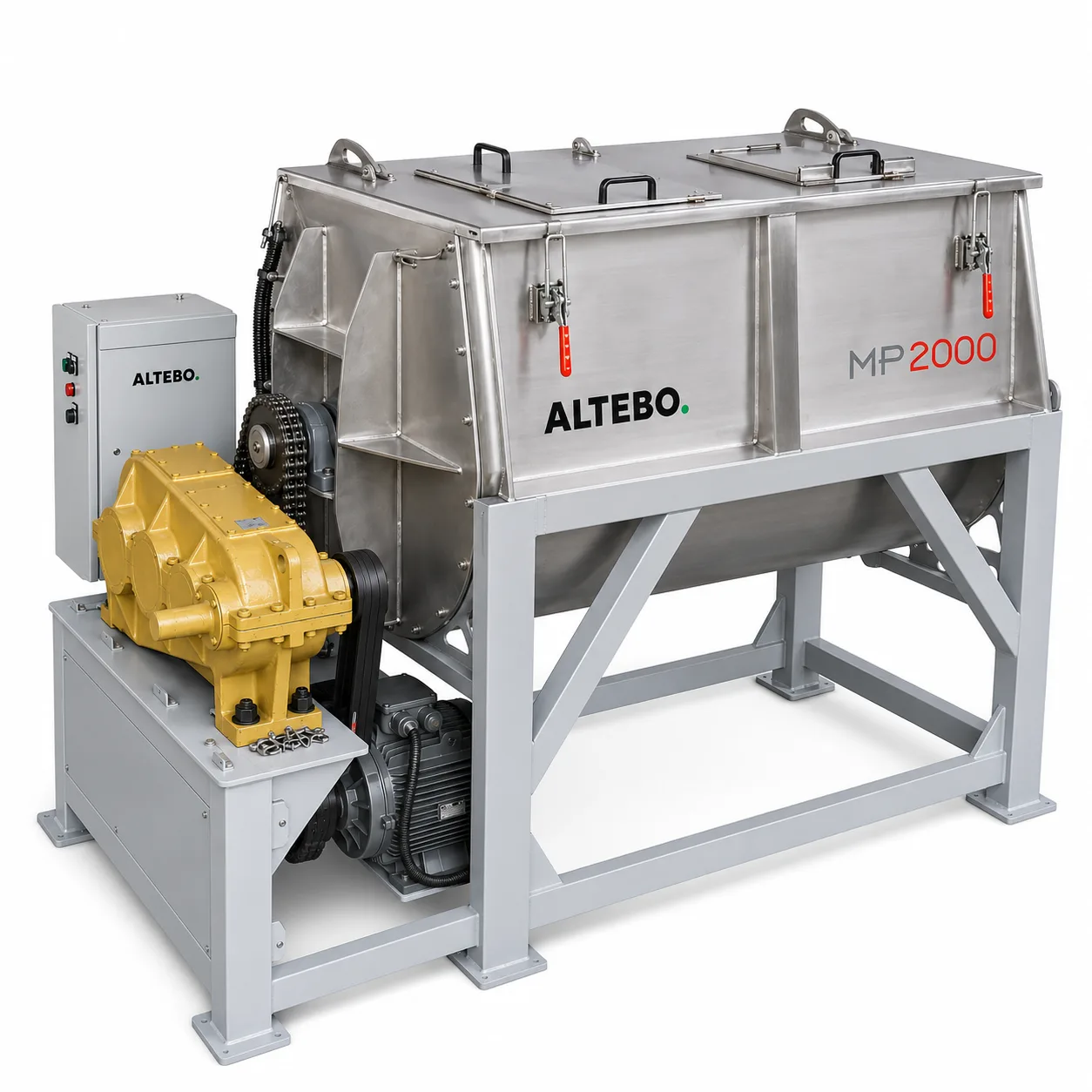
Horizontal vacuum ploughshare dryer — built by Altebo

Industrial mixers

Horizontal vacuum ploughshare dryer

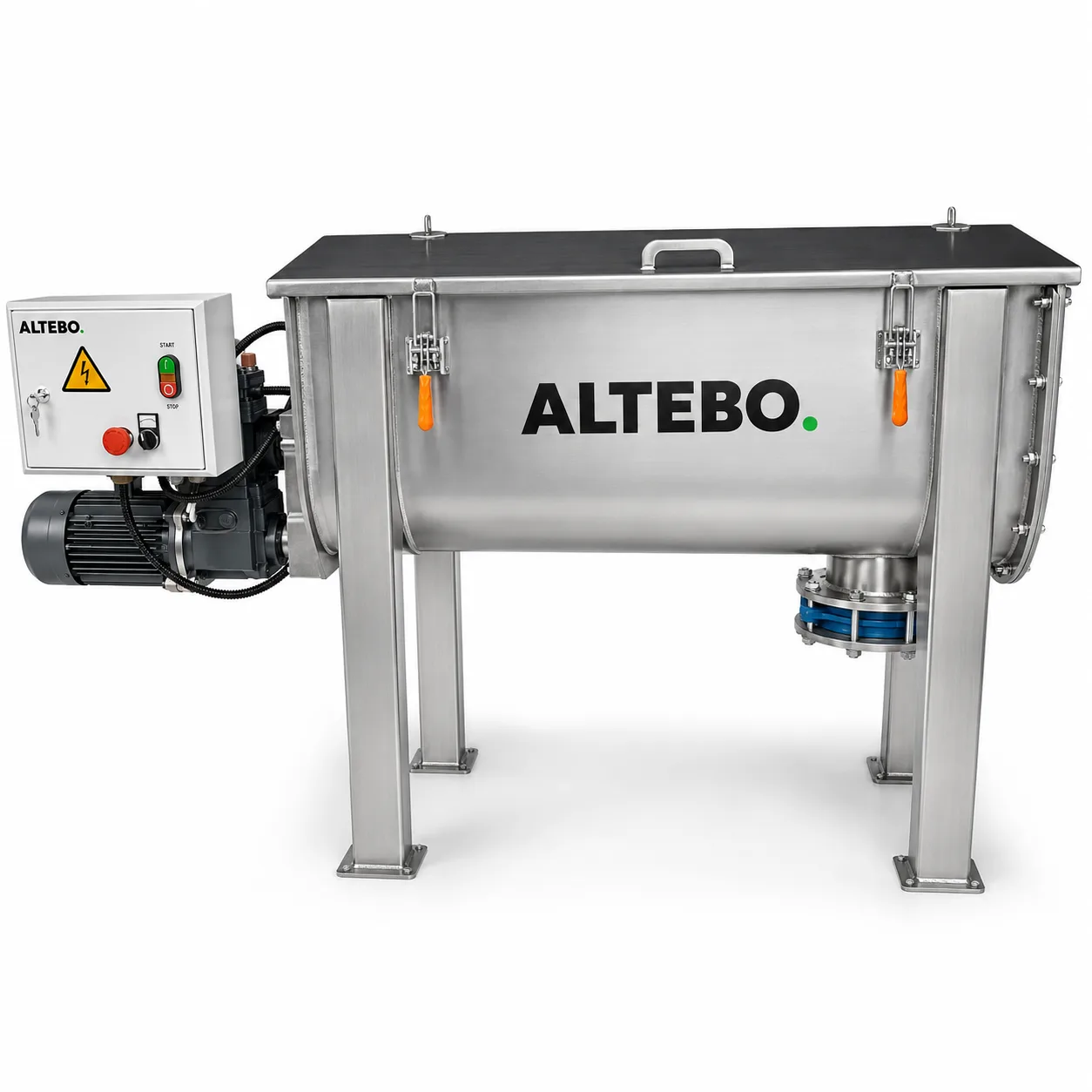
Intensive mixing and vacuum drying in a horizontal cylindrical chamber with ploughshare elements — for materials that cake as they dry and have to be broken up during the process. Built routinely between approx. 500 and 30,000 L.

Usual configurable range
approx. 500 – 30,000 L
Usual installed power
approx. 15 – 250 kW

Also known as: vacuum ploughshare dryer · horizontal vacuum mixer dryer · ploughshare vacuum mixer

approx. 500 – 30,000 Lvacuum + choppers

Individually sized on your material and your process. Technical proposal and price normally within 48 hours. Delivery across the EU and the Republic of Moldova.

How it works

The chamber is a horizontal cylinder, and the mixing elements are ploughshares mounted on a central shaft, running at close clearance to the wall. Unlike a conical dryer, where material is lifted slowly, here the ploughshares throw material into the free space of the chamber — creating a mechanically fluidised bed in which every particle continuously changes position and exposure to the hot wall.

The practical effect: the heat transfer area is used far more intensively, so drying time falls. And materials that cake as they lose solvent — the normal case with fine products — are broken up by high-speed choppers mounted in the chamber wall, working independently of the main shaft.

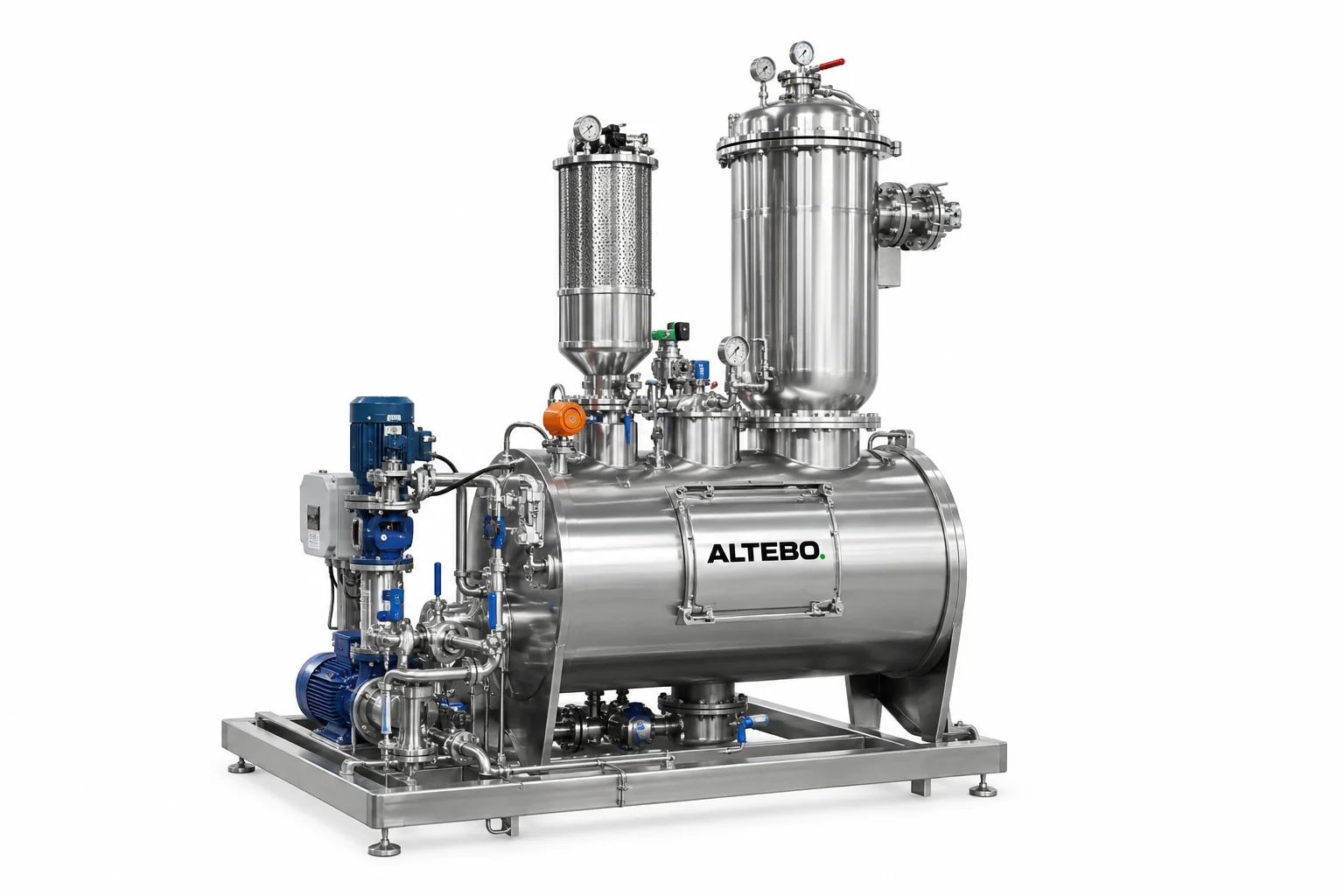
The jacket covers the cylindrical body and the end covers, vapour is filtered and passes into a condenser for solvent recovery, and discharge is through a valve on the bottom generatrix. The execution is settled on the product: AISI 304 or 316L for chemicals and pharmaceuticals, with polished surfaces where cleaning has to be validated.

Mechanically fluidised bed

The ploughshares throw material into the free space of the chamber — far more intensive heat transfer than a slow lifting motion.

De-agglomerating choppers

Separate high-speed elements that break the lumps formed as the material loses solvent.

Jacket on body and end covers

Heat transfer area across the whole chamber, not only on the cylindrical body.

Solvent recovery

Filter and condenser — the solvent is collected instead of being vented.

When to choose it

The concrete situations in which this machine is the right answer — and the one in which we would point you to something else in our range.

  • The material cakes as it dries and has to be broken up during the process rather than milled afterwards — the choppers work while drying is under way.

  • Drying time is critical for line capacity: the mechanically fluidised bed uses the heat transfer area far more intensively than a slow motion.

  • You need intensive mixing and drying in the same machine, for fine products where uniform final moisture across the whole batch matters.

  • The solvent has to be recovered, and the product must never meet the hall atmosphere.

When this is NOT the right machine

If the product consists of crystals whose particle size must not change, intensive ploughshare mixing will break them.

See Conical vacuum mixer dryer
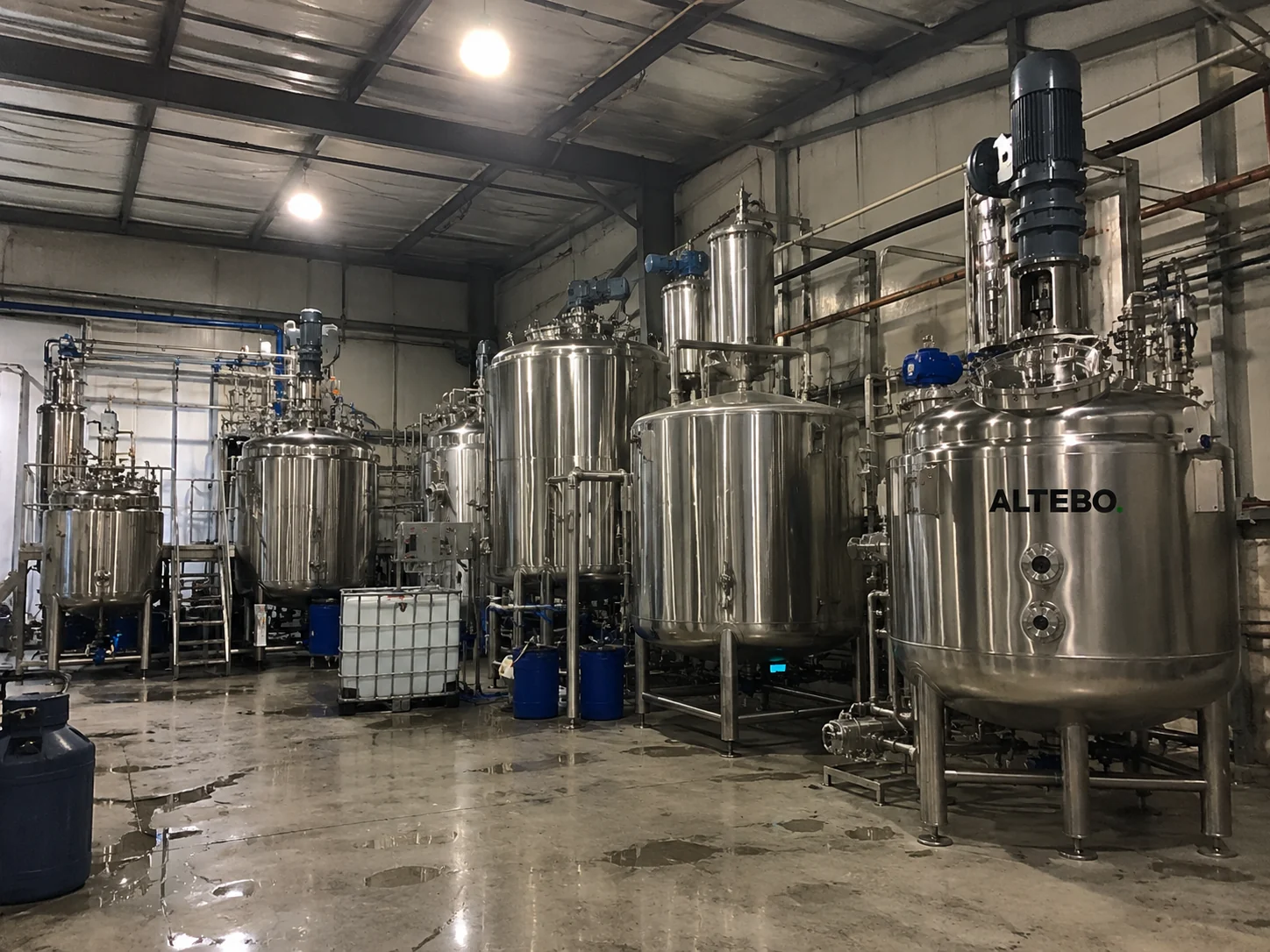
Line of stainless steel reactors and process vessels built by Altebo in its own production hall

Own production

Built entirely in our own plants

Cutting, welding, machining, assembly, testing and automation — the whole chain runs in our plants in Tomești (Iași county) and Bălți. Nothing is subcontracted.

Specifications

The ranges we build routinely. Final dimensions and installed power follow from the density and viscosity of the product, the batch size and the process conditions.

Technical specifications — Horizontal vacuum ploughshare dryer
Configurable volumeapprox. 500 – 30,000 L
Product contact materialAISI 304 / 316L stainless
ChamberHorizontal cylindrical, jacketed on body and end covers
Mixing elementsPloughshares on a central shaft; optional high-speed choppers
Operating regimeUnder vacuum
Installed powerapprox. 15 – 250 kW, depending on product and volume
Working vacuumTypically below 100 mbar absolute; the exact level is set from the solvent to be evaporated
Operating temperatureJacket for hot water, steam or thermal oil — typically up to approx. 200 °C, depending on the heating medium selected
OptionsCondenser and solvent recovery · CIP · load cells · PLC automation

The figures above are the ranges we build routinely, not construction limits. We design and manufacture any capacity, power rating and envelope to order — including below or above the ranges in the table.

Build variants

What actually changes between them — not just what they are called.

Without choppers

For materials that do not cake. Only the ploughshares on the central shaft — a simpler build and lower consumption.

With wall-mounted choppers

One or more high-speed elements, independent of the main shaft. Chosen when the material forms lumps during drying.

Sanitary execution

Surfaces polished to Ra ≤ 0.8 μm and geometry without retention pockets, for pharmaceutical products and food ingredients.

Wear-resistant execution

For minerals and abrasive materials: ploughshares and lining in treated steel, with individually replaceable parts.

Where it is used

The industries we build this machine for — each with its own execution requirements.

Frequently asked questions

Question not answered here? Write to us — an engineer replies, not a bot.

How does it differ from a conical dryer?

In how the material moves. A conical dryer lifts material slowly along the wall — gentle, right when particle size must not change. The horizontal ploughshare machine throws material into the free chamber, which shortens drying considerably but also means mechanical stress on the particles. The choice follows from the product, not from preference.

What are the choppers for?

They break agglomerates. Many fine products stick together and form lumps as they lose solvent, and moisture stays trapped inside those lumps. Without choppers you take them out at the end and mill them separately; with choppers they are broken up during drying, and the final moisture comes out uniform across the whole batch.

Can it be used as a mixer only, without drying?

Yes. The construction is the same as a ploughshare mixer, plus the jacket and the vacuum connection. If you need neither drying nor solvent recovery, a plain ploughshare mixer costs considerably less.

What happens to the dust carried over with the vapour?

It is stopped by the filter mounted on the vapour chamber, before the condenser. The filter is cleaned by reverse blowback so that it does not blind during the batch — otherwise the evaporation rate falls as the batch progresses and drying time becomes unpredictable.

Typical applications

Need a version adapted to your process?

Describe the material, the batch size and the process conditions — we size the equipment exactly on the application.