ALTEBO.
Sterile process reactor — built by Altebo

Industrial mixers

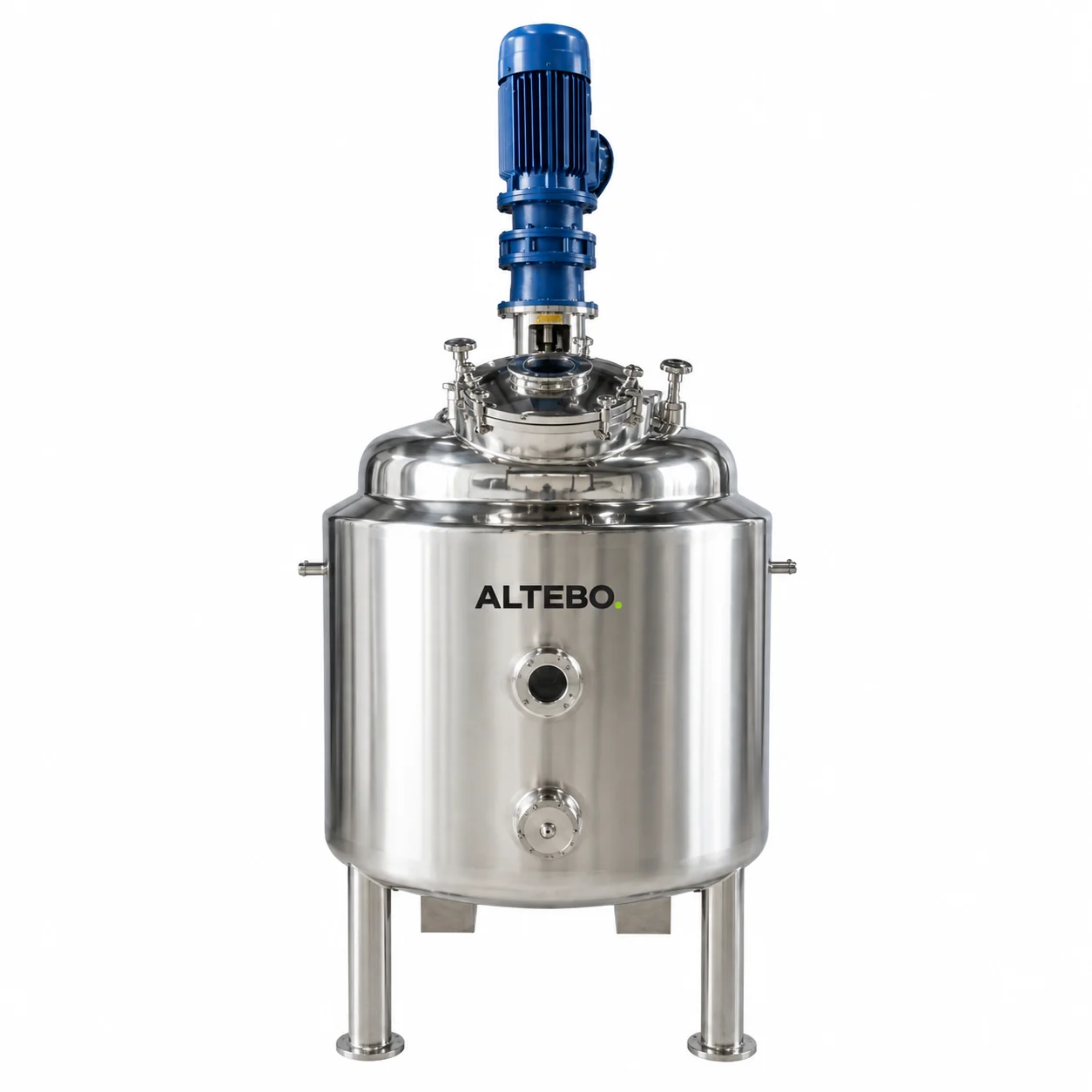
Sterile process mixer reactor

Process vessel with hygienic construction for pharmaceuticals, biotechnology, nutraceuticals, food ingredients and cosmetics: AISI 316L in product contact, sanitary polished surfaces, a hygienic mechanical seal and CIP/SIP. Built routinely between approx. 500 and 20,000 L.

Usual configurable range
approx. 500 – 20,000 L
Usual installed power
approx. 5.5 – 110 kW

Also known as: sanitary reactor · hygienic process vessel · aseptic mixing vessel · GMP-oriented process reactor

approx. 500 – 20,000 LAISI 316L, CIP/SIP

Individually sized on your material and your process. Technical proposal and price normally within 48 hours. Delivery across the EU and the Republic of Moldova.

How it works

What separates this from an ordinary industrial reactor is not the mixing principle but everything to do with cleaning. Every sharp corner, every exposed thread and every stretch of pipe that holds liquid after draining is a place where contamination develops. So the construction is defined by geometry: sanitary connections, generous internal radii, welded and ground joints, no zones where product can stagnate.

Product contact surfaces are built in AISI 316L and polished, because a rough surface holds product in microcavities that washing never reaches. The shaft seal is mechanical, in a hygienic version — a conventional packed gland is a source of contamination by its very construction.

The system is completed with CIP for closed-circuit washing and SIP for steam sterilisation, a heating and cooling jacket, sterile connections for transfers and, on request, a vacuum or pressure regime defined at design stage. We build hygienic designs oriented to GMP requirements, and we supply the equipment technical file: material certificates, welding records and test protocols. Validation and certification of your installation are achieved through qualification on site — they are not properties of the machine itself.

Sanitary polished AISI 316L

A smooth product contact surface: a rough one holds product in microcavities that washing never reaches.

No retention pockets

Sanitary connections, generous internal radii, welded and ground joints — geometry decides whether the vessel can be cleaned.

Hygienic mechanical seal

The alternative to a packed gland, which by construction is a source of contamination.

CIP and SIP

Closed-circuit washing and steam sterilisation, with no dismantling between lots.

When to choose it

The concrete situations in which this machine is the right answer — and the one in which we would point you to something else in our range.

  • The product is intended for human consumption or for application to skin, and cleaning between lots has to be demonstrable, not merely performed.

  • You change product frequently and dismantling for every lot would stop the line for too long: CIP washes in a closed circuit, without opening the vessel.

  • The process requires steam sterilisation before every lot.

  • You need batch traceability — temperature, time, dosing — for the batch record.

When this is NOT the right machine

If the product is technical and carries no hygiene requirements, you are paying for polishing, sanitary connections and CIP without gaining anything in the process.

See Industrial synthesis reactor
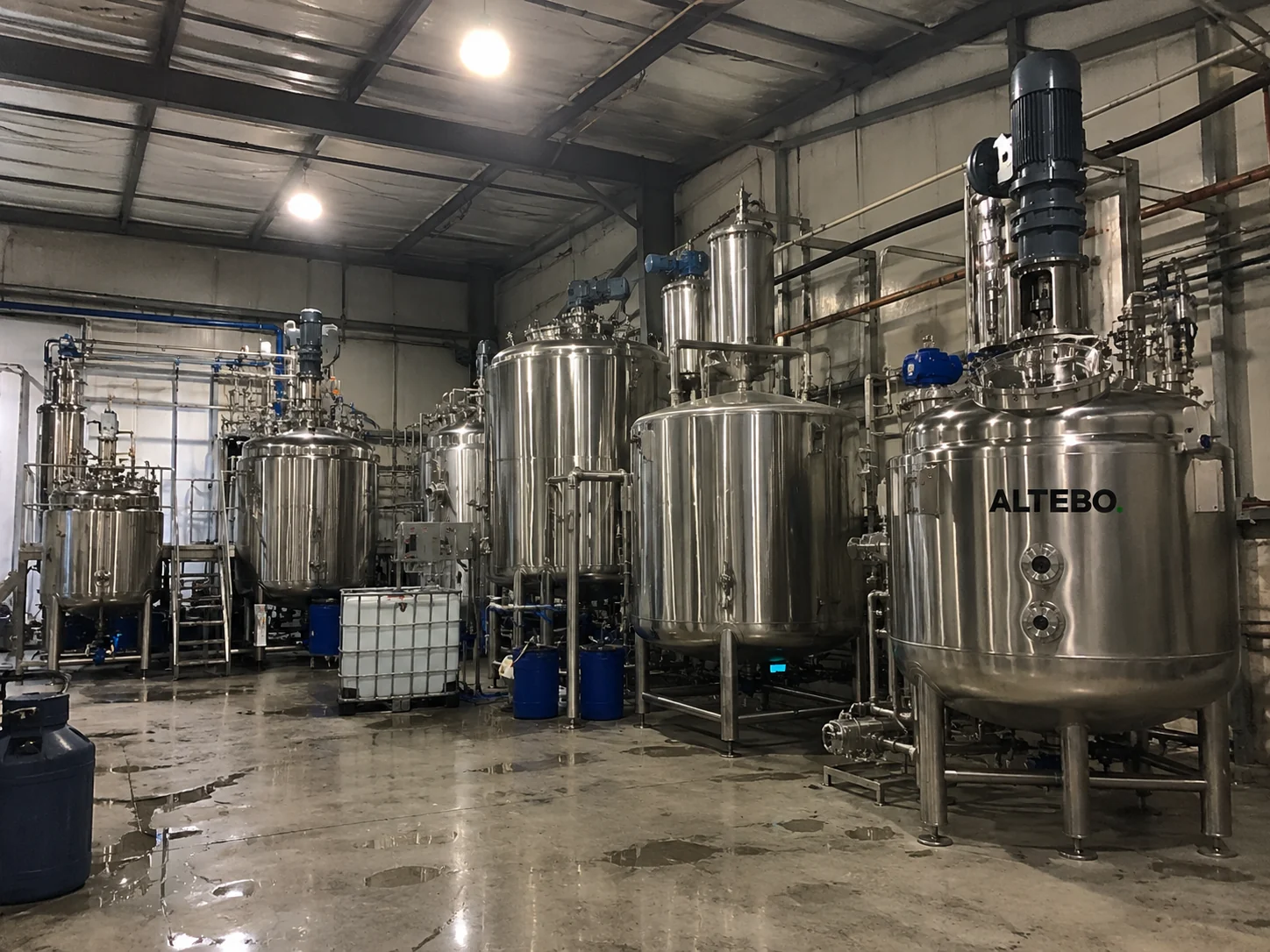
Line of stainless steel reactors and process vessels built by Altebo in its own production hall

Own production

Built entirely in our own plants

Cutting, welding, machining, assembly, testing and automation — the whole chain runs in our plants in Tomești (Iași county) and Bălți. Nothing is subcontracted.

Specifications

The ranges we build routinely. Final dimensions and installed power follow from the density and viscosity of the product, the batch size and the process conditions.

Technical specifications — Sterile process reactor
Configurable volumeapprox. 500 – 20,000 L
Product contact materialAISI 316L stainless
Internal finishSanitary polished, typically Ra ≤ 0.8 μm; fine polishing below 0.4 μm on request
Shaft sealMechanical seal in hygienic execution
CleaningCIP; optional SIP with steam
JacketHeating and cooling
Operating regimePressure or vacuum, defined at design stage
Installed powerapprox. 5.5 – 110 kW, depending on volume
DocumentationMaterial certificates (EN 10204 3.1), welding records, pressure test protocols and the equipment technical file
OptionsSterile connections · instrumentation · load cells · PLC automation with recipes

The figures above are the ranges we build routinely, not construction limits. We design and manufacture any capacity, power rating and envelope to order — including below or above the ranges in the table.

Build variants

What actually changes between them — not just what they are called.

With anchor agitator and scraper

The scraper lifts the layer of product off the hot wall. Necessary for viscous products, which otherwise stick and thermally insulate the jacket.

With propeller or turbine agitator

For fluid products, where bulk circulation and a short homogenising time are what is needed.

With an integrated homogeniser

A shear head mounted on the bottom or on a recirculation loop, when the recipe calls for emulsification and not only mixing.

With SIP

Steam sterilisation in the vessel. Designed in from the start, because it changes the mechanical calculation of the vessel and its connections.

Where it is used

The industries we build this machine for — each with its own execution requirements.

Mixing technology

Frequently asked questions

Question not answered here? Write to us — an engineer replies, not a bot.

Is the equipment GMP certified?

We build hygienic designs oriented to GMP requirements: polished AISI 316L, geometry without retention pockets, a hygienic mechanical seal, CIP and SIP. GMP certification is not granted to a machine in itself — it is obtained for your process and your installation, through qualification. From us you receive the technical file — material certificates, welding records, test protocols — on which that qualification rests.

Why does surface roughness matter?

Because a rough surface has microcavities that hold product, and washing does not reach them. Polishing reduces those cavities to a level at which cleaning becomes effective and, more importantly, verifiable. The Ra value required is settled against your process requirements.

What is the difference between CIP and SIP?

CIP is closed-circuit washing, with cleaning solutions sprayed through nozzles inside the vessel — it removes product residue. SIP is the sterilisation that follows, with steam, destroying the micro-organisms that remain. CIP runs after every lot; SIP when the process requires sterile conditions at start-up.

Can you build the connections and pipework as well?

Yes. We build the whole scope in our own plants — vessel, connections, support structure and control panel — which means the interfaces are not negotiated between three suppliers.

Typical applications

Need a version adapted to your process?

Describe the material, the batch size and the process conditions — we size the equipment exactly on the application.